Most dreams are nightmares. Presumably, when central command shuts down for the night and the brain enters maintenance mode, it’s an opportunity to run disaster simulations and generate contingencies. The trouble is, my dreams rarely generate anything much grounded in reality, and tend to dwell on bad memories instead. All that accomplishes is aggravating my neural sympathetic responses and giving me a bad night’s sleep. I don’t need a reminder of prior bad jobs or states of anxiety.
Common themes include:
- I have to go back to work at my college job.
- I have to go back to work at my former call center job.
- I’m taking the final exam for a college class that I’ve never attended.
- I’m trying to find my way through an urban maze, towards some undefined objective, and timing is critical, and I’m lost.
- I’m supposed to do something somewhere, and I don’t remember either.
Gone are the days of being hunted by some unearthly monster. At least those were entertaining to some degree. It would appear that once the individual adds life experience to their memory banks, terrors move from the abstract to the contextual.
Additionally, at least in my case, characters in dreams become either people I’ve known or nebulous humanoid entities. I don’t create identifiable people from scratch. If my dream needs a background extra, it’s just a bipedal form, all the while the main characters are past friends or current co-workers, usually delivering bad news in unlikely conditions.
But recently, for the first time that I can remember, a woman I’ve never met appeared in a dream. And she had striking features. I had created a mental image of a person I didn’t know.
The story is as follows:

I received a notice from some organizational body that I’d inherited property from my late grandfather, in Pataskala. It would not turn out to be on the old family farm. It turned out to be a house – a variant of Frank Lloyd Wright’s Fallingwater – on the rocky banks of a creek, in an unnamed hidden community in some invisible valley. Sounded kind of cool so far.
I spent some days fishing, but noted increasing hostility amongst the neighbors. Eventually, I was summoned to a town meeting at their community center. Once there, I was informed that ordinarily new initiates had to undergo a trial and rite of passage to join this village, but because my grandfather passed his citizenship to me upon his death, I was exempted. What this community was or what the right of passage involved was never clear. I was reluctant to join as a result of this, combined with the general bad vibes I was getting.
Then She appeared – and escorted me to a secluded corner of the building, and sat next to me.
[And now we take a break from this story.]
I jest often about having an infatuation with redheads. True, my earliest years with confusing romantic obsessions involved some of them, but they were hardly the majority. However, the most emotionally intense experiences in those formative times were, coincidentally or not, with redheads. Ergo, classical conditioning has made the permanent association, even though, objectively, those were not good times!
It would seem that as the individual ages and the power of daily emotions fade, the mind still refuses to let go of those moments when we were capable of powerful emotional responses, and it even lies about them having been good. Logic should have me recoil in terror when I see a redhead. Stupid amygdala.
There’s the necessary background for the rest of this story.
[And now back to the story.]
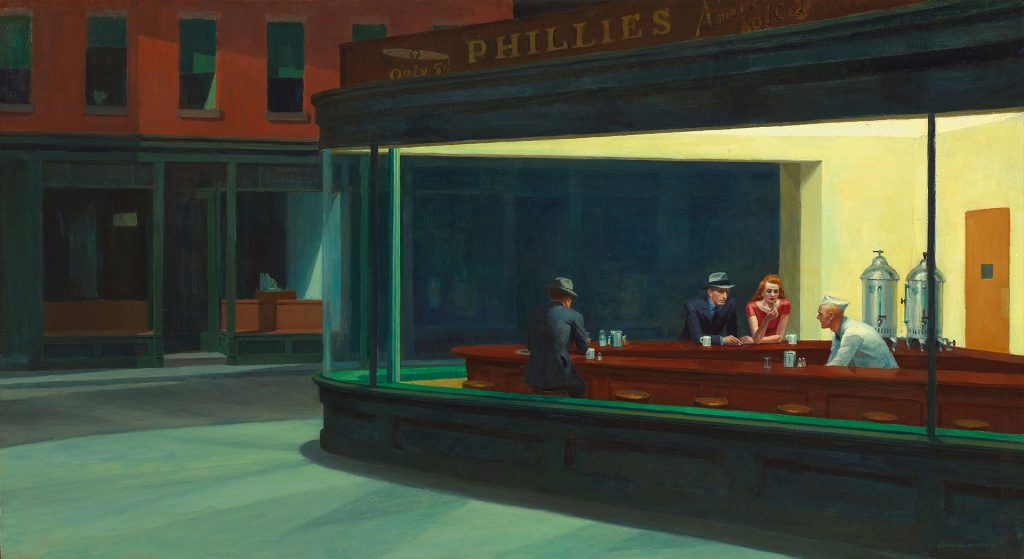
So what did my subconscious manifest for this powerfully strong female presence in what appeared to be turning into a version of Shirley Jackson’s The Lottery? Yes, I knew I was going to die someway terrible, and yes – my courier to the eternal beyond by way of undoubtedly horrific violence would be…a redhead.
Then she put her leg on mine and her arm around me, leaned in close, and whispered comforting words. In a voice that said: “these aren’t comforting words”. Something about this being my place and they were welcoming me in and to give it a try. I protested, mentioning I lived elsewhere and that I had a wife – a very reasonable response rather well grounded in reality to a situation that was anything but. I appear to be boring even in my own delirious mental creations.
Unconcerned, she said that she knew, and to invite her up to the conversation. As in – not that she should drive in. She was already there. In the basement. And she was! Downstairs with some other unwitting victims, sitting on a couch, watching TV, and sipping tequila. Tequila?! Happily, Liz waved to me and pointed to the liquor. And she was wearing another man’s trenchcoat. They had gotten to her already!
Then I woke up.
Heart racing from that ordeal, I began my day in a somewhat rattled state of mind. Then the dream faded from thought, as they all do eventually.
The next day, I lounged on the basement loveseat for the day’s first conference call. It was a division meeting and was two hours, so while awaiting my direct team’s updates and the caffeine to kick in, I dozed off. An offscreen presence appeared directionally behind me somewhere, in the back of my head. She was back! She started to say something but I violently jolted awake.
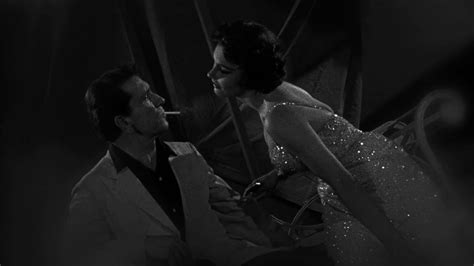
There’s a Twilight Zone episode “Perchance to Dream”, wherein the protagonist episodically dreams of a phantom woman who lures him into exciting activities. As he has a heart condition, he knows that this repeated stress will kill him. So he attempts to stay awake. Things do not work out well for him.
His tormentor had a name. Mine does not…yet.
–Simon