Being a 90s kid was no joke. If one had a mother with a propensity for drama, as I did, then prime time Television was her oyster. After the daily soaps concluded, it was off to “real” drama. There was 20/20, Unsolved Mysteries, and whatever Barbara Walters was going to indignantly talk about that evening. But Dateline was my crux.
Dateline, for the uninitiated, was an hour long show that took one news event and tried to squeeze it until tears came out. And it usually approached it with two messages: “men are evil and they will kill you”, and “your children aren’t safe and they’ll be abducted”.
Sadly, that unmarked van filled with candy and psychoactive drugs never appeared, but that didn’t stop mother from confining me to my suburban corral: the backyard, enclosed with a privacy fence.
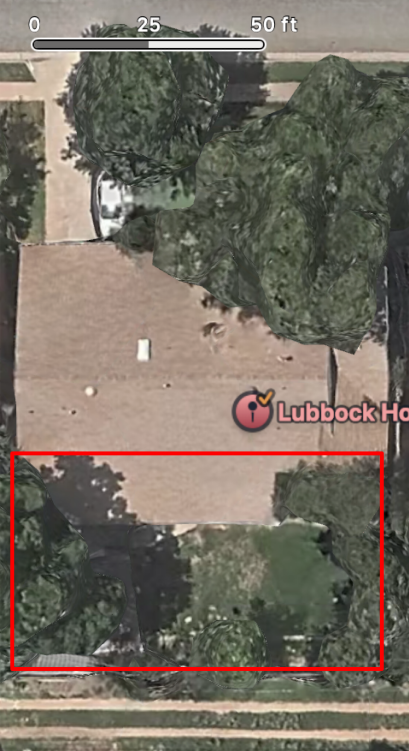
The red box roughly highlights the back yard section. And if the satellite distance reference is accurate, I calculate my pen to have been about 3000 sq ft. Or ~0.07 acres.
As one might imagine, the mind of a child tended to wander in such a limited environment. And as the summers of my stunted social development compounded, I withdrew entirely and accepted the yard as my entire world. I became intimately familiar with every detail of that small space.
And in that space was a small patch of annuals. Specifically, four o’ clocks.
One day, I noticed that the spent flowers, which had dried on the plant, had an pleasant earthly tea scent. Further observation also revealed that the petals crumbled easily, and effused their aroma quickly into water, specifically a mug of water left out on the concrete patio in the hot Texas sun. Furthermore, the resultant tisane tasted delicious. I had stumbled upon something.
But the experiment was cut short when mother, having taken her usual Schindler’s List perch by the full-length backyard windows, witnessed my activities and intervened. The resultant lecture was less a cautionary lesson on knowing with certainty that a plant is edible and more a morality lecture on how my selfish and careless decisions impacted other people (her). I came out of that conversation with no additional scientific knowledge, but instead sobbing and begging for forgiveness – exactly what a Catholic mother wants. The overlord of morality had won again.
Fast forward to today and I was watching Netflix. And as with any Netflix show involving food, that Danish chef guy was there talking about his amazing restaurant and how he forages ingredients. But, for the first time, I noticed a certain flower being used as a garnish. Nasturtium flowers always show up, because they’re pretty and taste peppery. But this looked different. I swear it was a four o’ clock flower. This necessitated a quick internet search.
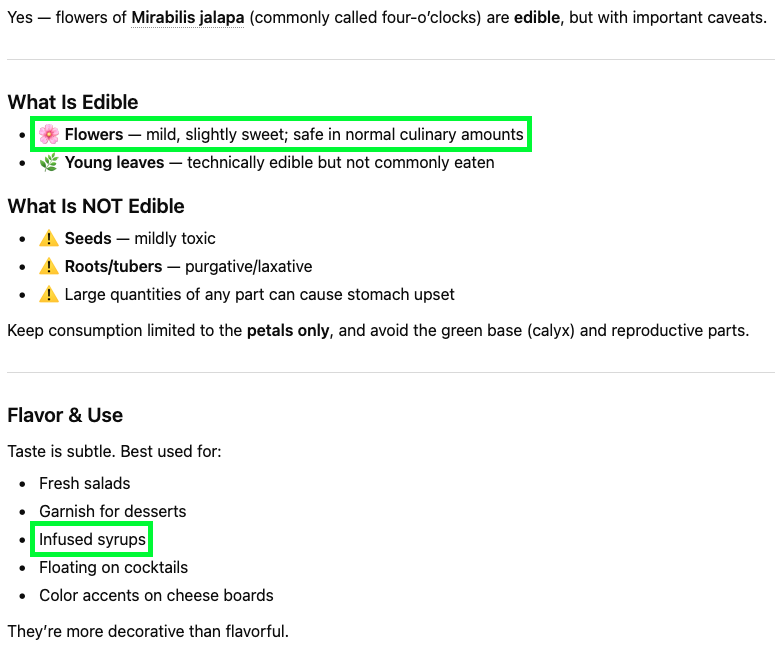
30 years later and I find out that not only are the flowers edible, but they’re specifically used in infusions: exactly what I was doing.
I get that information is much more accessible today, and that digging through encyclopedias gets tedious and that was a rabbit hole mother didn’t want to explore, but did every childhood mistake have to end with crying?
I guess she was worried that if the psychoactive drug van wasn’t showing up, I’d start randomly sampling plants to find drugs on my own. But as it turns out, my culinary curiosity led to foraging – something Netflix is now telling me is the mark of a genius chef. Who knew?
–Simon