Bacon Perfected

Many moons ago, I began smoking my own bacon. Inspired by a certain blog post, I invested my time yet again into insourcing development so as to create a superior and cheaper (personal time excluded) product. I brought it in house, as MBAs say. Or do they? I’ve never heard one actually talk about doing that. They just send work to India.

I don’t think many Hindus or Buddhists eat bacon though.

As as with most instructions, this formed a foundational starting point, but they can always be improved upon. And thus, after several attempts, I present my enhanced version. Here it is:

  1. Acquire uncured pork belly.
  2. Mix brine. Use a 2:1 ratio of a standard Kosher salt brine and Morton’s Tender Quick. Here’s the measurements that will provide 3/4 gallon’s worth of brine, which should be sufficient: 1/4 cup Kosher salt, 1/4 cup brown sugar, 1 cup Tender Quick, 12 cups water.
  3. Optional: add herbs/spices (peppercorn, garlic, whatever).
  4. Submerge pork belly in brine (FoodSaver bags are mighty convenient).
  5. 7 days later, on the 7th day itself, remove pork belly from brine and rinse. Air dry (a box fan is helpful here).
  6. Preheat smoker to 200 degrees F with hickory/pecan wood mix.
  7. Smoke pork belly until it reaches an internal temperature of 165 F.

After that, just cool the meat. An hour in a deep freeze will firm it up for slicing. Then it’s just bagging, sealing, and freezing for long term storage.

Where have I deviated? Well, for starters, using a mix of standard salt and curing salt reduces the sodium nitrate content. Ignoring health concerns (because this is bacon, after all), this reduces the perceived saltiness while still retaining that nice pink bacon color. Reducing the curing time by half a day also reduces the saltiness, as does rinsing the meat pre-smoke. Trust me – it’s still salty. But it’s much easier to skip the rinse for a saltier taste if desired than it is to try to soak the salt out when using the longer brining times/higher sodium nitrate amounts for a less salty taste later. And finally, at 160 F, meat will hit its stall point in the smoker where water begins to quickly evaporate out. Going to 165 F will ensure a drier product; which means less cooking time, less splattering while cooking, and crispier edges.

I also estimated some savings. Compared to premium market bacon, which is what this is, it’s about half the cost per slice. But I can also control the salt level and flavor. It’s an aggravating endeavor, but also one that can be significantly weighed against the convenience of store-bought bacon uncertainty!

–Simon
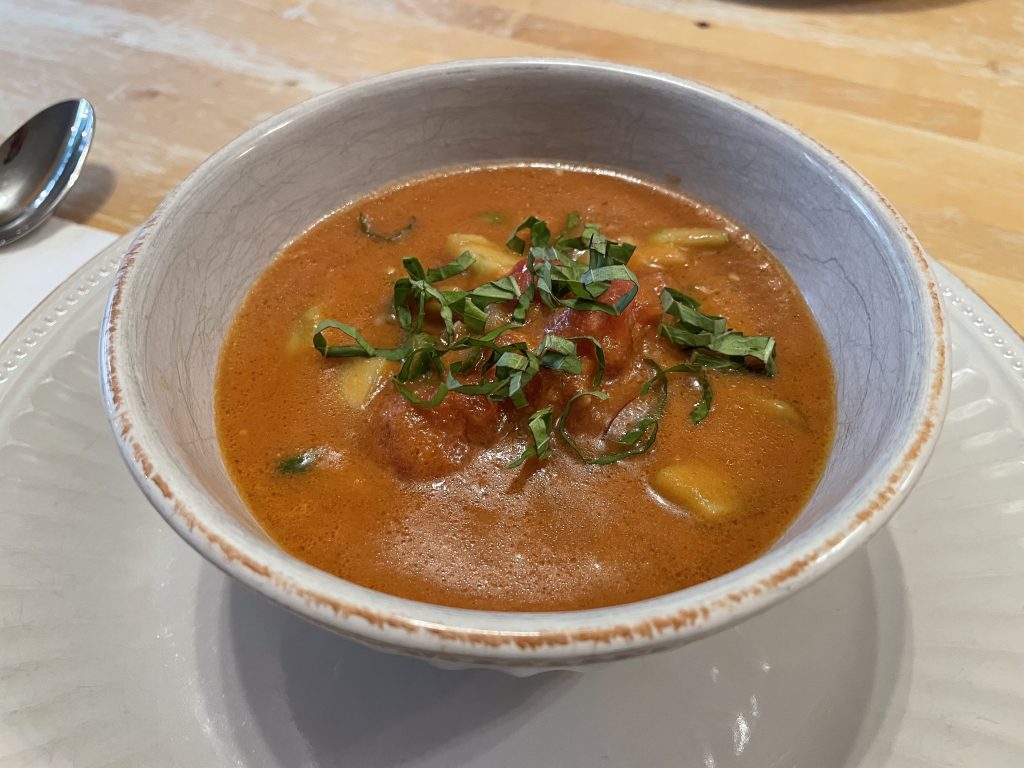
Gazpacho

This was really tasty. I had had cold soups before, but found them unsettling and unsatisfying. Soups shouldn’t be cold.

But I had cucumbers and tomatoes on hand. Why not give it a go? After all, I have Alton Brown now at my digital culinary disposal. Seemed like a good starting point. Here’s his recipe: https://www.foodnetwork.com/recipes/alton-brown/gazpacho-recipe-1937573

With some slight modifications: powdered cumin, because Liz doesn’t much care for it. And serrano peppers instead of bell, because that’s what I had. But otherwise, it’s pretty true to the recipe.

Also the portions were a tad modest, so I’d increase it in the future. But I supplemented it with garlic bread and that did the trick. Will definitely try again when I have an overabundance of summer veggies.

–Simon

Chicken-Fried Steak

Alton Brown had an amusing take on these flat meat diner foods in which he concluded that regional variances render this American staple undefinable. And if you were to try to find agreeable definitions, you would indeed be engaging in folly. Fortunately, I’m never too concerned with being agreeable here, so I’ll happily offer definitions.

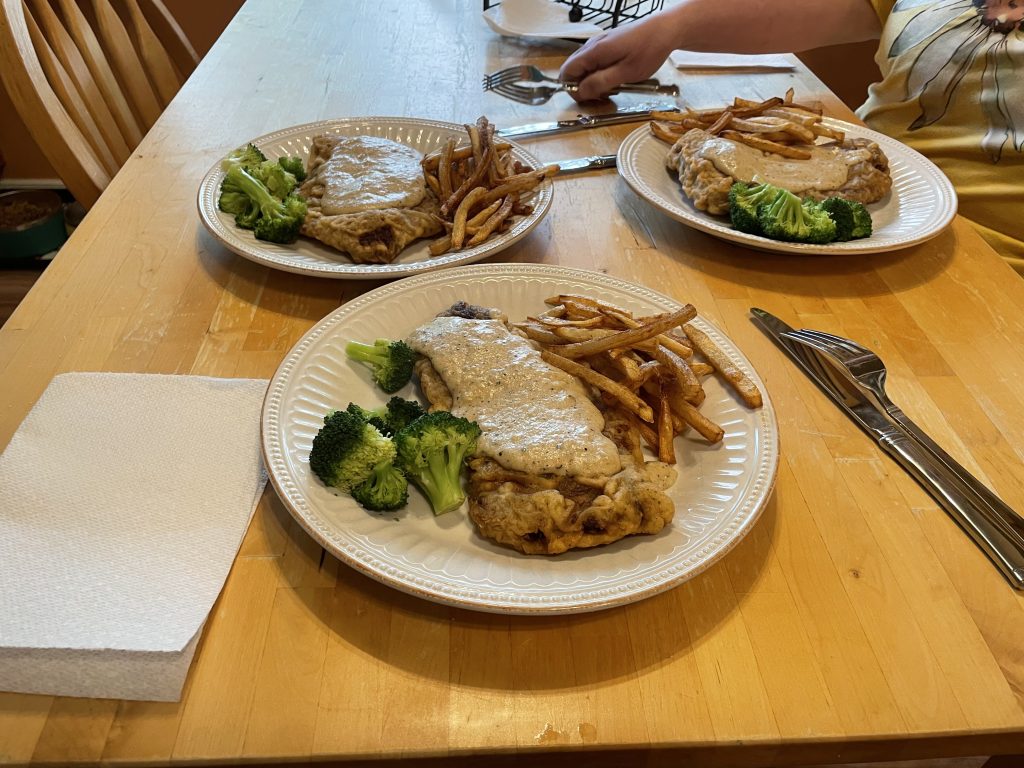
Chicken-fried steak: flattened beef cutlet breaded with flour and deep-fried, then topped with sawmill gravy. Served with fries.

Country-fried steak: flattened beef cutlet breaded with flour and pan-fried, then topped with broth-based brown gravy. Served with fries.

Salisbury steak: cubed beef cutlet breaded with flour and pan-fried, topped with onions and braised in tomato sauce with broth. Served with mashed potatoes or vegetables.

There. I’ve managed to piss everyone off now.

But as for the nostalgia-based reason for this post: I miss chicken-fried steak, which was a staple of my west-Texas childhood. Every restaurant, diner, and cafeteria had it – usually as the first item on the kids’ menu. The Midwest, however, seems to favor country-fried steak. And I don’t remember ever seeing Salisbury steak outside TV dinners. And none of these variations are very common at all now, seeming only to occupy a niche in country home kitchen type restaurants like Bob Evans or Cracker Barrel (neither of which are very good, I’ll add).

But not being terribly culinary difficult, it can be easily made at home. Which I did.

Family reviews indicated that it was “not terrible”, and “not the worst thing I’ve ever had”. So I guess that’s why it doesn’t find its way onto many menus. It’s in actuality cheap food with minimal spices, relying on flavor through caloric addition.

But it did bring back memories.

–Simon