It’s been a while since I had a good pumpkin harvest, and while my yield contains pretty small specimens, ravaged by squash bugs, it’s still better that most years past.
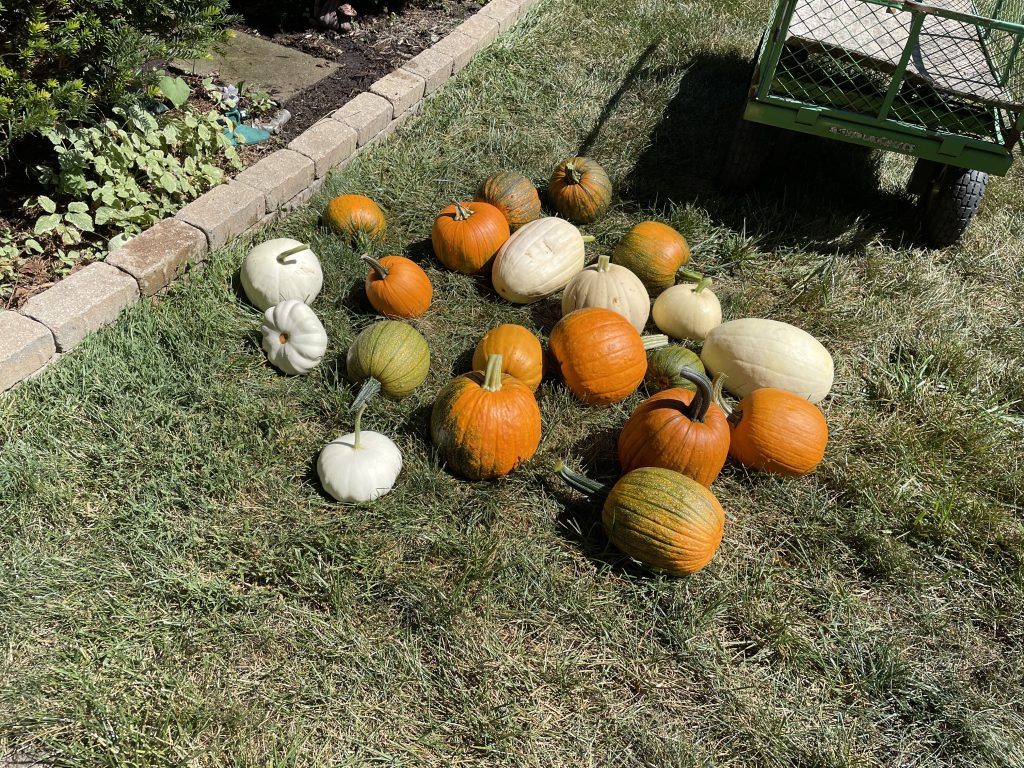
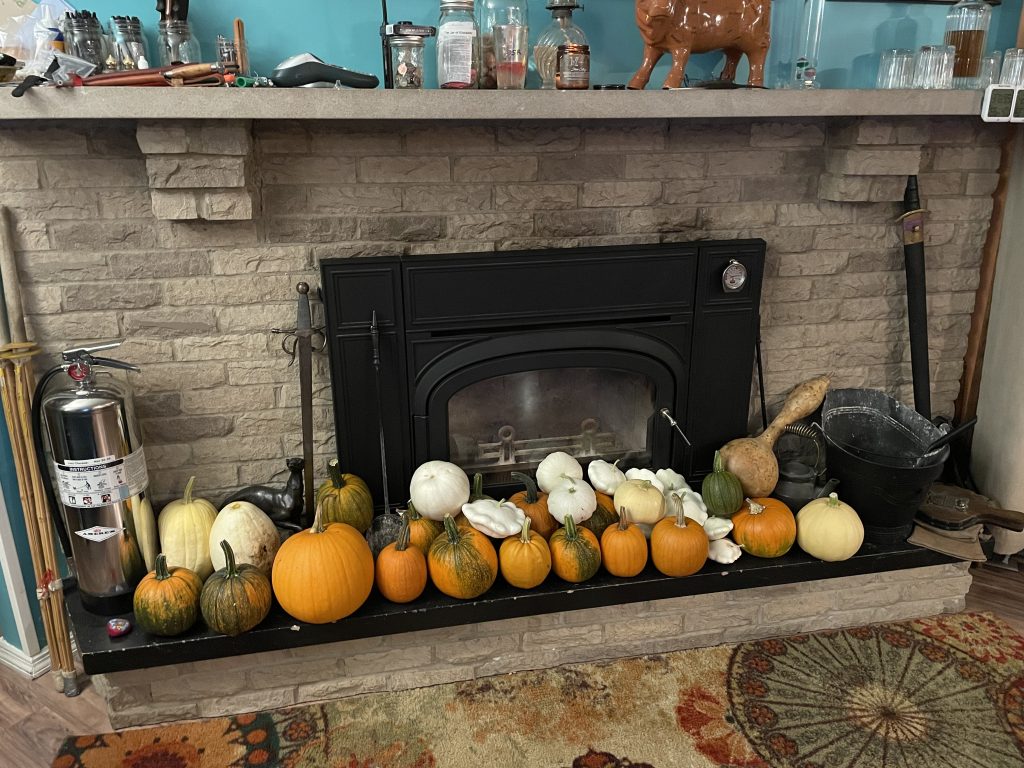
It’s a pretty pile of fall colors, perfect to usher in the season.
–Simon
Tales from Easement Acres
It’s been a while since I had a good pumpkin harvest, and while my yield contains pretty small specimens, ravaged by squash bugs, it’s still better that most years past.
It’s a pretty pile of fall colors, perfect to usher in the season.
–Simon
This was really tasty. I had had cold soups before, but found them unsettling and unsatisfying. Soups shouldn’t be cold.
But I had cucumbers and tomatoes on hand. Why not give it a go? After all, I have Alton Brown now at my digital culinary disposal. Seemed like a good starting point. Here’s his recipe: https://www.foodnetwork.com/recipes/alton-brown/gazpacho-recipe-1937573
With some slight modifications: powdered cumin, because Liz doesn’t much care for it. And serrano peppers instead of bell, because that’s what I had. But otherwise, it’s pretty true to the recipe.
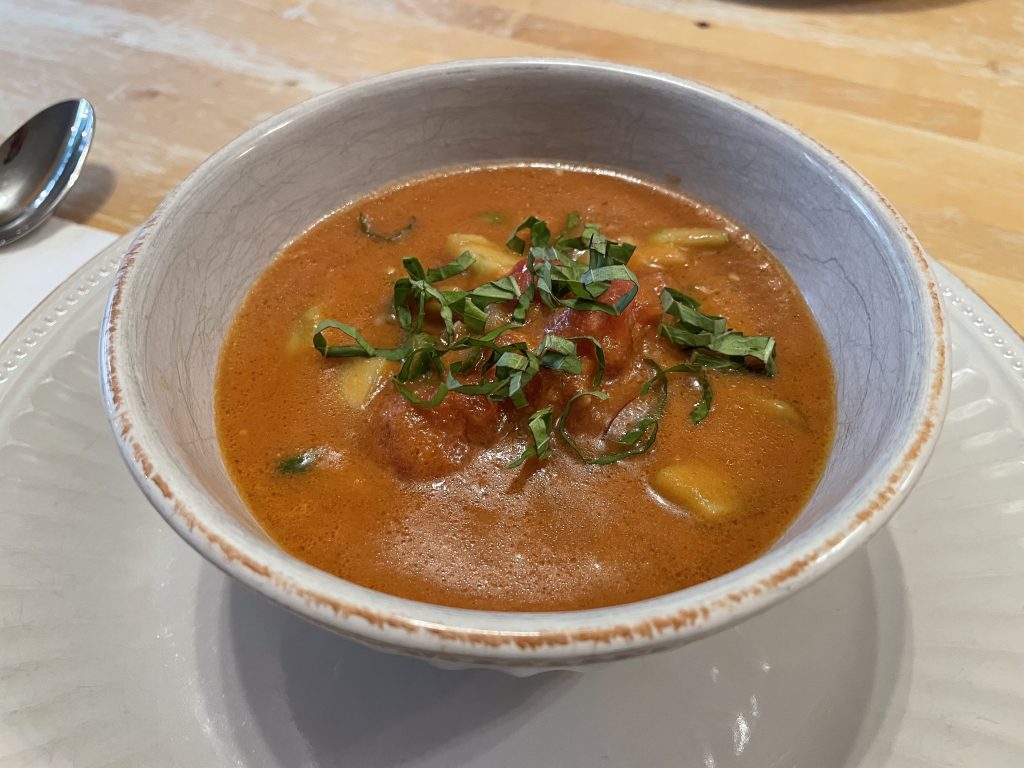
Also the portions were a tad modest, so I’d increase it in the future. But I supplemented it with garlic bread and that did the trick. Will definitely try again when I have an overabundance of summer veggies.
–Simon
Every year there’s one, usually either a beefsteak or a brandywine. An early fruit, if unmolested by wildlife, will eventually become the largest of the season. Here are the winners from past years (it would not appear that I documented them all):
2017: Undefined
2019: 24.8oz
2021: 16.8oz
2023: 19.3oz
2024: 14.2oz
2019 still holds the record.
And pushing its way into 3rd place, muscling out 2021, is 2025! Yay!
2025: 17.2oz
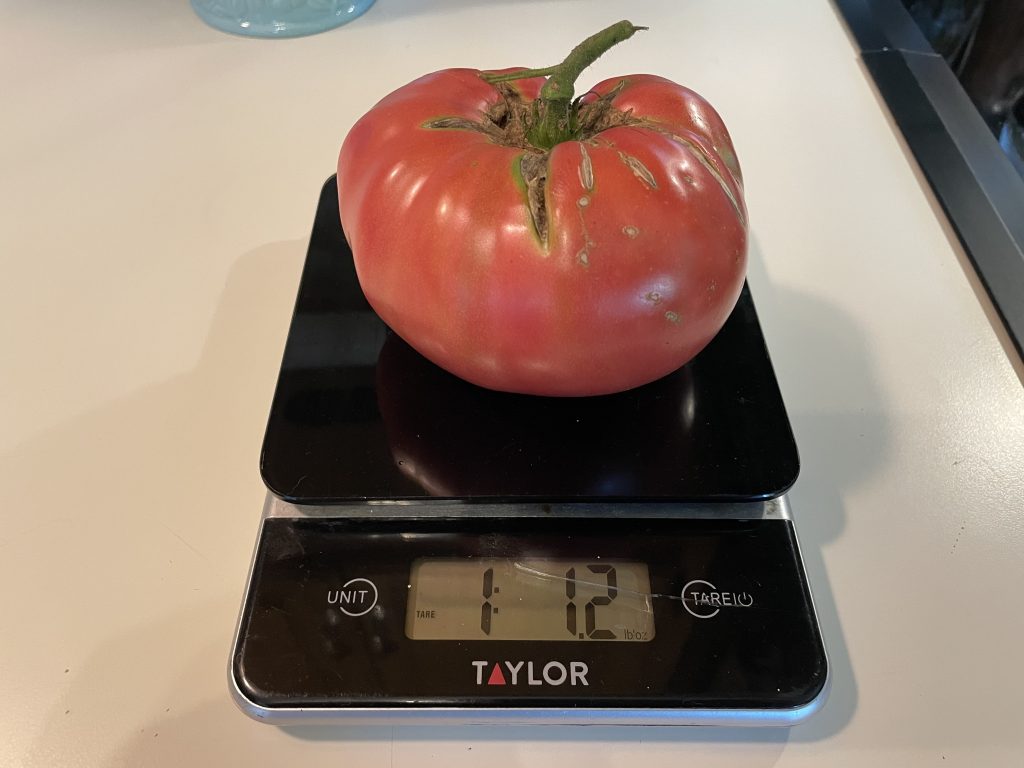
Not epic, but categorically glorious.
–Simon
Musa basjoo, to be specific.
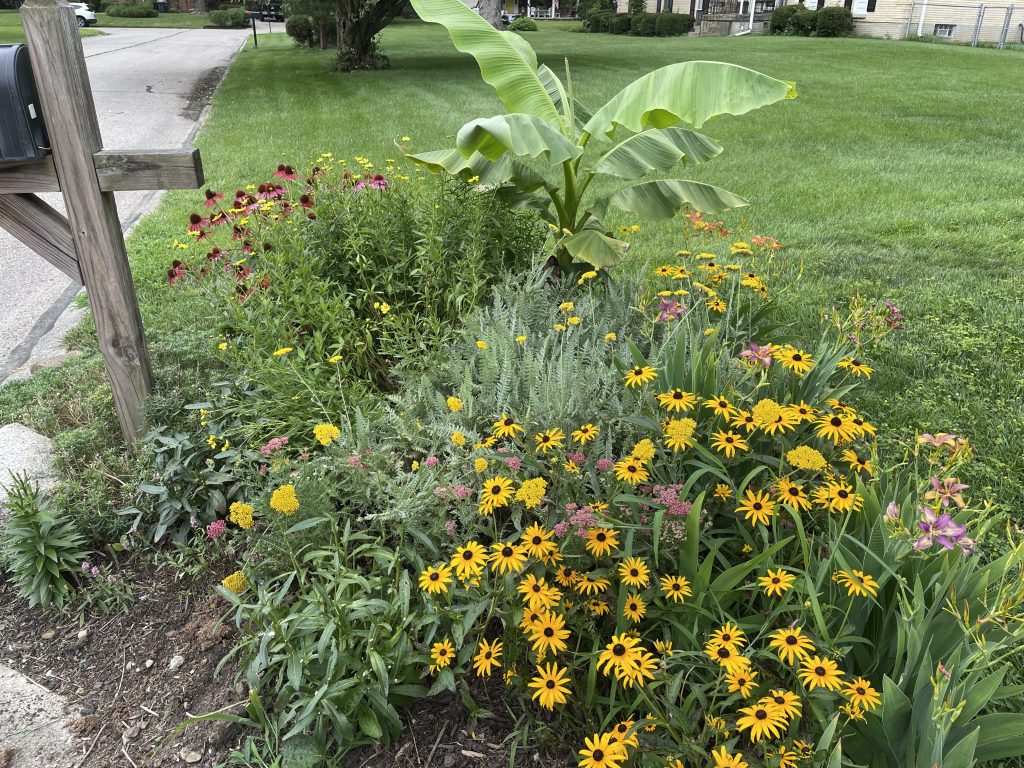
These things are cool, and they’ve been appearing with more frequency in the area. Maybe some sneaky horticulturists are embarking on a suburban gardening campaign to introduce more exotic species, or maybe climate change is simply expanding the range of some previously incompatible species to the USDA zone. Whatever the reasoning, I decided to give this guy a go last year.
Supposedly they can survive as perennials down to zone 5, so here in zone 6a/b it would normally be a tad too chilly. But, I used strategery in my micro-climate. I planted it in the hottest part of the yard: against the concrete driveway and asphalt road, above the heated oil pipeline. The ground never freezes very deep there. It was an experiment I kept from my sister, knowing that she’d tell me I was gardening wrong and it wouldn’t survive.
But lo! Here it is on year two! And with the constant rain, it’s very happy with the temporal climate facsimile of its native habitat.
Supposedly they bloom, but I don’t know if the season is long enough here. Still, it’s cool.
–Simon
What do second stage ethanol fermentation and metabolic detoxification have in common?
Vinegar! Acetic acid. Good for excreting into the toilet and preserving produce. Except probably don’t use urine for the produce part. Too many other things in that for a good pickling medium.
Fortunately, it’s easier to just buy vinegar than to rely on the above in-home methods of production. And much easier than attempting the lactic acid route (though I’ll totally try that one day). But for now, it’s refrigerator pickles, sans-Orléan method. Standard grocery store vinegar for this one. Here’s the recipe I used:
Seems a tad sweet, but I’ll give it a week to settle and adjust accordingly.
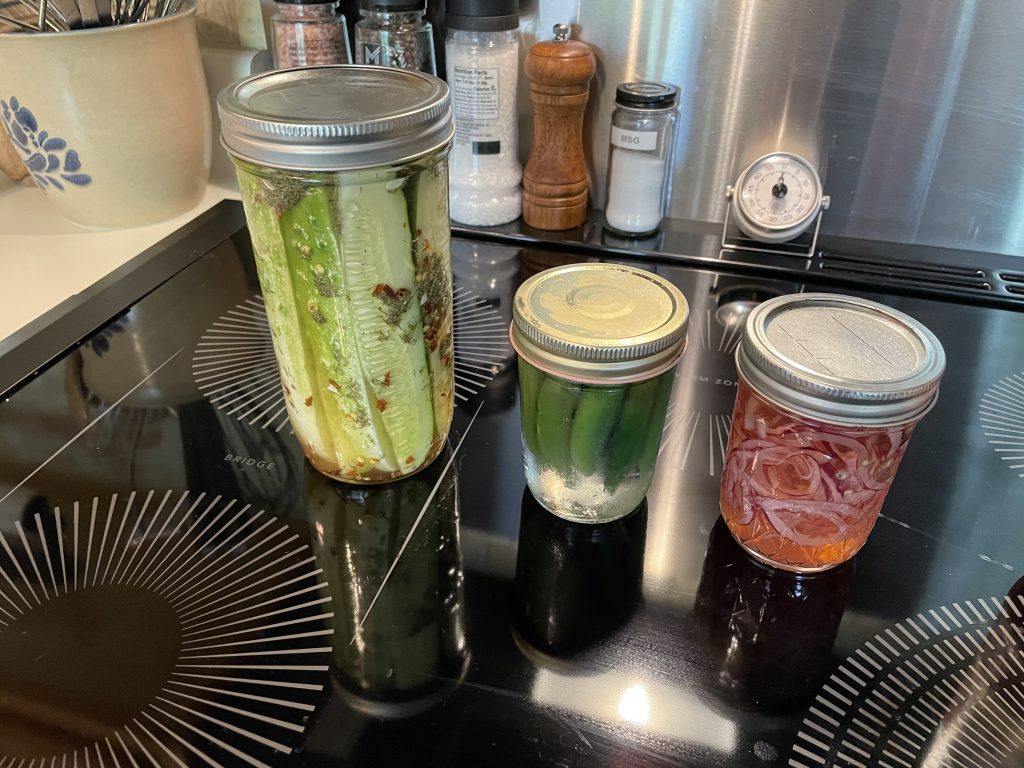
We have cucumbers (there’s an abundance from the garden right now and the kid wanted to make some after learning about it at summer camp), serrano peppers, and red onions. So far, the red onions are pretty good. One of the most ridiculously up-charged items to buy, by the way. More street tacos in the future!
We can, indeed pickle that.
–Simon