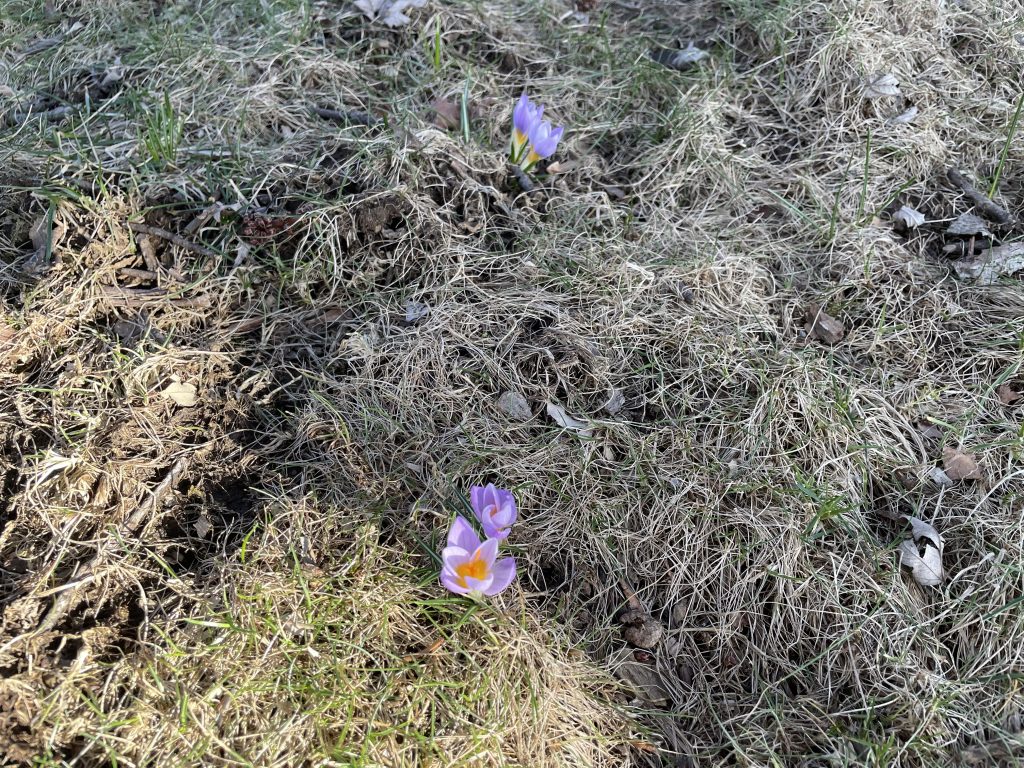
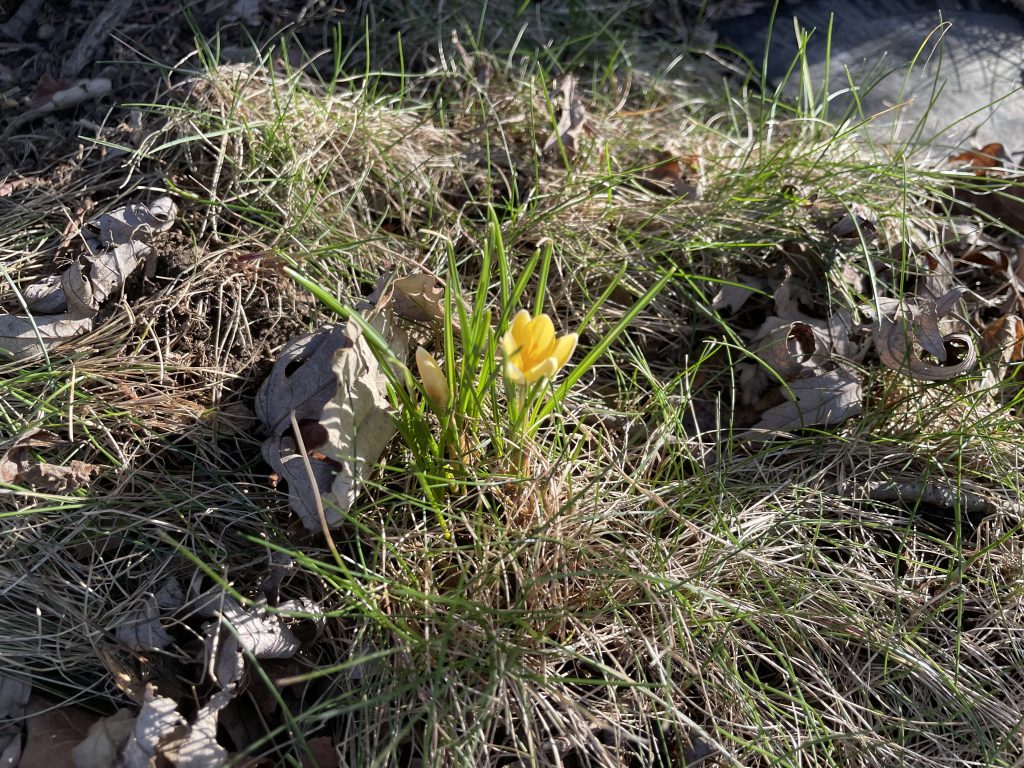
In the spirit of phenologic trend monitoring, here are the first crocus blooms of 2026, as of 2/25:
3 days earlier than last year, but that’s probably insignificant. I’m making the guess that this year’s weather patterns will be similar to last year’s.
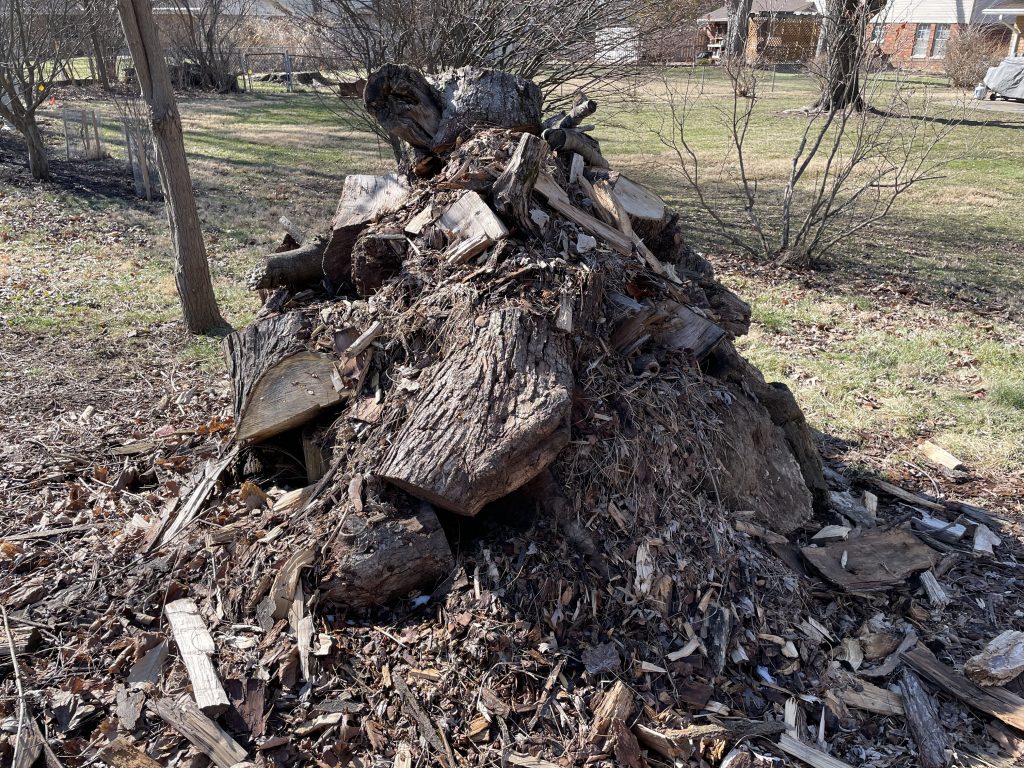
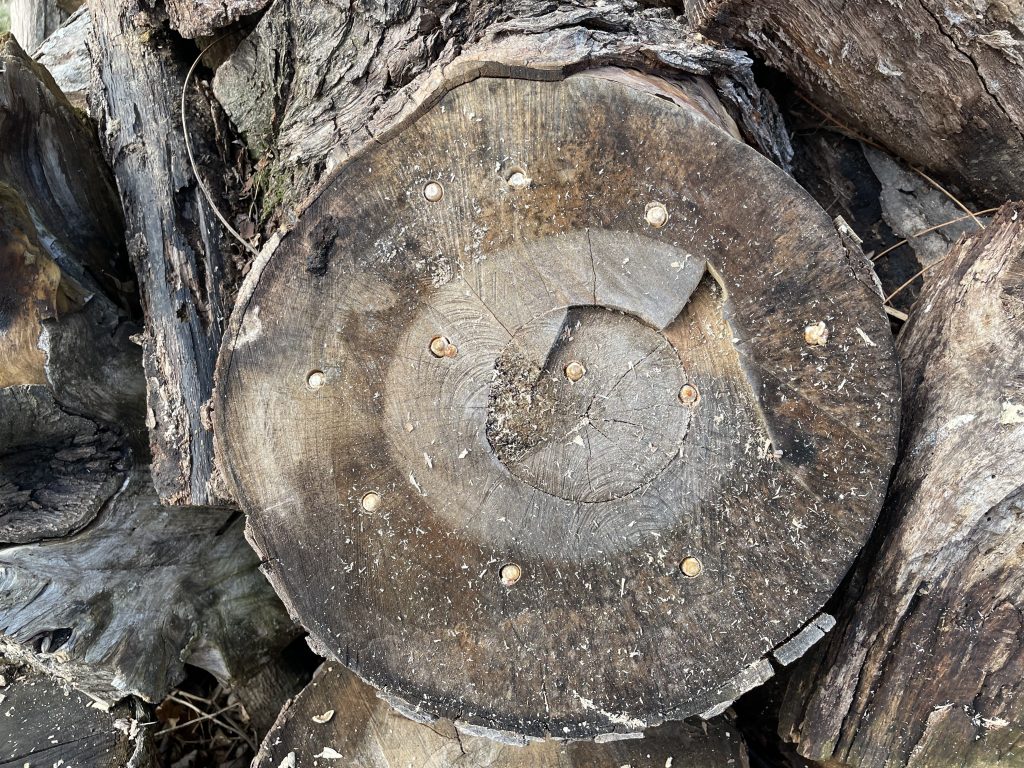
Following the great firewood processing of 2025, I was left with some junk wood remnants: rotten chunks, un-splittable end pieces, wood that absorbed too much mud over the years, etc. So I carefully stacked them into a pile and ended up with a…
No, not a haphazard pile of junk wood. A stumpery!
No really, this is a thing. The great Monty Don – Britain’s most famous master gardener, told me so.
And no, I’m not making this guy up either. The Brits are weird. He’s on Amazon streaming. Look it up.
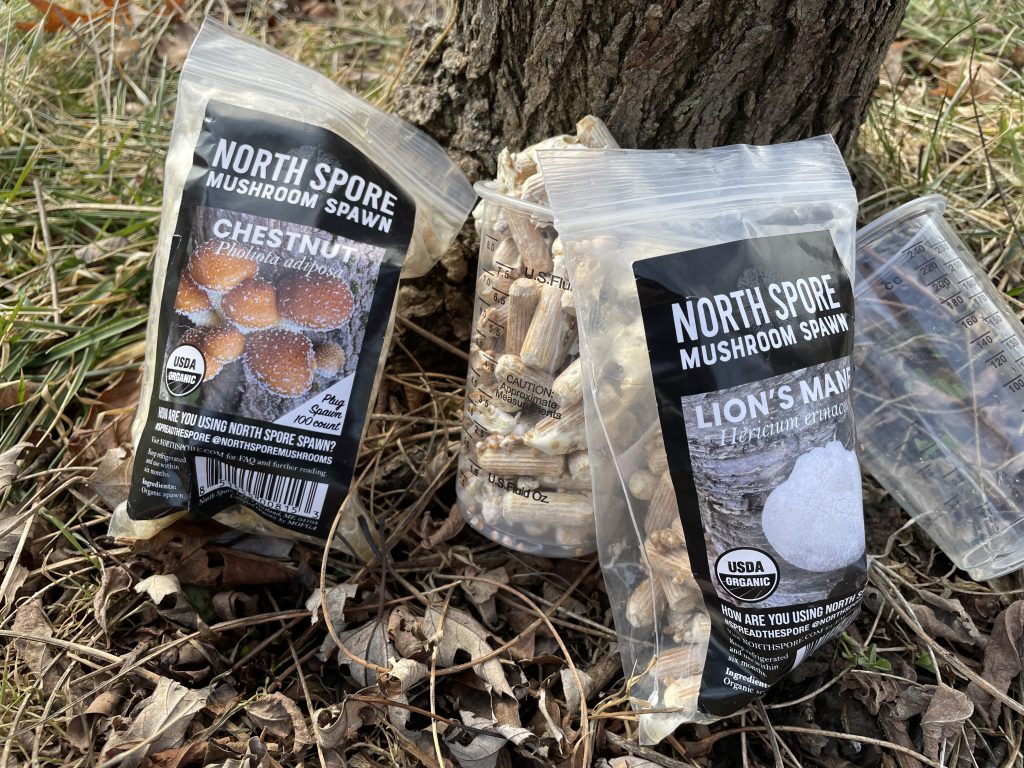
The premise being, a pile of large chunks of wood can add visual interest to an otherwise over-manicured garden. Maybe, or it might just end up looking like a pile of junk. Which is why I’m attempting to inoculate it with mushroom spores.
I did successfully grow a mushroom patch last year, though the mushrooms themselves weren’t very tasty.
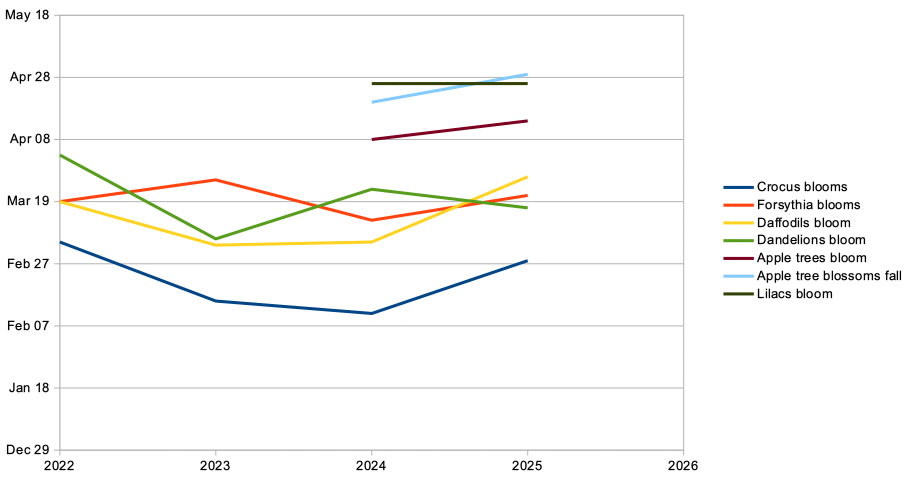
Four years is hardly a sufficient data sample by which to predict trending weather, but I took my historical phenologic observations and graphed them nonetheless. It would turn out to reveal a short-term trend.
Dandelions are the outlier, and I didn’t start measuring all events on the same initial year, but there’s a noticeable dip – indicating a warm spell. That 2-year period returned to previous values last year.
I have yet to observe crocus flowers, but they are starting to bloom. And with all the recent snow, it would appear that we’re beginning to return to a cooler seasonal climate.
Interesting. I shall continue to monitor this. I may delay planting dates.
About two years back I planted sunchoke tubers in the forage patch. I caught on to the idea after reading some random gardening article during the height of the Ohio winter season and thought that they sounded like a good idea: native, low-maintenance, pretty flowers, edible tubers, perennial. What’s not to like?
They were also amusingly absent from any commercial catalog, so I had to source some from a fellow gardening nerd. They cleared postal inspection, unlike the black bean seeds my sister tried to send me, and I dutifully plopped them into the ground come early spring. A few plants grew, but I decided to wait an extra year for them to fill out before attempting a harvest.
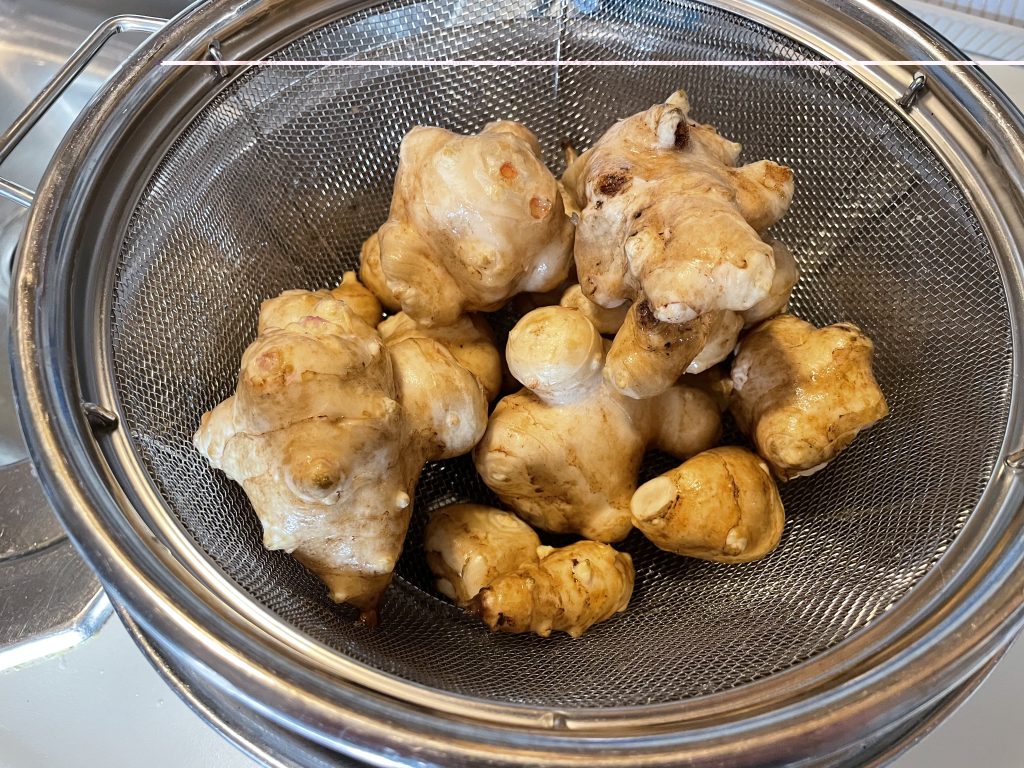
Now that the growing season is concluded, I wanted to try them. So I shoved a gardening pitchfork into the partially frozen ground at the edge of the patch and ripped up a mass. A surprisingly large mass, in fact. It would seem that they spread quickly.
Internet knowledge states that they can be cooked like potatoes. So Liz roasted them. And they were tasty – like an earthy parsnip. But, there were consequences.
Sunchokes store their energy in a carbohydrate very different from potatoes, specifically inulin – a polysaccharide. Polysaccharides cannot be digested (a notable exception being lactose, a disaccharide, though we all know isn’t a universal exception). Potatoes, on the other hand, consist of starch – also a polysaccharide, but upon cooking, breaks down into amylose and amylopectin, which are easy to digest. Inulin, however, does not fully break down into monosaccharides upon cooking, resulting in a food comprised of indigestible carbohydrates.
This leads to large amounts of food for gut bacteria, which ferment inulin into….gas! Lots and lots of gas!
So some more cooking research is needed to work around this better. Or…we eat them raw and have a juvenile fratboy-themed competition on the deck!
I got another mushroom spore block last Christmas. The family biologists seem to enjoy them, and have looped me in. And I diligently grow them. Because they are kind of neat.
The first batch I grew were yellow oyster mushrooms, which had a pleasant mushroom-y taste. Then Dad brought me down some foraged Chicken of the Woods, which I recently wrote about, and tasted quite pleasant with indeed a chicken-type flavor and texture.
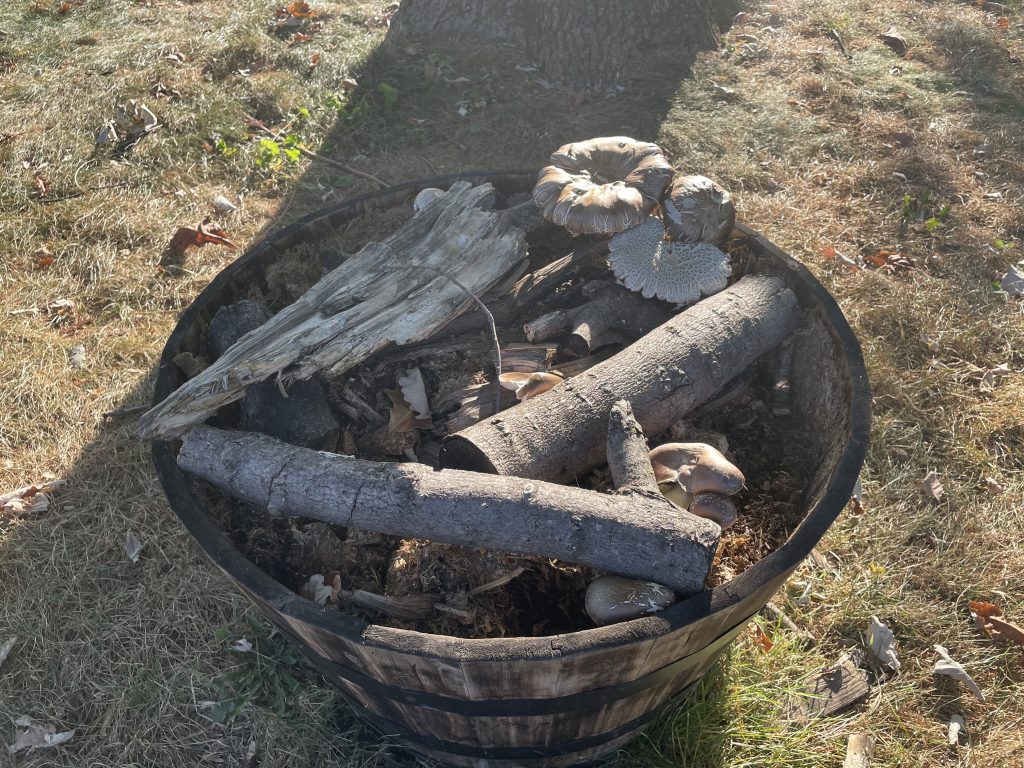
But the wine caps, for which I created a dedicated “garden” in a half bourbon barrel with straw, failed to fruit despite clear signs of ongoing inoculation. Finally, after nearly 6 months, they appeared.
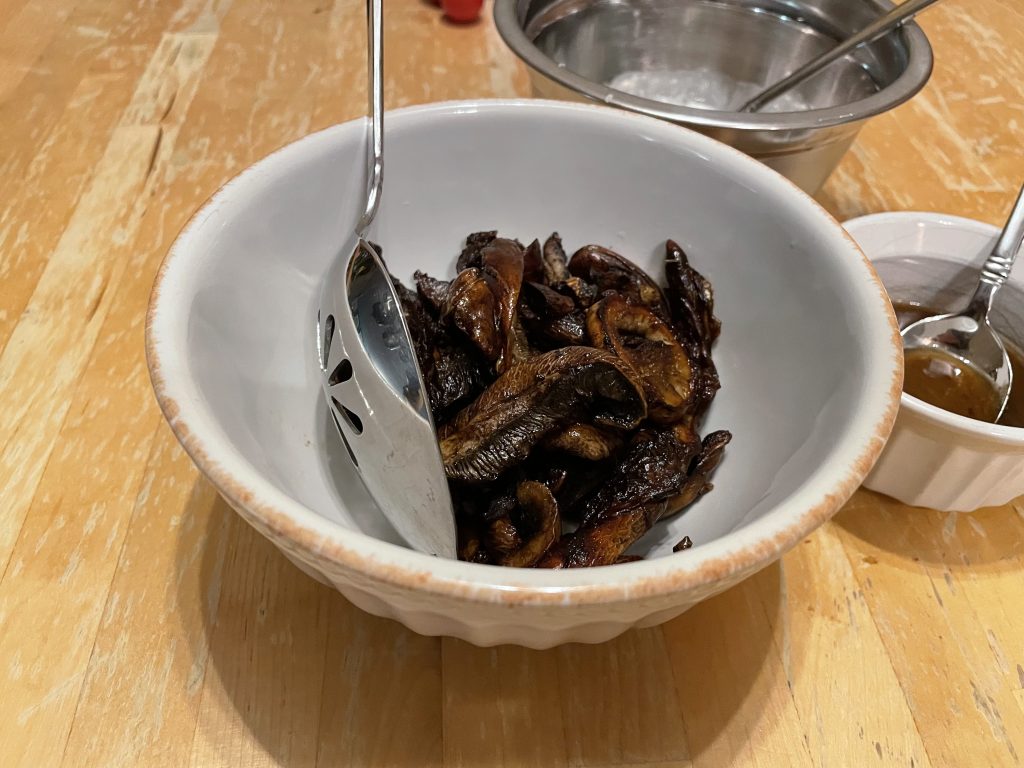
So to try them, I applied a light sauté as to not muddle the flavors.
And they were terrible. Sweet and astringent. Yuck. Not recommended. I think I’ll send the rest up with Dad for him to try. What a disappointment for such a long wait. Oh well.