I’ve started to embrace AI engines. The aging crank that I am has been reluctant to jump aboard too soon, but it turns out I was thinking about it all wrong. Instead of using it to lazily bypass the process of basic internet research, as its main purpose appears to be, I discovered that I can instead use it to bypass the bullshit copy/paste non-researched web articles themselves. A simple query returns aggregated, compiled, and distilled information; which I can then use to better refine my internet searches to find the actual information that most websites simply scrape and regurgitate. It was, perhaps, a slow revelationary process on my part.
Here’s a good example. One of my tomato starters had three initial leaves. I had never seen that before. My standard internet searching revealed that these first leaves that reside within the seed are called cotyledons. Sounds like a dinosaur to me, but okay. And as a seasoned gardener, I know that tomato seedlings have two cotyledons, not three. What was going on? It was time for Wikipedia to bestow me with closure.
But it didn’t. It just talked about the leaves themselves and their purpose, though not why there would be a non-standard number on a plant. Genetic mutation? Monsanto? Government conspiracy? Tell me!
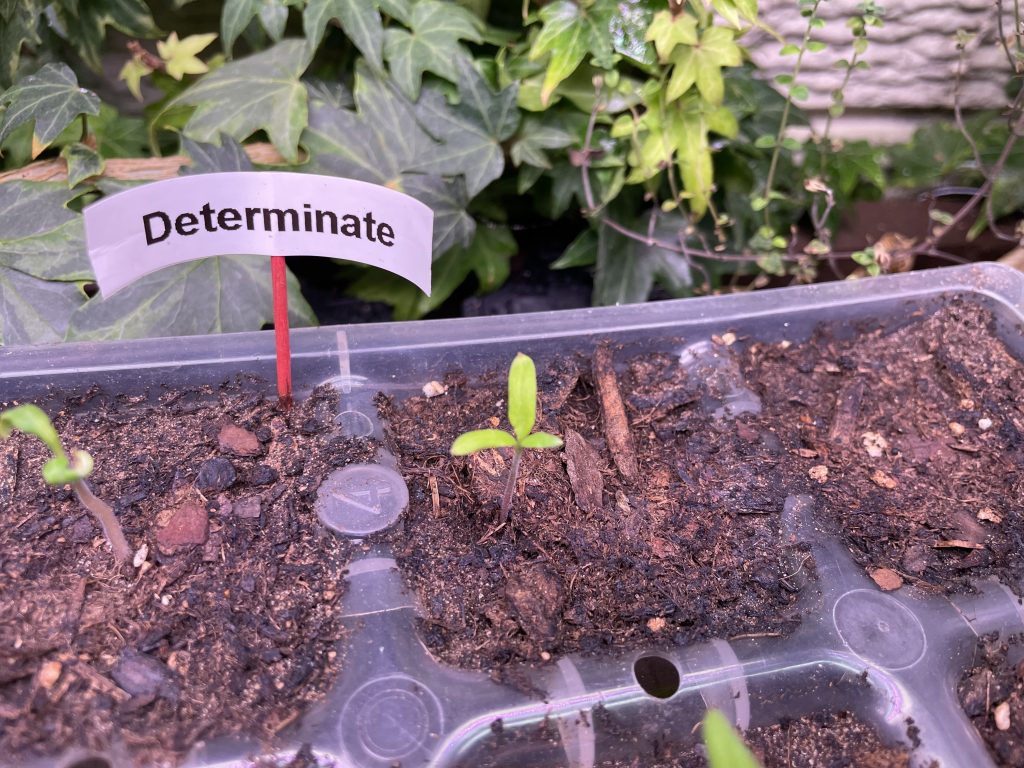
But again, it didn’t. So I used an AI engine, and asked it why a tomato seedling would have 3 cotyledons. And it promptly told me that it’s rare, sometimes from genetic mutation, but usually resulting from polyembryony, which happens when more than one embryo forms within a single seed. Furthermore, it’s apparently a non-issue long term, though it causes early variations in normal growth patterns. Now that’s useful information, and also kind of fascinating.
And to drive the point home further, another one germinated, from a completely different variety!
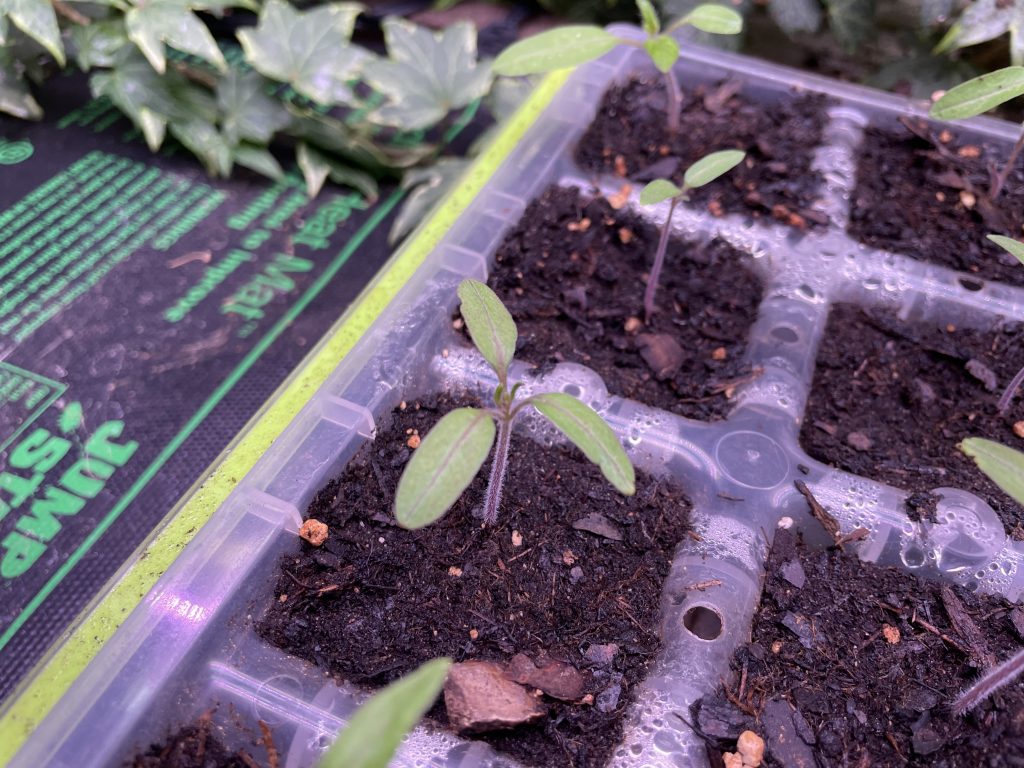
Most of the seeds I plant are ones I’ve saved, so this double occurrence is intriguing. Perhaps attributed to a statistical Poisson distribution, it could be an unintentional result of my decades-long solanum eugenics project.
Whatever the cause, I’ll be keeping a close eye on these samples. Maybe I’ll have developed new varieties! Or, more likely, the bigger achievement here is that I’ve finally dabbled in AI.
–Simon