Fast food occupies an interesting niche in American cuisine. Supplanting street food vendors and pre-made automat-type meals, it promised quick calories with consistent taste and a guarantee of food safety. Indeed, the OG of fast food is White Castle, because in a time of questionable food quality, no one trusted the hamburger – a skepticism that should be continued into present times, I might add. But White Castle ground their own meat on-site and in view of the customer (originally, anyway). Sanitation was prioritized, with everything from the wall paint to the employee uniforms being bright white so as to convey this. And to top it off, they pioneered the first version of the fast food assembly-line system adapted for use by all modern fast food. McDonald’s made it famous, but White Castle started it.
So fast food is clean and quick. But wait, there’s more: all kids love fast food because it’s food that mom didn’t make. And it’s food that a male figure usually promoted for consumption when mom wasn’t around, because it was easy to procure and relatively cheap (also food that mom wouldn’t approve of). What does this lead to? Nostalgia. My own Grandpa said that when McDonald’s first started, their burgers were terrible. But he loved shoveling his grandkids into that giant farm truck for a McDonald’s run anyway.
My point being: fast food is inherently American because it checks all the boxes that Americans value: quick, affordable, reliable, and nostalgic.
The internet would have you believe that fast food prices have not significantly outpaced inflation. And that’s because the internet lies. AI simply aggregates data and forms conclusions, but it’s not very good yet at vetting sources of that data. Yes, flagship menu items follow this rule, but value menu items do not. In 2005 I could get a .39-cent Taco Bell taco, which equates to .66-cents today. The cheapest option currently on offer? $1.29.
Still, fast food has cornered the market of the young and lazy, because: quick, affordable, reliable. Also the young haven’t figured out how to cook yet, or make good financial decisions. And they don’t suffer yet the digestive problems that fast food causes their elders. But this doesn’t stop fast food from continually trying to expand their customer base to older people. Because, as the one American value criteria not being satisfied by the young and lazy: nostalgia.
I admit – it’s satisfying to be pandered to. No wonder the boomers are so self-important, having received this most of their lives! And now it’s my turn. And in this case of nostalgia and fast food, I will call out two products from my time which have been rebooted recently: The Arch Deluxe, by McDonald’s; and the Chicken Twister, by KFC.
The Arch Deluxe was a failed burger from an attempted premium line of menu items. It included additional ingredients that I’d consider pretty basic for a bacon cheeseburger with lettuce and tomato, but that was enough for me to desperately want to try one. But even if mom were willing to buy one, they were never in our select market. Ultimately it died out, but I did manage to grab one once on a Boy Scout trip once. I remember the commercials for it being weirdly hostile towards kids, which might have had something to doom it when being offered from a company whose mascot was a clown encouraging kids to have a little fun. The Arch Deluxe is now the Big Arch, but I’d consider them more or less the same thing, aside from marketing. The former was meant to be a luxury option, the latter just a bigger option. As this is fast food, I say whatever. Same crap ingredients. (If they ever bring back the Angus Mushroom Swiss burger, however, then we’re on a different level.)
The Chicken Twister was just a couple boneless chicken tenders in a wrap with lettuce and some spicy sauce. It was great at the time because it was slightly cheaper than a sandwich and easy to eat while walking – perfect college requirements. I never did understand why it was discontinued, so it must have been company economics in this case rather than consumer perception. I had often declared that I’d get one the moment they were brought back.
So, how did they stack up to expectations? First, a bit of internet meme-ing is required. I encourage you to find the Chris Kempczinski video.
Found it? Good. Because that led to an additional experiment on top of whether these products were any good or not: Big Arch vs Whopper. Because that was Burger King’s response: at least pretend that you as a company executive actually enjoy eating the company offerings. We would take this opportunity to make a comparison ourselves.
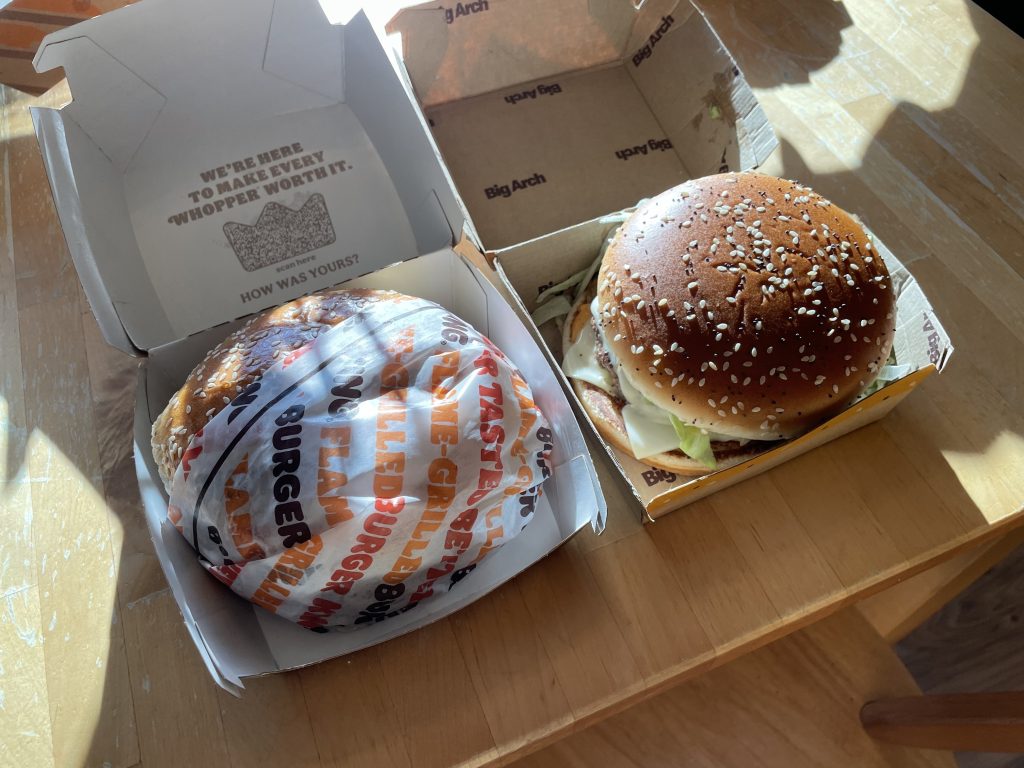
The last time I had a McDonald’s burger, it was a quick grab on the road. It was the first time I used one of those kiosks they have now inside. Apparently, that wasn’t the standard procedure, as I received some weird looks from the staff. I’m uncertain as to why, but I’m guessing their usual demographic prefers to order via their mobile app, because…apps are cooler? Maybe coupons? Dunno. Whatever. The burger was the expected sponge-beef on a puffed cardboard bun. The Big Arch was, however, surprisingly good. A little heavy on the sauce, but they had apparently replaced the sponge and cardboard with actual bread and griddle beef like I remember from the old days. Of course, inflation-adjusted, it’s still overpriced, but it actually tasted like good ol’ McDonald’s.
The Whopper, however, was a bland and dry basic burger. McDonald’s “wins”. I then spent the evening groaning and massaging my gut.
Would I buy the Big Arch again? Probably not. If I were in my 20s then yes, but if I were in my 20s it wouldn’t hold any nostalgic value. So, I call this a fail.
Moving on, the Chicken Twister. These things were so damn good and I couldn’t wait to try one!
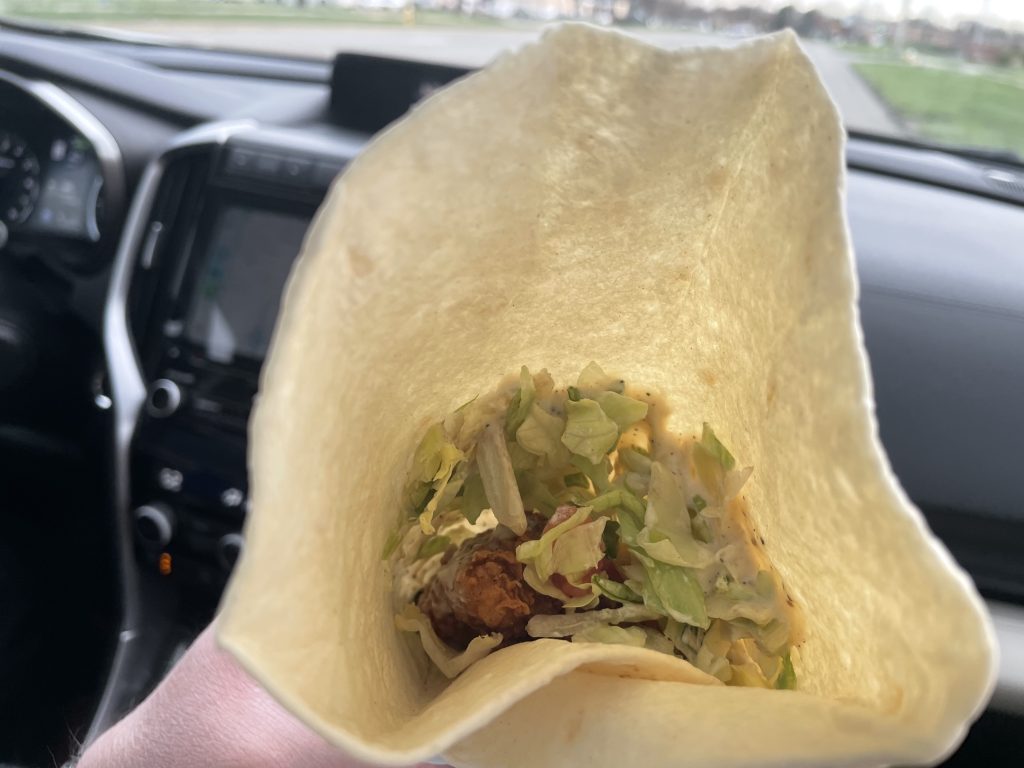
Okay, so apparently someone failed to explain to staff that the tenders are supposed to be lined up the length of the tortilla, not thrown into one end. That, or whatever stoner assembled this just didn’t care. What’s wrong there, Chad? Overdue for your vape break?
In any case, some reassembly was required, negating the product’s convenience. As in, half the tortilla needed removing.
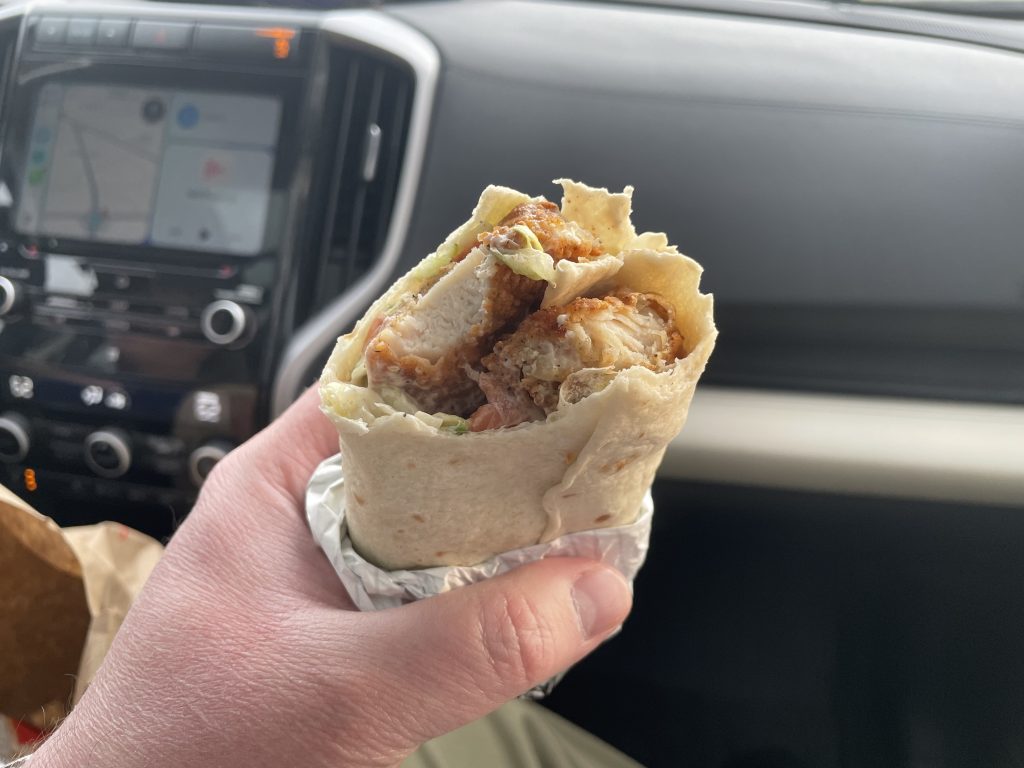
There we go. Once that part was corrected, it once again resembled two chicken tenders in a tortilla with some sauce and lettuce. It was…okay I guess. Even if it had been flawlessly presented at a reasonable price by a Chad without attitude, it still would have remained a lackluster attempt at a millennial throwback. Another fail.
There’s a few lessons from this experience:
- The overall quality in fast food has declined across the board, due to streamlining production methods and by reducing ingredient costs. Even if current products were made as they were originally, which they aren’t, they would still fail to live up to ingrained memory expectations.
- People with any sort of economic means don’t regularly eat fast food. Even Kempczinski could barely stomach the thought of eating his company’s flagship reveal. It’s simply just not good nutrition, nor good quality.
- The demographic trying to be captured here using nostalgia is a demographic who, through aging in general, has achieved economic means. And even the ones who haven’t are still…
- …old now, and can’t eat that crap food without painful consequences.
Conclusion: attempting to use nostalgia for marketing purposes in the fast food industry is dumb. You’ll get us to try things once, then we’ll laugh, poop, and never buy them again. But at least I had a fun time going down memory lane. You sold me that much at least.
–Simon