The produce is coming, the produce is coming!
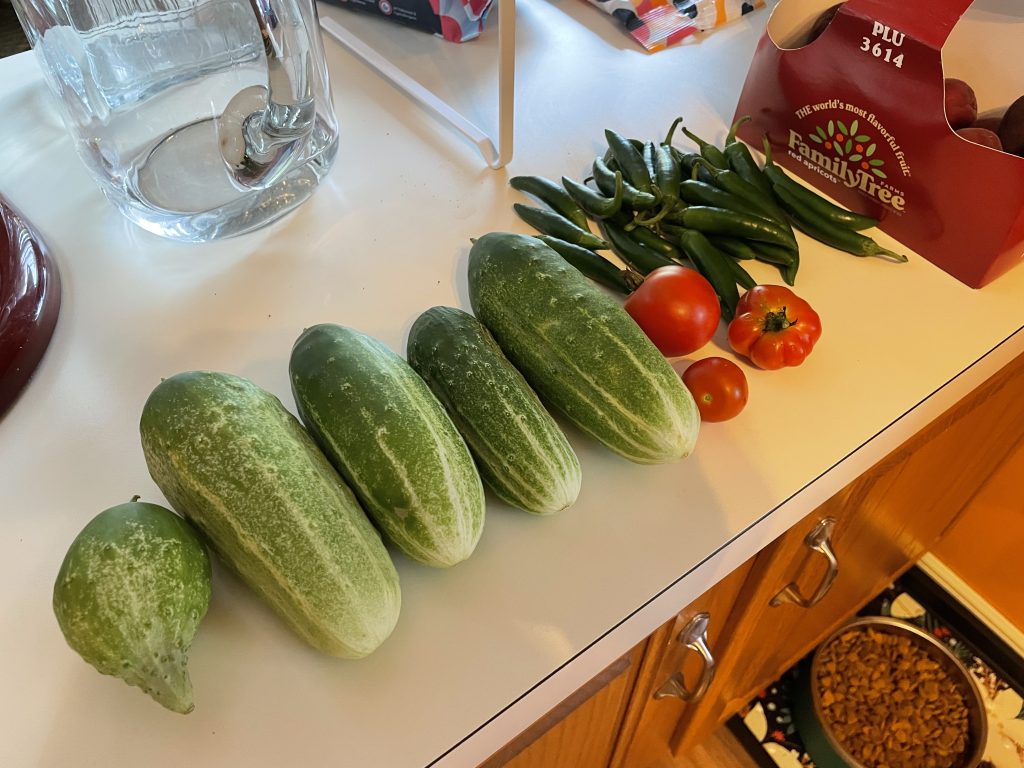
Yayy!
–Simon

Tales from Easement Acres
The produce is coming, the produce is coming!
Yayy!
–Simon
Woe to the rhubarb that lacks its brilliant hue/
The visual allure for folks like me and you.
Yes, my rhubarb was most green in color – apparently due to a lack of anthocyanin. Dear God!
Fortunately, following my soil test and subsequent amendments, the problem appears to have been resolved; once I increased available levels of nitrogen, phosphorous, potassium, magnesium, and iron. Actually that was a happy accident, since I was more concerned with tomato production. But I won’t beat a dead gift horse on the mouth. Here’s our most recent harvest:
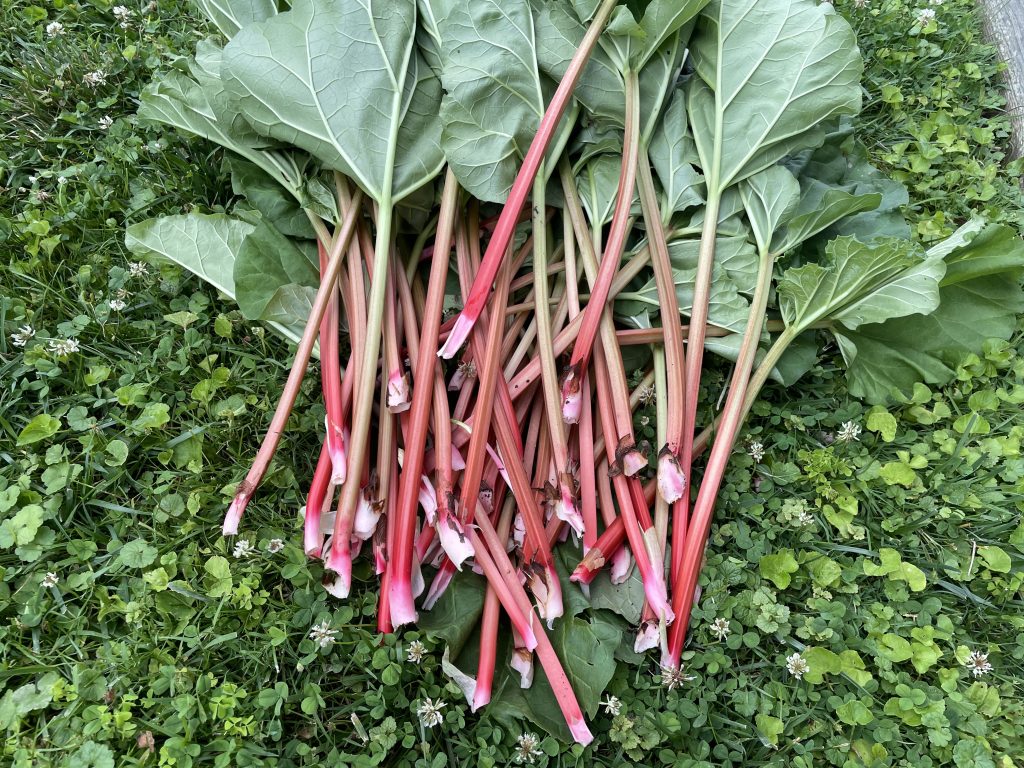
Brilliant!
–Simon
I don’t buy this “pollinators are dying off” panic. There’s certainly no shortage of documentaries crying out over Colony Collapse Disorder with our commercial honey bees and how our food supply is in peril as a result. But first of all, our largest agricultural crops here in the US are maize and wheat – both of which are pollinated by wind – followed by soybeans and potatoes, which are self-pollinating and propagated through cuttings, respectively. And two – honey bees aren’t native to North America – they were imported from Europe. Our most important native pollinating bee here is the bumble bee, which doesn’t suffer from CCD (although they are experiencing population declines in urbanized areas, but so is every species displaced by human development). What we’re really whining about is the peril of beekeepers’ livelihood and their co-conspirators – the cash crops that rely on non-native pollinators because they themselves aren’t native, like almonds and apples. Interestingly, bumble bee hives have been commercialized, but no one talks about them because they aren’t as cute and they don’t make large amounts of honey.
The real problem is the ubiquitous use of residential pesticides, but that seems to be tapering off, at least in my own neighborhood. People are starting to show reluctance in trading lawn grubs for lymphoma, I’m guessing. I mean, I haven’t taken a poll or anything, so this is strictly observational. I don’t see nearly as many lawn care companies dumping chemicals on grass, and there are more young families. And there are tons of bees in my gardens (YoY informal personal measurements (hey – I’m in finance)). So progress, I think.
And here to help them along, I have dedicated a patch of my personal greenspace to benefit them! I offer up last year’s squash patch, which didn’t turn out too well. Too close to the greenbelt I think, and the deer helped themselves. So now it’s repurposed, with a custom sign to boot! Anniversary gift from Liz.
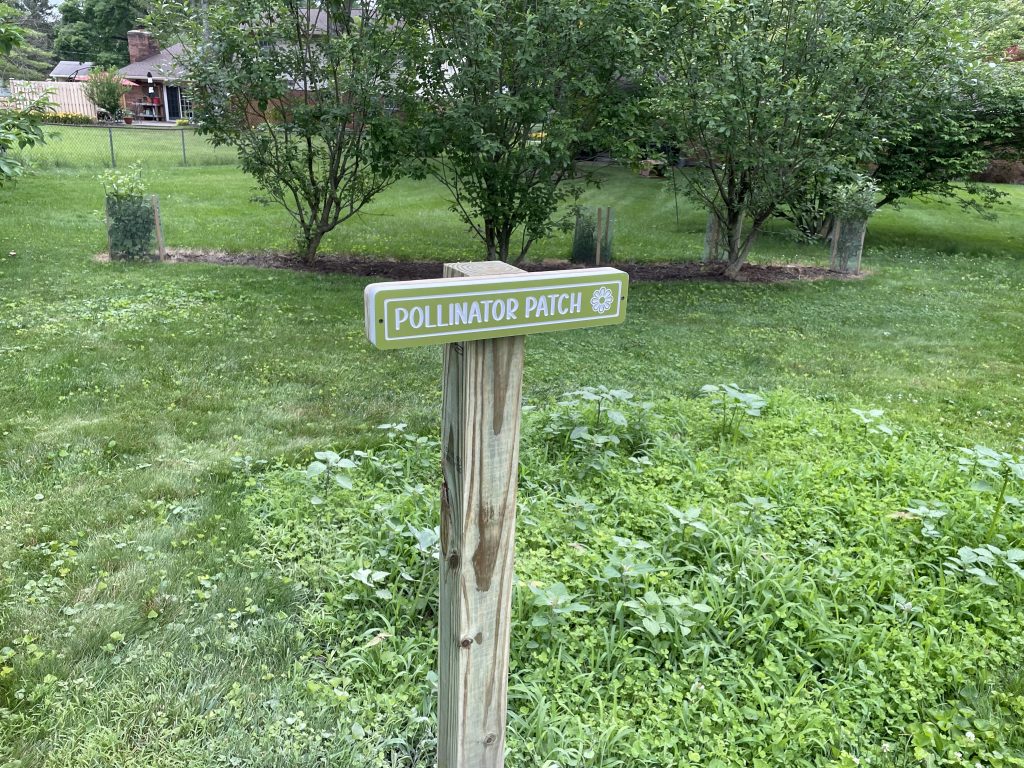
Right now it’s just a bunch of weeds, since the rabbits ate all my intentional plants before the grass filled in. But we’ll see how it goes and adjust the seed accordingly. If nothing else, the rabbits are choosing it over my cucumbers, so either way it’s a win.
For the bees!
–Simon
Sounds like a deranged schoolyard dare…or a sex game.
But no, my life isn’t that interesting. I refer instead to the forage patch.
…which now has very nicely established hops and sun chokes.

A collection of desirable weeds, which one day someone will have to till and poison to get rid of. But for now, they bring me much joy.
Choke on that!
–Simon
…can be built!
I’m growing increasingly weary of the construction quality of purchased products. It’s nothing new, of course. Every product, once popular, is imitated by other manufacturers (patents allowing). And what begins as a consumer-friendly price reduction quickly turns into marketing gimmicks to build brand loyalty, followed by a race to the bottom. The prices stabilize somewhere beneath the original price, and then once that maximum price a consumer is willing to pay for the product is determined, the profit margin can only increase by reducing manufacturing costs. Ergo, in capitalism, a good idea turns into a readily-available mediocre product that breaks much sooner than it should. And we put up with it.
But what really irks me is when I can’t even throw money at the problem and find a luxury-priced version of an item that’s actually built better – what I call the “lazy tax”. Apparently I’m an aberration to consumer spending habits, for what I want usually doesn’t even exist. And in the time I spend searching for the unicorn, I could have built it myself.
So fine! Here’s my new cucumber trellis:
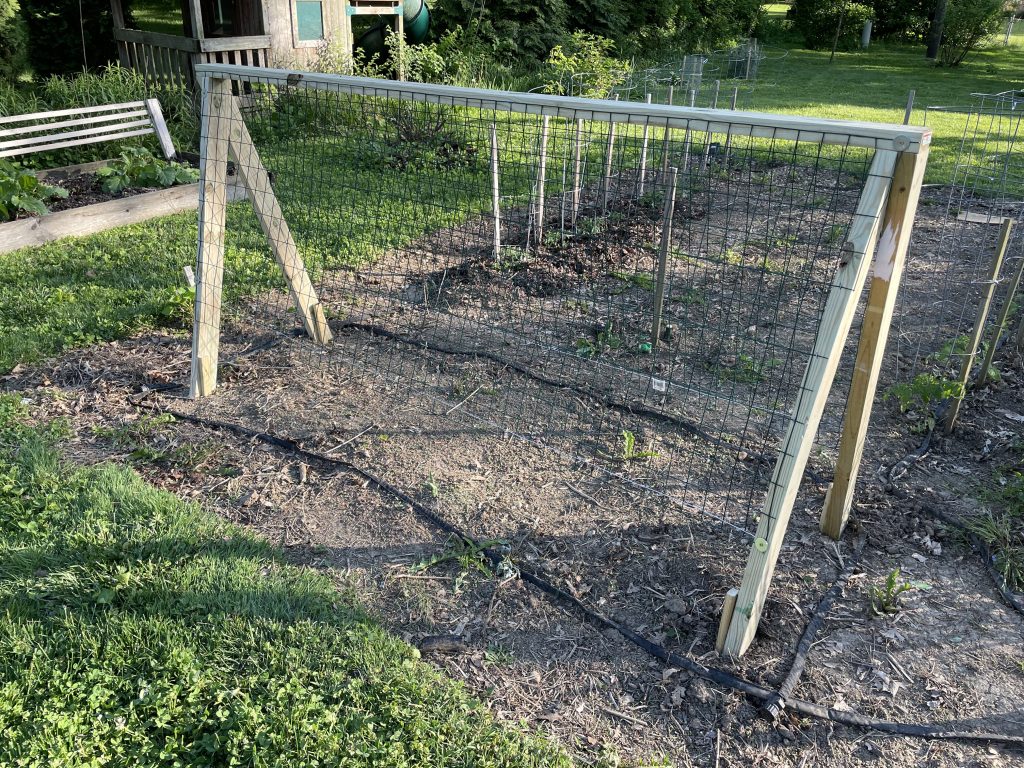
Constructed with treated lumber, PVC-coated fencing wire, and deck screws; this bad boy certainly isn’t going anywhere. Especially since it’s mounted to stakes driven 3 feet into the soil. Total price? I dunno, maybe around $40? Certainly no more than $50, considering I had some materials on hand already.
A flimsy bent wire prefab? Definitely more.
Don’t stand for this people! By all means, be lazy and spend your money. That helps the economy and drives up shareholder stock values (hopefully mine, most importantly). But don’t settle for cheapness!
Wasting your money on cheap imported good is definitely American, but so is ingenuity.
Lecture over.
–Simon