Four o’ Clocks

Being a 90s kid was no joke. If one had a mother with a propensity for drama, as I did, then prime time Television was her oyster. After the daily soaps concluded, it was off to “real” drama. There was 20/20, Unsolved Mysteries, and whatever Barbara Walters was going to indignantly talk about that evening. But Dateline was my crux.

Dateline, for the uninitiated, was an hour long show that took one news event and tried to squeeze it until tears came out. And it usually approached it with two messages: “men are evil and they will kill you”, and “your children aren’t safe and they’ll be abducted”.

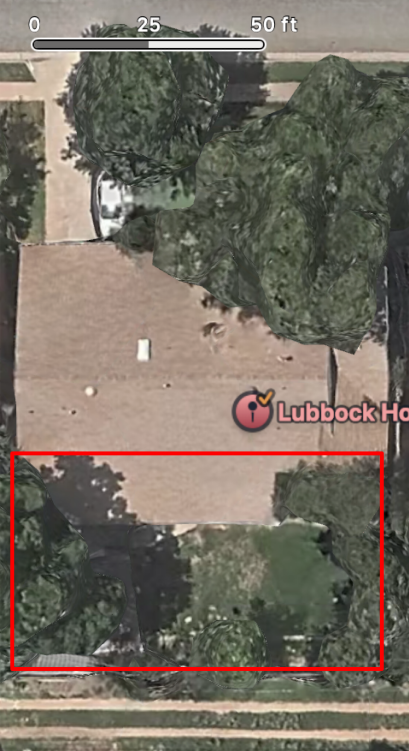
Sadly, that unmarked van filled with candy and psychoactive drugs never appeared, but that didn’t stop mother from confining me to my suburban corral: the backyard, enclosed with a privacy fence.

The red box roughly highlights the back yard section. And if the satellite distance reference is accurate, I calculate my pen to have been about 3000 sq ft. Or ~0.07 acres.

As one might imagine, the mind of a child tended to wander in such a limited environment. And as the summers of my stunted social development compounded, I withdrew entirely and accepted the yard as my entire world. I became intimately familiar with every detail of that small space.

And in that space was a small patch of annuals. Specifically, four o’ clocks.

One day, I noticed that the spent flowers, which had dried on the plant, had an pleasant earthly tea scent. Further observation also revealed that the petals crumbled easily, and effused their aroma quickly into water, specifically a mug of water left out on the concrete patio in the hot Texas sun. Furthermore, the resultant tisane tasted delicious. I had stumbled upon something.

But the experiment was cut short when mother, having taken her usual Schindler’s List perch by the full-length backyard windows, witnessed my activities and intervened. The resultant lecture was less a cautionary lesson on knowing with certainty that a plant is edible and more a morality lecture on how my selfish and careless decisions impacted other people (her). I came out of that conversation with no additional scientific knowledge, but instead sobbing and begging for forgiveness – exactly what a Catholic mother wants. The overlord of morality had won again.

Fast forward to today and I was watching Netflix. And as with any Netflix show involving food, that Danish chef guy was there talking about his amazing restaurant and how he forages ingredients. But, for the first time, I noticed a certain flower being used as a garnish. Nasturtium flowers always show up, because they’re pretty and taste peppery. But this looked different. I swear it was a four o’ clock flower. This necessitated a quick internet search.


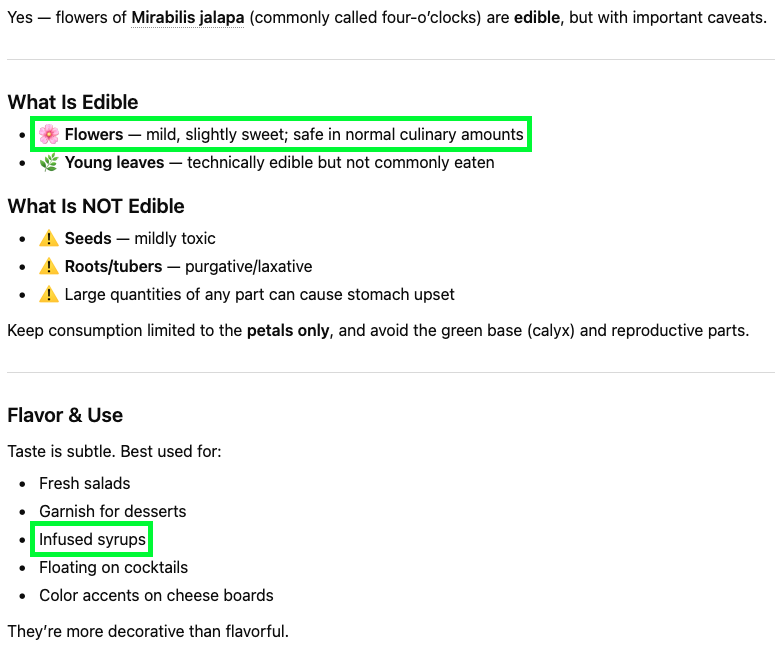
30 years later and I find out that not only are the flowers edible, but they’re specifically used in infusions: exactly what I was doing.

I get that information is much more accessible today, and that digging through encyclopedias gets tedious and that was a rabbit hole mother didn’t want to explore, but did every childhood mistake have to end with crying?

I guess she was worried that if the psychoactive drug van wasn’t showing up, I’d start randomly sampling plants to find drugs on my own. But as it turns out, my culinary curiosity led to foraging – something Netflix is now telling me is the mark of a genius chef. Who knew?

–Simon
Choke on Polysaccharides

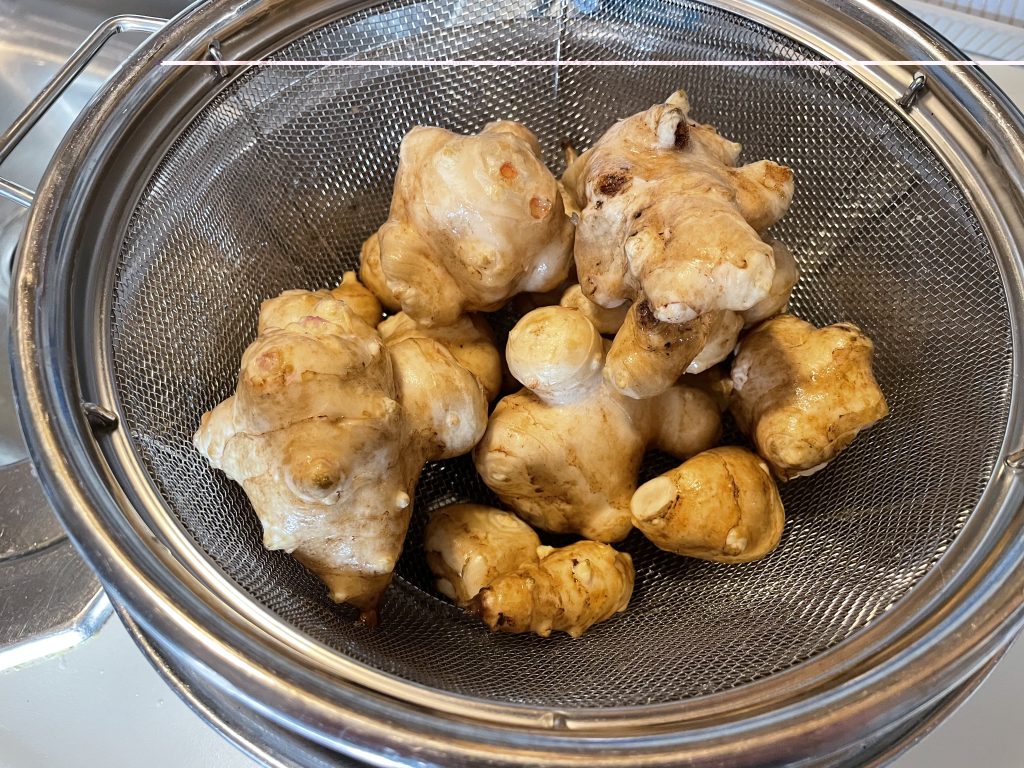
About two years back I planted sunchoke tubers in the forage patch. I caught on to the idea after reading some random gardening article during the height of the Ohio winter season and thought that they sounded like a good idea: native, low-maintenance, pretty flowers, edible tubers, perennial. What’s not to like?

They were also amusingly absent from any commercial catalog, so I had to source some from a fellow gardening nerd. They cleared postal inspection, unlike the black bean seeds my sister tried to send me, and I dutifully plopped them into the ground come early spring. A few plants grew, but I decided to wait an extra year for them to fill out before attempting a harvest.

After two years, they had spread quite nicely.

Now that the growing season is concluded, I wanted to try them. So I shoved a gardening pitchfork into the partially frozen ground at the edge of the patch and ripped up a mass. A surprisingly large mass, in fact. It would seem that they spread quickly.

Internet knowledge states that they can be cooked like potatoes. So Liz roasted them. And they were tasty – like an earthy parsnip. But, there were consequences.

Sunchokes store their energy in a carbohydrate very different from potatoes, specifically inulin – a polysaccharide. Polysaccharides cannot be digested (a notable exception being lactose, a disaccharide, though we all know isn’t a universal exception). Potatoes, on the other hand, consist of starch – also a polysaccharide, but upon cooking, breaks down into amylose and amylopectin, which are easy to digest. Inulin, however, does not fully break down into monosaccharides upon cooking, resulting in a food comprised of indigestible carbohydrates.

This leads to large amounts of food for gut bacteria, which ferment inulin into….gas! Lots and lots of gas!

So some more cooking research is needed to work around this better. Or…we eat them raw and have a juvenile fratboy-themed competition on the deck!

–Simon

Pumpkins (Part 4)

It’s been a while since I had a good pumpkin harvest, and while my yield contains pretty small specimens, ravaged by squash bugs, it’s still better that most years past.

It’s a pretty pile of fall colors, perfect to usher in the season.

–Simon

Gazpacho

This was really tasty. I had had cold soups before, but found them unsettling and unsatisfying. Soups shouldn’t be cold.

But I had cucumbers and tomatoes on hand. Why not give it a go? After all, I have Alton Brown now at my digital culinary disposal. Seemed like a good starting point. Here’s his recipe: https://www.foodnetwork.com/recipes/alton-brown/gazpacho-recipe-1937573

With some slight modifications: powdered cumin, because Liz doesn’t much care for it. And serrano peppers instead of bell, because that’s what I had. But otherwise, it’s pretty true to the recipe.

Also the portions were a tad modest, so I’d increase it in the future. But I supplemented it with garlic bread and that did the trick. Will definitely try again when I have an overabundance of summer veggies.

–Simon

Prize Tomato 2025

Every year there’s one, usually either a beefsteak or a brandywine. An early fruit, if unmolested by wildlife, will eventually become the largest of the season. Here are the winners from past years (it would not appear that I documented them all):

2017: Undefined

2019: 24.8oz

BFT

2021: 16.8oz

2023: 19.3oz

2024: 14.2oz

2019 still holds the record.

And pushing its way into 3rd place, muscling out 2021, is 2025! Yay!

2025: 17.2oz

Not epic, but categorically glorious.

–Simon