Bacon Perfected

Many moons ago, I began smoking my own bacon. Inspired by a certain blog post, I invested my time yet again into insourcing development so as to create a superior and cheaper (personal time excluded) product. I brought it in house, as MBAs say. Or do they? I’ve never heard one actually talk about doing that. They just send work to India.

I don’t think many Hindus or Buddhists eat bacon though.

As as with most instructions, this formed a foundational starting point, but they can always be improved upon. And thus, after several attempts, I present my enhanced version. Here it is:

  1. Acquire uncured pork belly.
  2. Mix brine. Use a 2:1 ratio of a standard Kosher salt brine and Morton’s Tender Quick. Here’s the measurements that will provide 3/4 gallon’s worth of brine, which should be sufficient: 1/4 cup Kosher salt, 1/4 cup brown sugar, 1 cup Tender Quick, 12 cups water.
  3. Optional: add herbs/spices (peppercorn, garlic, whatever).
  4. Submerge pork belly in brine (FoodSaver bags are mighty convenient).
  5. 7 days later, on the 7th day itself, remove pork belly from brine and rinse. Air dry (a box fan is helpful here).
  6. Preheat smoker to 200 degrees F with hickory/pecan wood mix.
  7. Smoke pork belly until it reaches an internal temperature of 165 F.

After that, just cool the meat. An hour in a deep freeze will firm it up for slicing. Then it’s just bagging, sealing, and freezing for long term storage.

Where have I deviated? Well, for starters, using a mix of standard salt and curing salt reduces the sodium nitrate content. Ignoring health concerns (because this is bacon, after all), this reduces the perceived saltiness while still retaining that nice pink bacon color. Reducing the curing time by half a day also reduces the saltiness, as does rinsing the meat pre-smoke. Trust me – it’s still salty. But it’s much easier to skip the rinse for a saltier taste if desired than it is to try to soak the salt out when using the longer brining times/higher sodium nitrate amounts for a less salty taste later. And finally, at 160 F, meat will hit its stall point in the smoker where water begins to quickly evaporate out. Going to 165 F will ensure a drier product; which means less cooking time, less splattering while cooking, and crispier edges.

I also estimated some savings. Compared to premium market bacon, which is what this is, it’s about half the cost per slice. But I can also control the salt level and flavor. It’s an aggravating endeavor, but also one that can be significantly weighed against the convenience of store-bought bacon uncertainty!

–Simon

The Decline of Restaurants: An Anecdotal Observation

[Note to self: add this to the Quantitative Philosophy Index when it posts]

Remember those times when eating at restaurants was fun? I had attributed this to a combination of not having to eat mom’s boiled vegetables and not possessing any financial knowledge of a restaurant’s expense. Childhood, in essence, was the best time to eat out at restaurants.

But now, it’s usually disappointing. And there are so many more dining options out there than what was available to me as a kid! There has to be more to it.

So I sat down and compiled an arbitrary list. Here goes:

Given that the experience quality is defined by 5 operators:

  1. (A) Base cost of restaurant food
  2. (B) How much I’m expected to tip
  3. (C) How good I am at cooking
  4. (D) Novelty of eating at a restaurant
  5. (E) Perceived quality of restaurant food

Then:

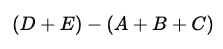
D+E-(A+B+C) = Quality of the experience.

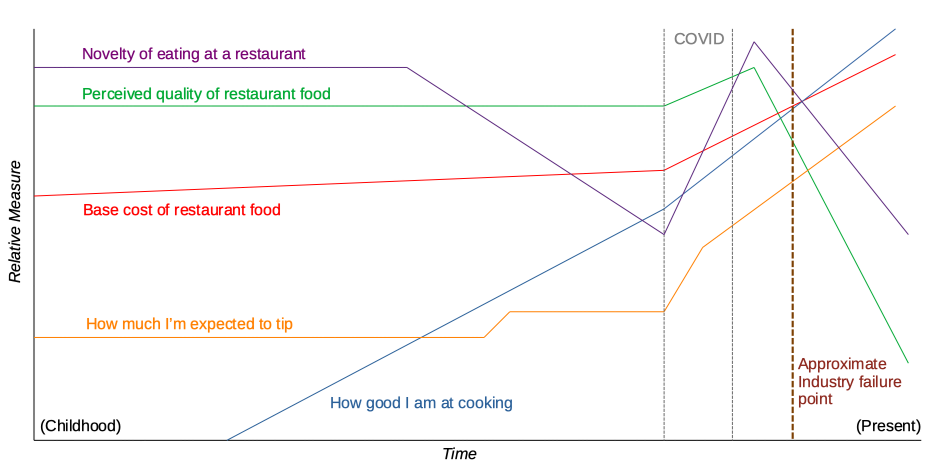
As these are mostly relative measures, attempts at quantification prove difficult. This approach also fails to represent why restaurants were fun before but suck now. No – a timeline representation is needed for this one:

Now I’ll point out some observations having thought back through this timeline:

  • The novelty of eating at a restaurant started high as a child, then declined as an adult as I could make the personal choice any time I wanted. This trend continued until COVID lockdowns, when the option was taken away, peaking after places began to reopen, following a drop to prior levels.
  • The perceived quality of restaurant food again started high as a child, generally maintained its allure through adulthood, seemed even better when it was less available during lockdowns, then drastically collapsed thereafter, following the industry’s maladaption to post-COVID labor costs and all that it impacts along the way. American businesses never cut profits, so restaurants instead turned to lower quality ingredients and even less-skilled labor.
  • Also, to further counter rising business costs, restaurants raised prices, and very quickly indeed.
  • Then, restaurants and the dining culture turned to collective guilt and overhauled tipping expectations. The tip itself, based on a percent of the meal’s cost, shouldn’t change if the base meal’s cost is increasing to offset overhead. In theory, the workers would see a proportional increase in their compensation as a result. Yet now we’re expected to give them a greater percentage, out of our own pockets. I don’t need guilt added to my dining experience, nor an additional expense to further raise the final expected cost.
  • And all this might be tolerable if I didn’t know how to cook. But I do, and my standards are often higher.

That said, here’s a final observation to further drive home the point: All of these dynamic variables chronologically, mostly, intersected a couple years back, which I’ve visually represented as the “Approximate industry failure point”. This was the moment at which dining out became almost entirely non-viable for me.

Everyone will have their own version of the graph, and perhaps restaurants still make sense to some people. But unless either the quality and novelty of fine dining drastically increase, or costs go way down, I don’t see this industry as a cost-effective source of entertainment for the foreseeable future.

–Simon

Gazpacho

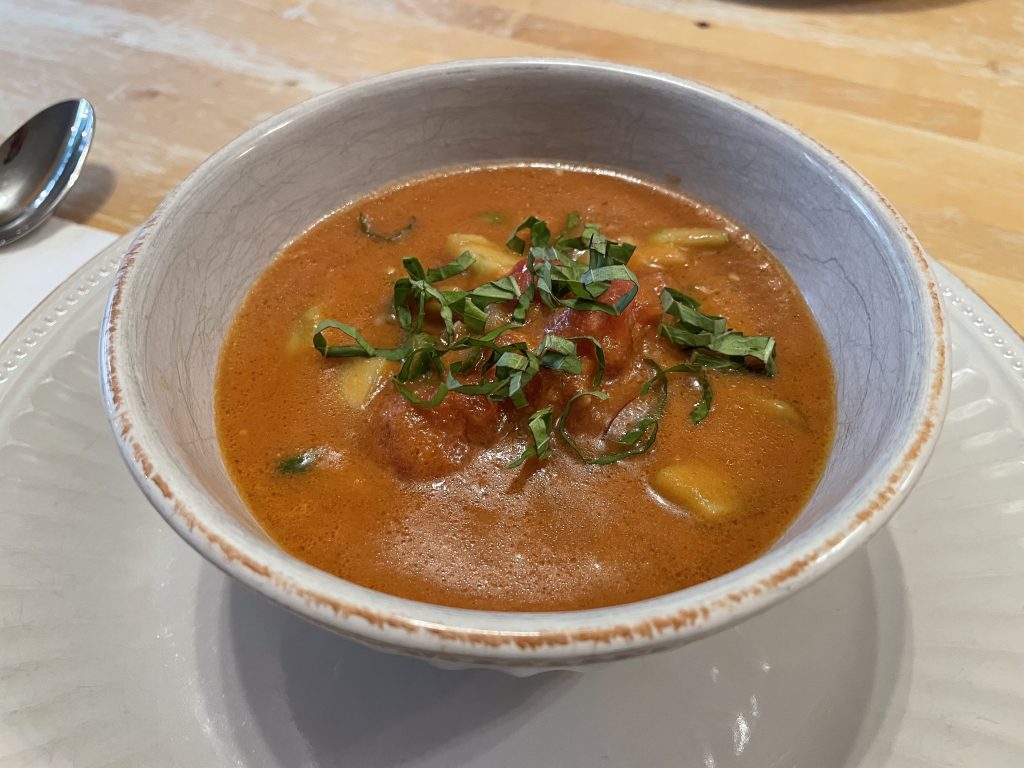
This was really tasty. I had had cold soups before, but found them unsettling and unsatisfying. Soups shouldn’t be cold.

But I had cucumbers and tomatoes on hand. Why not give it a go? After all, I have Alton Brown now at my digital culinary disposal. Seemed like a good starting point. Here’s his recipe: https://www.foodnetwork.com/recipes/alton-brown/gazpacho-recipe-1937573

With some slight modifications: powdered cumin, because Liz doesn’t much care for it. And serrano peppers instead of bell, because that’s what I had. But otherwise, it’s pretty true to the recipe.

Also the portions were a tad modest, so I’d increase it in the future. But I supplemented it with garlic bread and that did the trick. Will definitely try again when I have an overabundance of summer veggies.

–Simon

Refrigerator Pickles: AKA, We Can Pickle That!

What do second stage ethanol fermentation and metabolic detoxification have in common?

Vinegar! Acetic acid. Good for excreting into the toilet and preserving produce. Except probably don’t use urine for the produce part. Too many other things in that for a good pickling medium.

Fortunately, it’s easier to just buy vinegar than to rely on the above in-home methods of production. And much easier than attempting the lactic acid route (though I’ll totally try that one day). But for now, it’s refrigerator pickles, sans-Orléan method. Standard grocery store vinegar for this one. Here’s the recipe I used:

  • 1 cup water
  • 1 1/3 cup white vinegar
  • 1/3 cup granulated sugar
  • 2 Tbsp. kosher salt

Seems a tad sweet, but I’ll give it a week to settle and adjust accordingly.

We have cucumbers (there’s an abundance from the garden right now and the kid wanted to make some after learning about it at summer camp), serrano peppers, and red onions. So far, the red onions are pretty good. One of the most ridiculously up-charged items to buy, by the way. More street tacos in the future!

We can, indeed pickle that.

–Simon