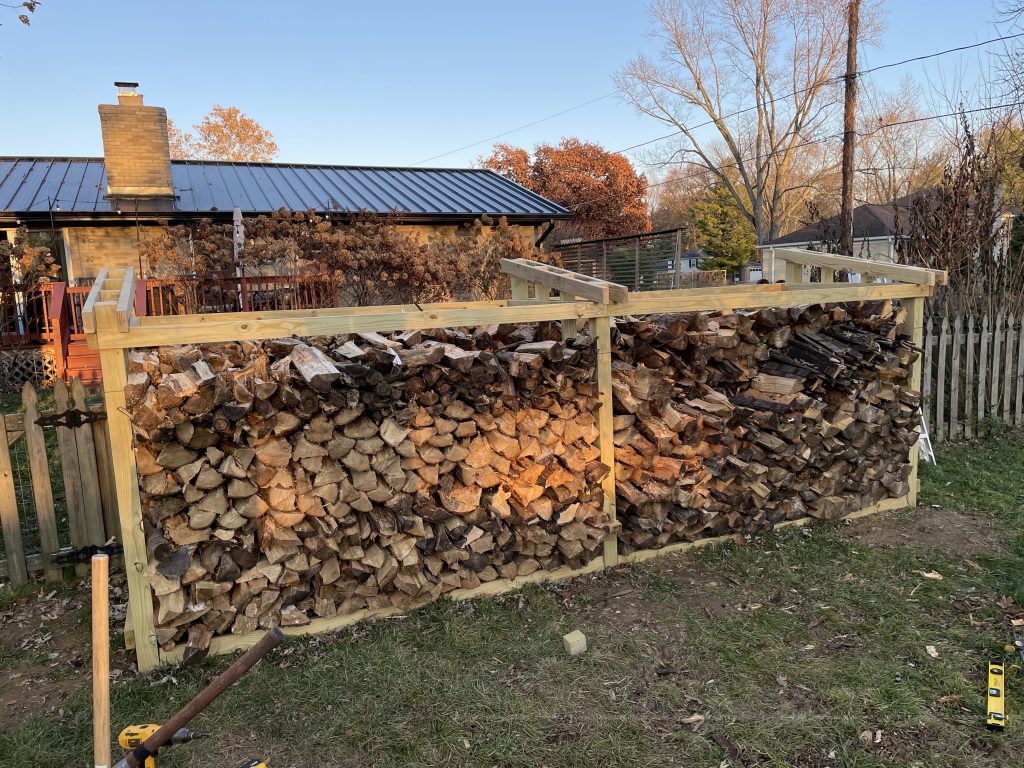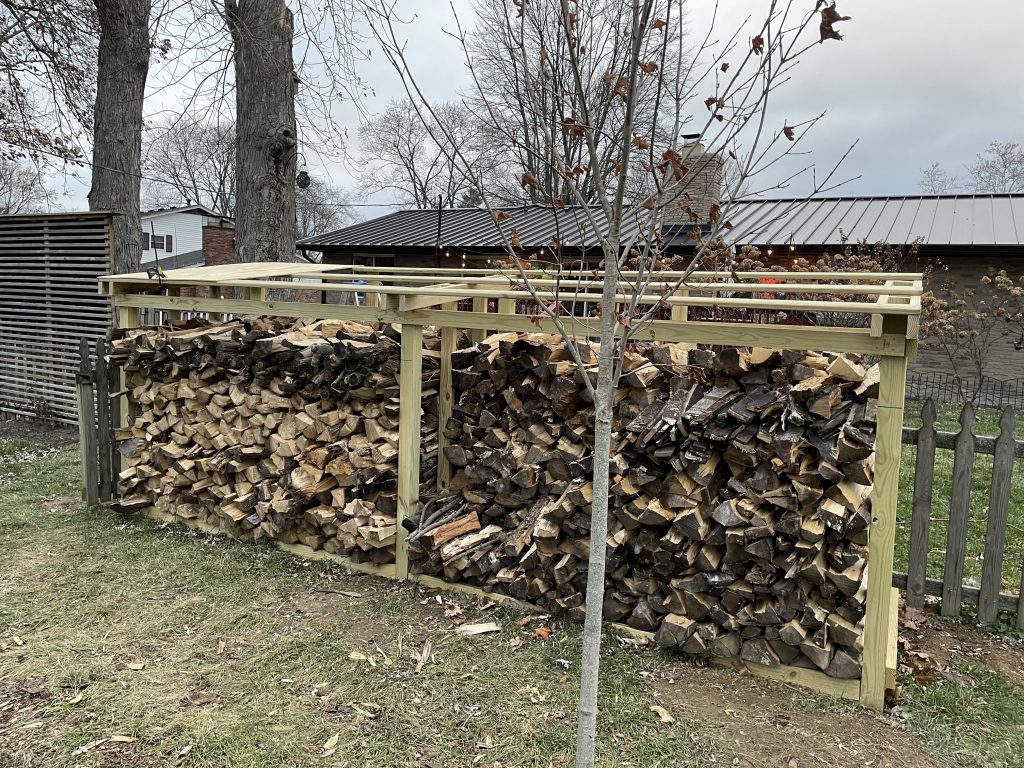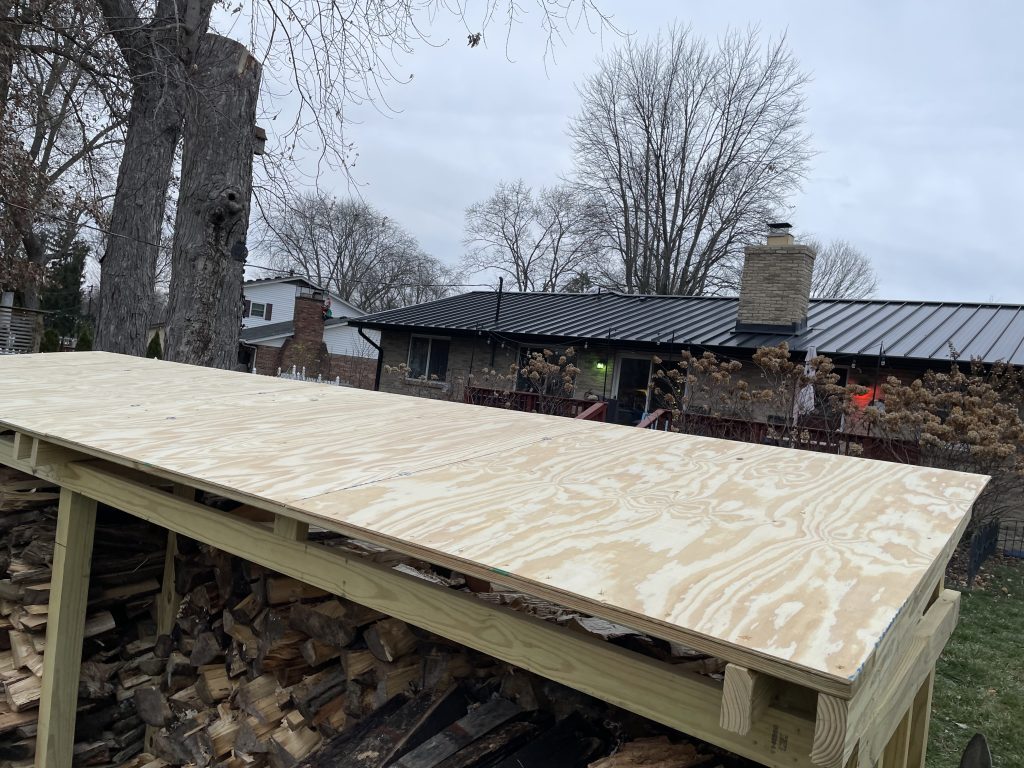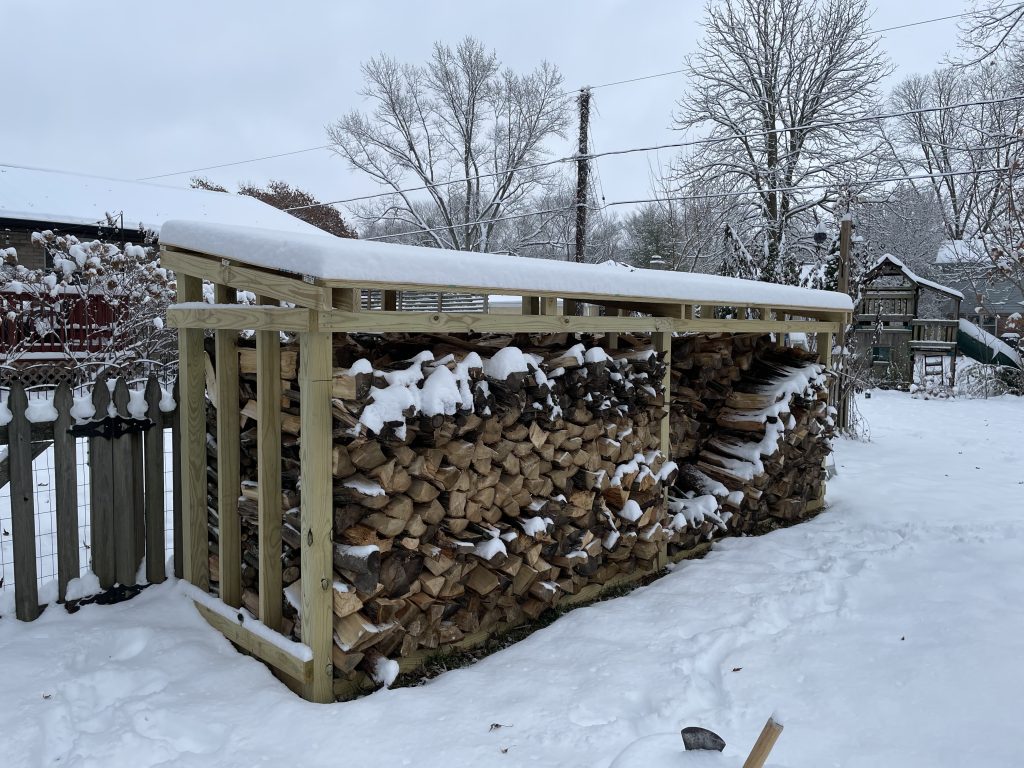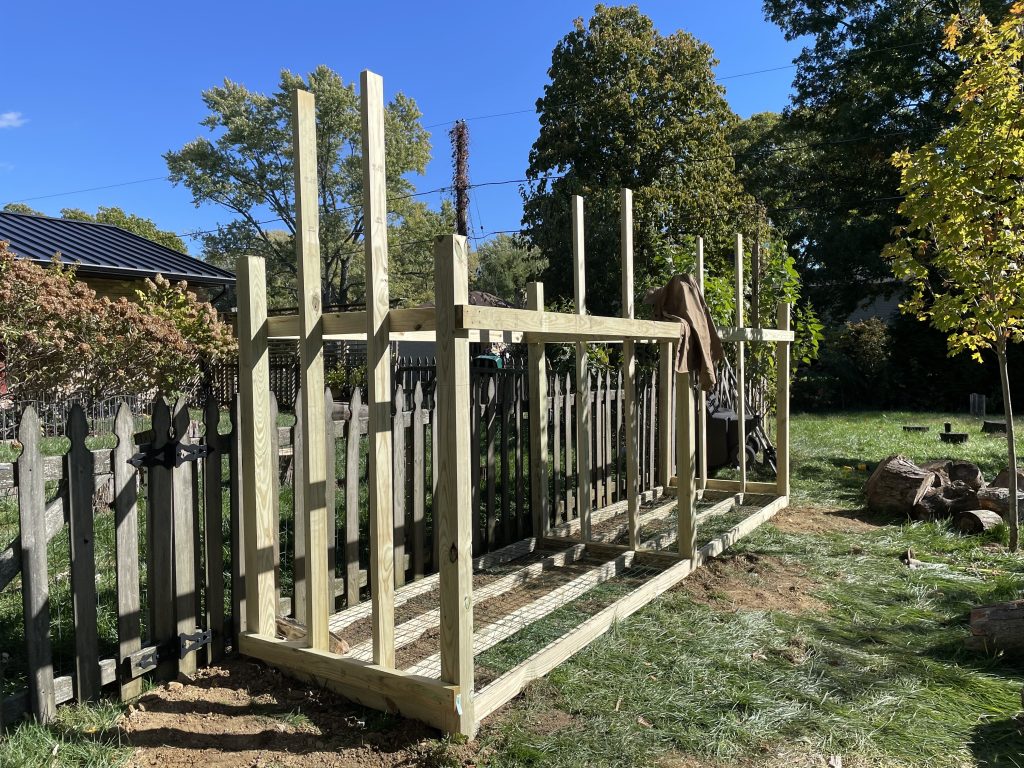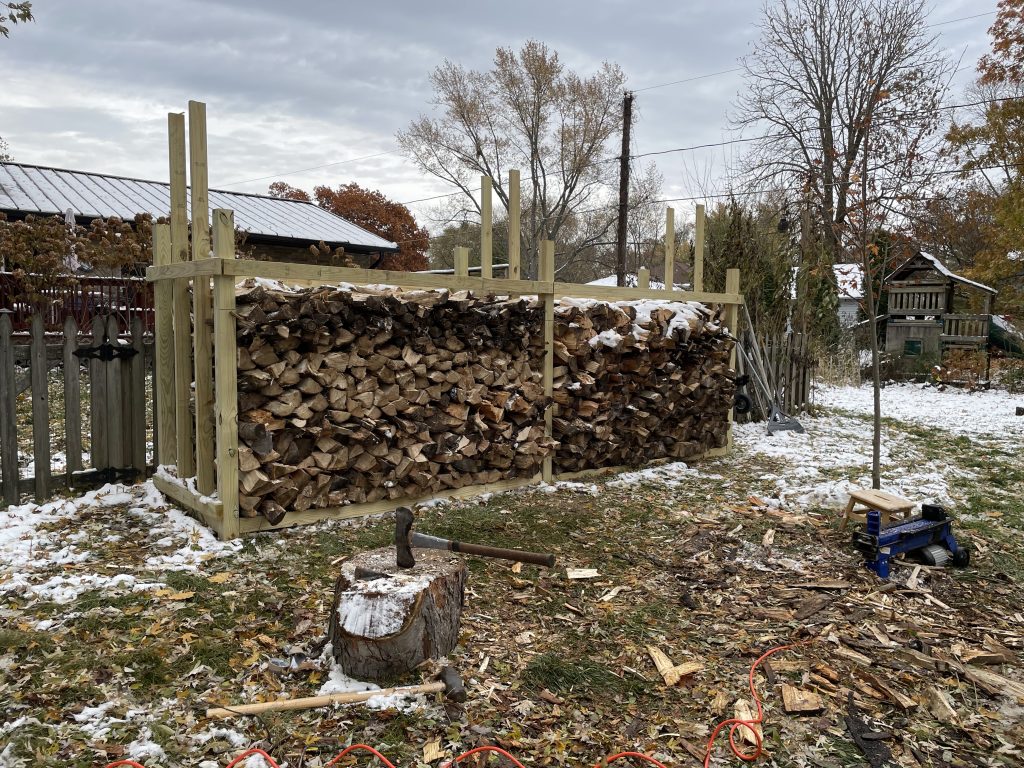
At last, with the holiday break, I was able to revisit the firewood holder. The warping OSB was concerning, but ultimately proved not to be an issue once I started attaching the metal. First though, I had to measure and cut it.
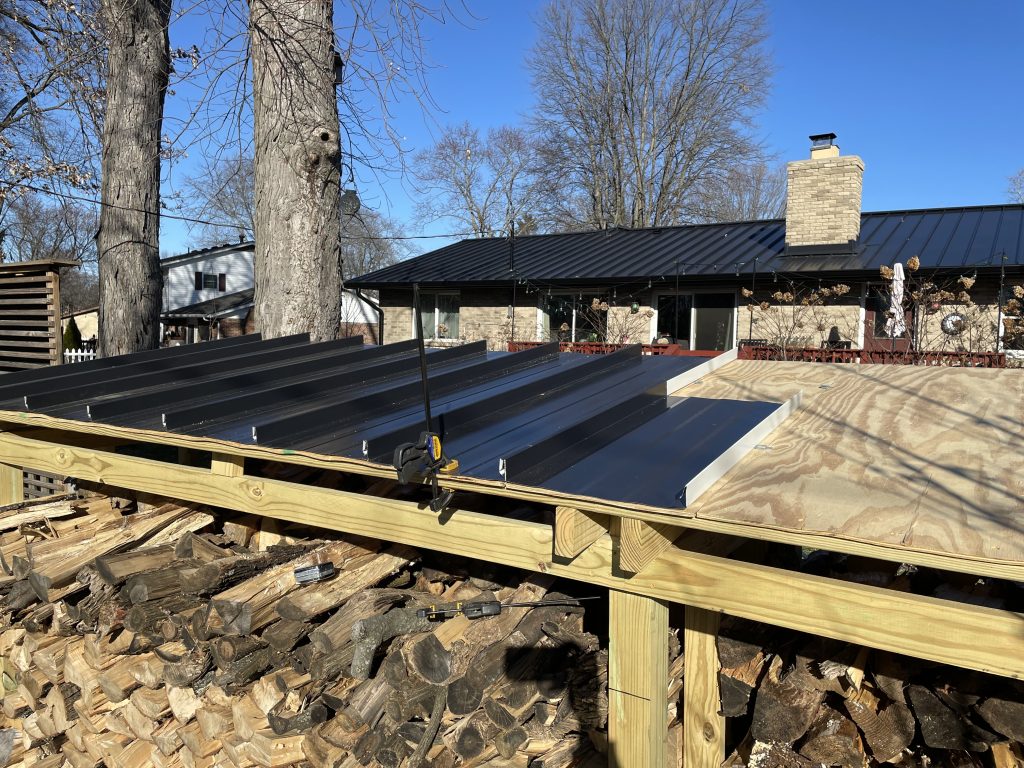
Sawing through metal paneling such as this was a new experience. It was too tough for any of my originally-planned methods, but with some protective gear and strong nerve on my part, the miter saw ended up suitable for the job. The screeching of metal on metal was horrendous, and the saw’s reach was insufficient, forcing me to make multiple cuts on each section. And no doubt the blade’s completely shot now and I’ll need to replace it. But, it did eventually work.
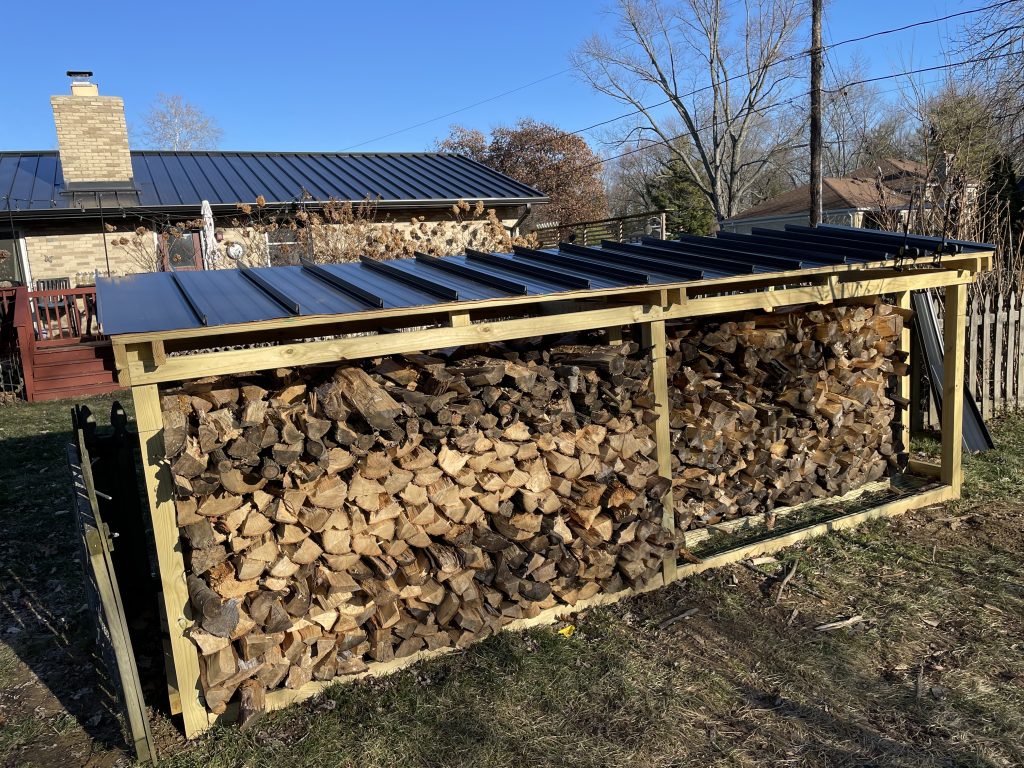
And by good fortune, full panel width almost lined up, with just a couple inches of overlap, so I didn’t have to attempt a longitudinal cut. Sometimes, I do luck out.
But as these were not full panels, they lacked the undercurve. They’re designed to hook under the eaves so no hardware is exposed skyward, but as I didn’t have 15 full panels to work with, that wasn’t an option and I had to screw them directly in. I wasn’t concerned. It is just a wood pile. Even if they leak over time, it’s a non-issue.
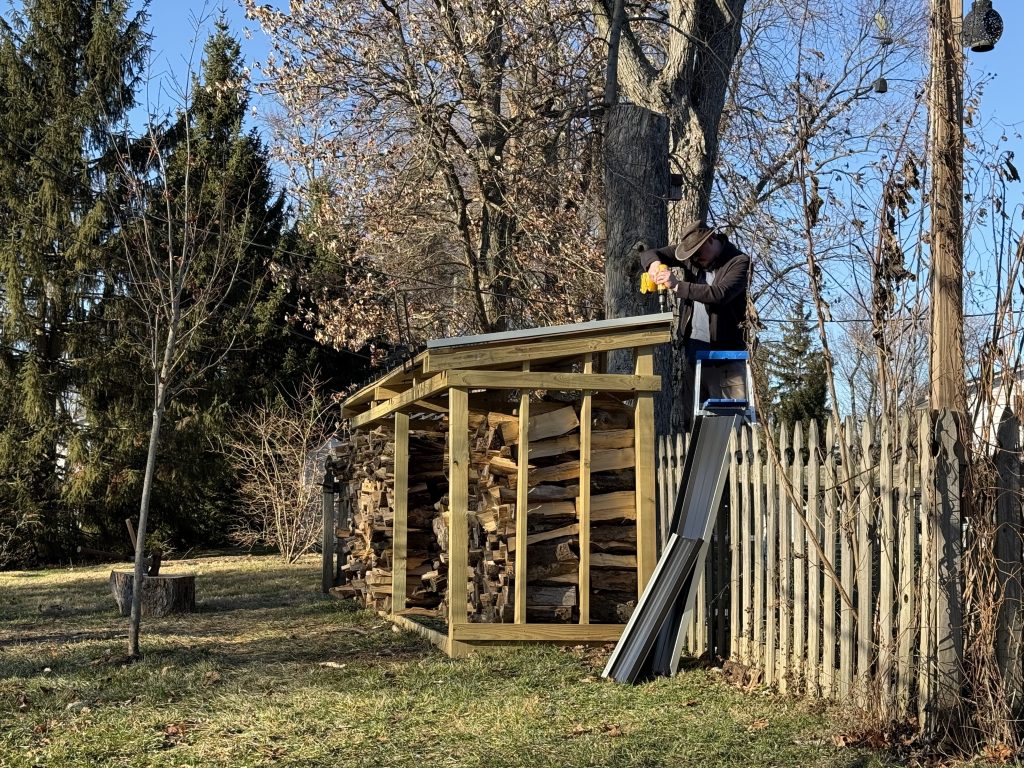
However, I did still use proper roofing screws – the ones with that synthetic washer that self-seal.
First though, I slid a drip guard under the downward edge, more for aesthetics than concern of water infiltration. I mean, I didn’t install felt or insulation between the metal and wood. I draw the line at overkill somewhere. But either way, it’s an improvement.
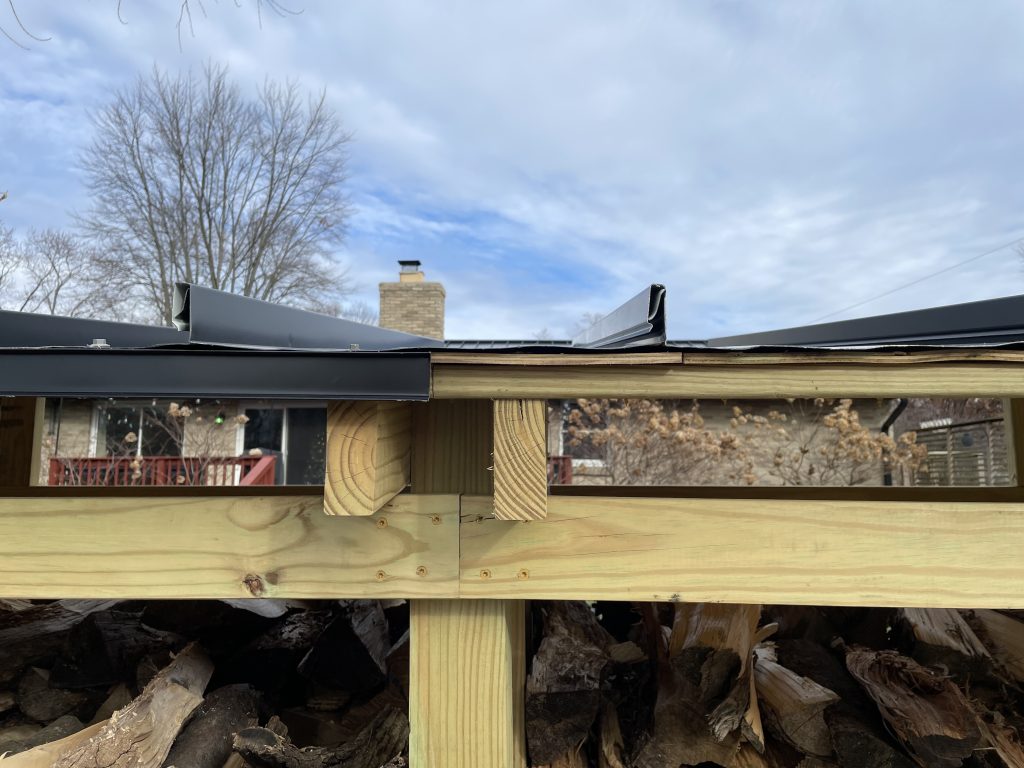
Then I added flashing at the peak, this time because I was concerned with water.
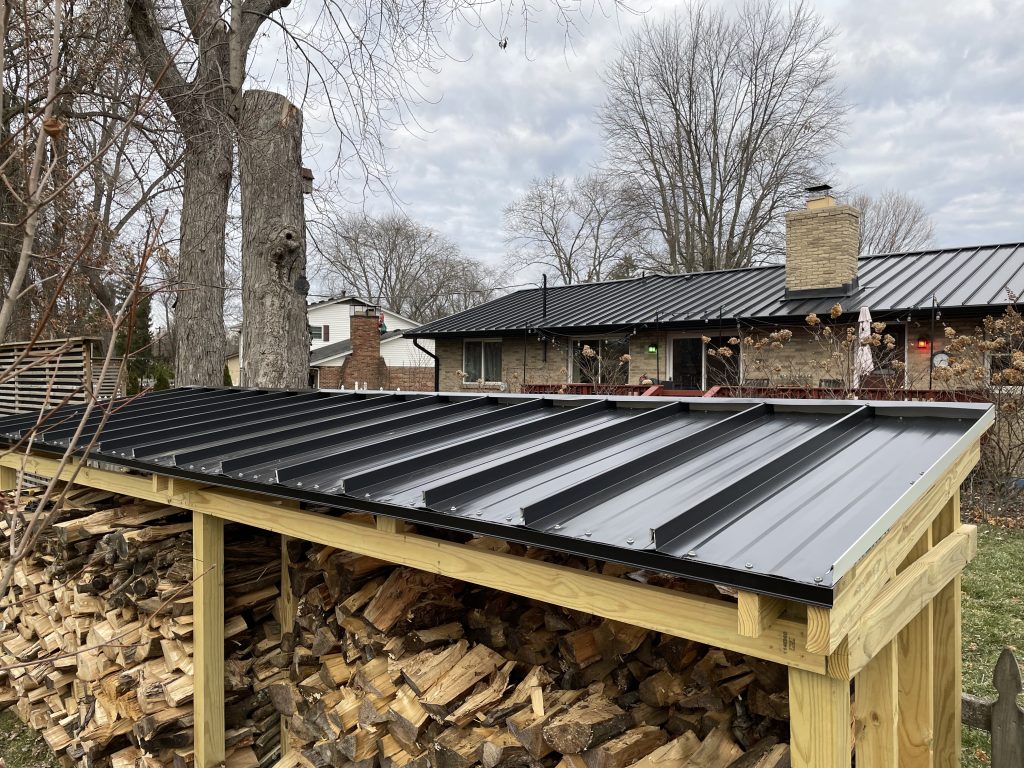
And lastly, I spray-painted all the metal parts that weren’t black, to make a nice purdy finish.
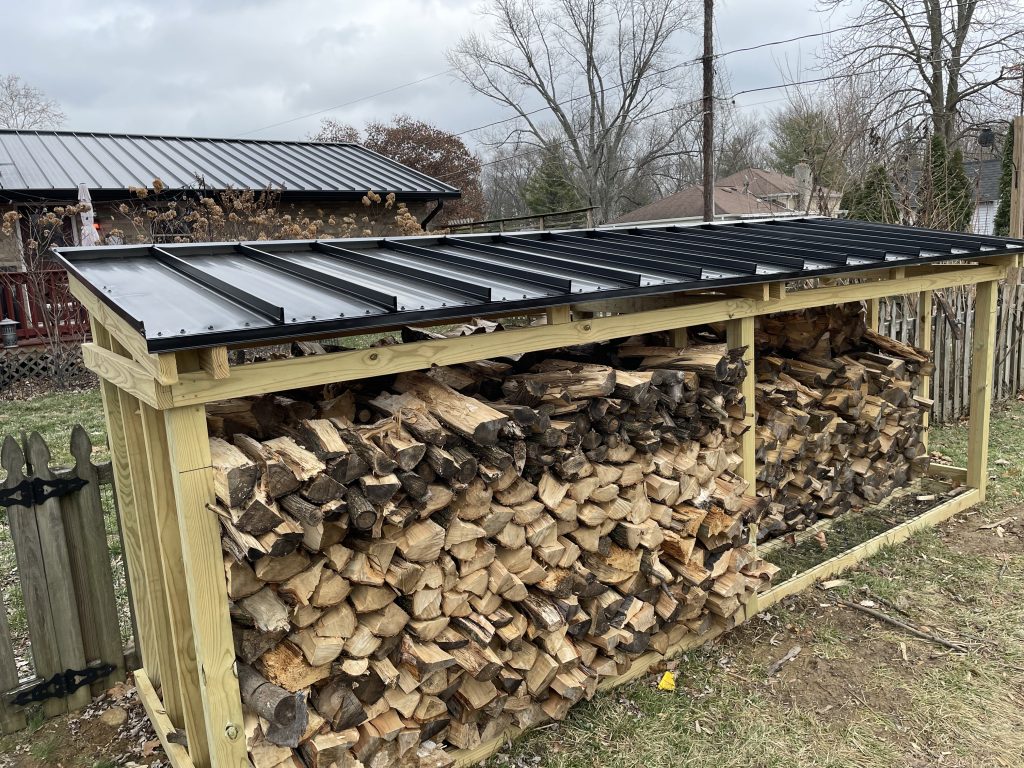
I have yet to see anyone else in the neighborhood with a custom-built firewood holder in their backyard, or a metal roof on their house – much less a custom-built firewood holder with a matching metal roof. I guess normal people spend their time and money elsewhere.
But I’m not a normal person, and I have an awesome firewood holder now. Ten years in the backlog and two months in the making. At last!
–Simon