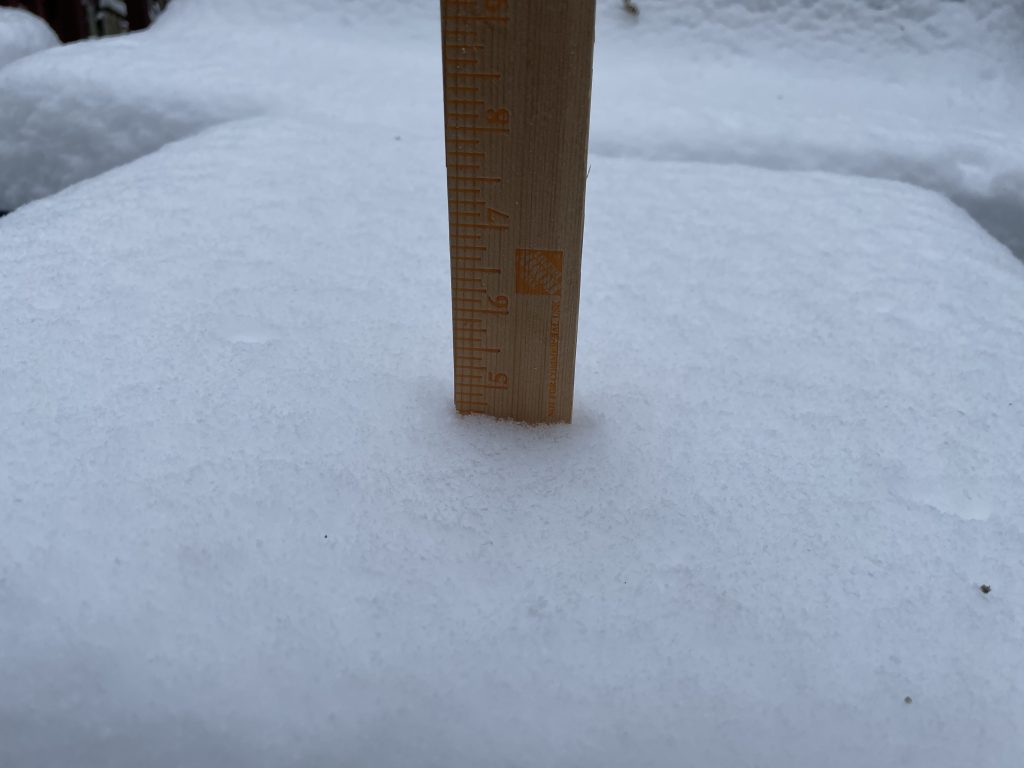
Ah yes – more snow! The Spanish water demons are upon us some more!
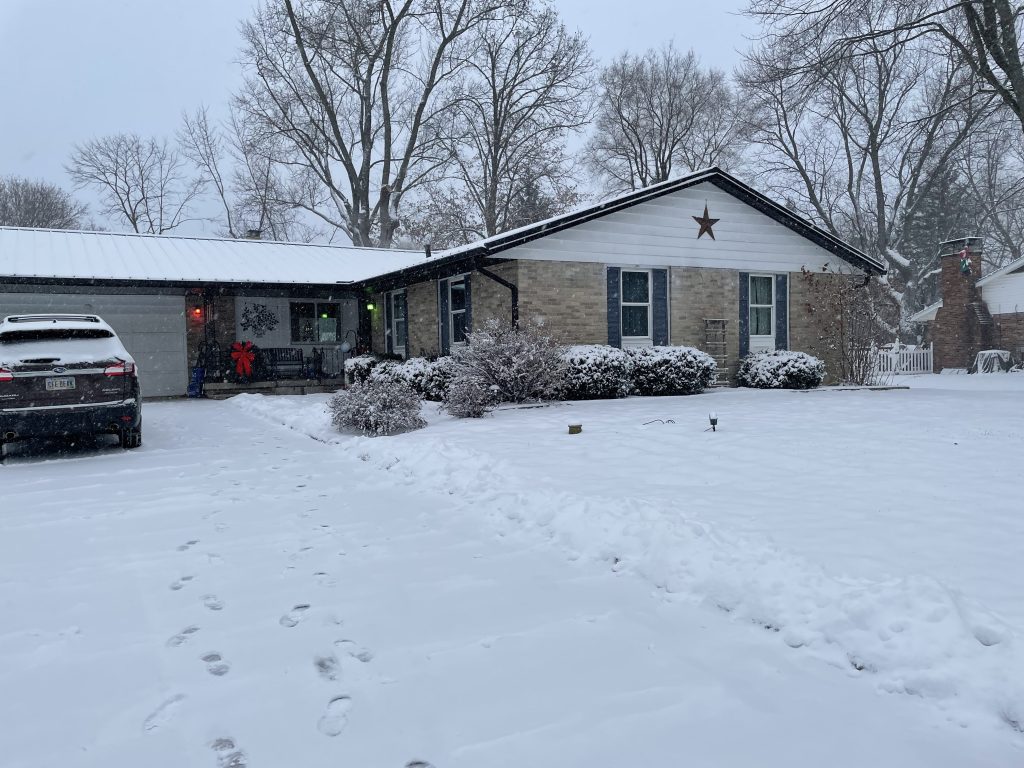
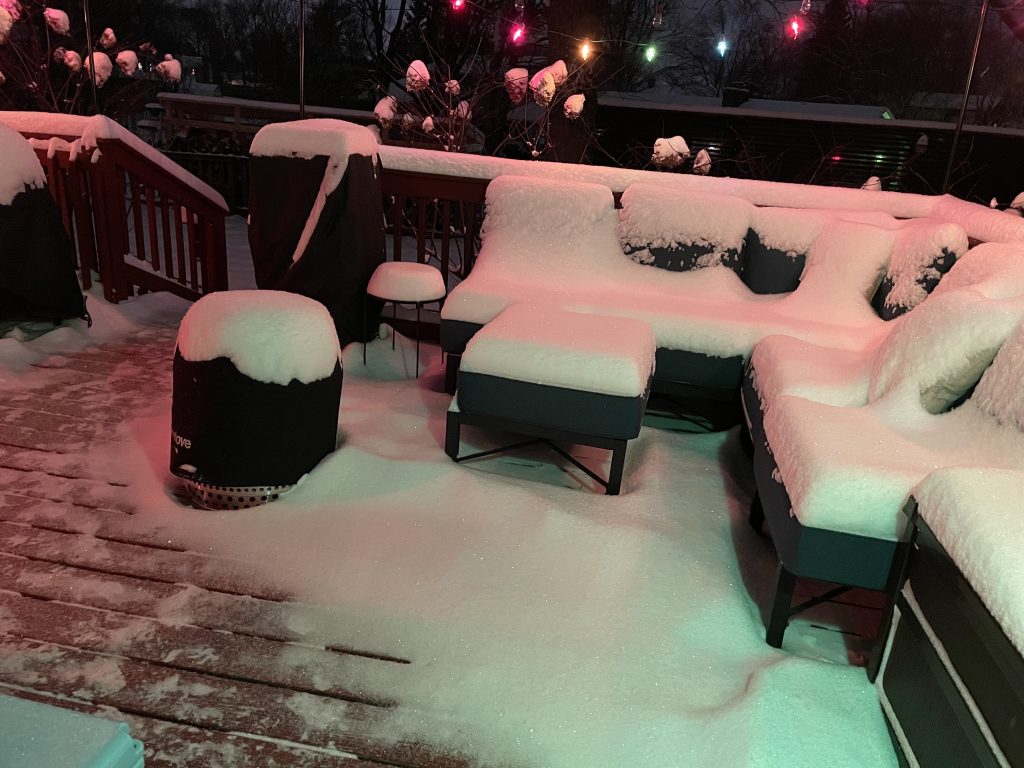
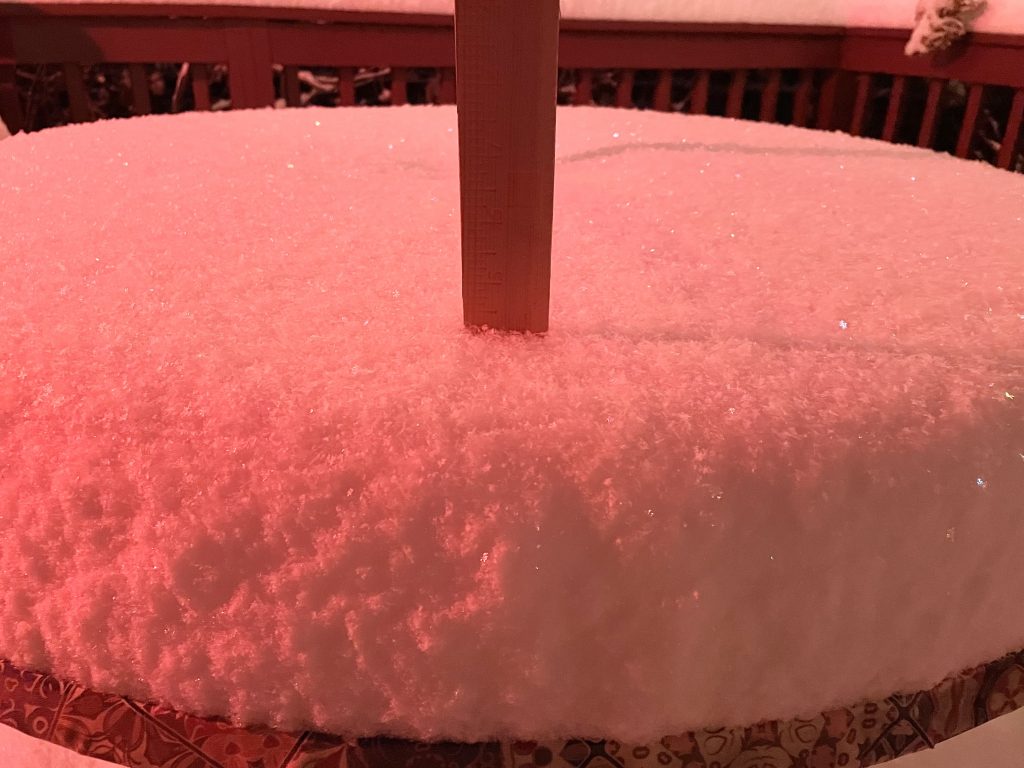
Plus a cool winter arcus.
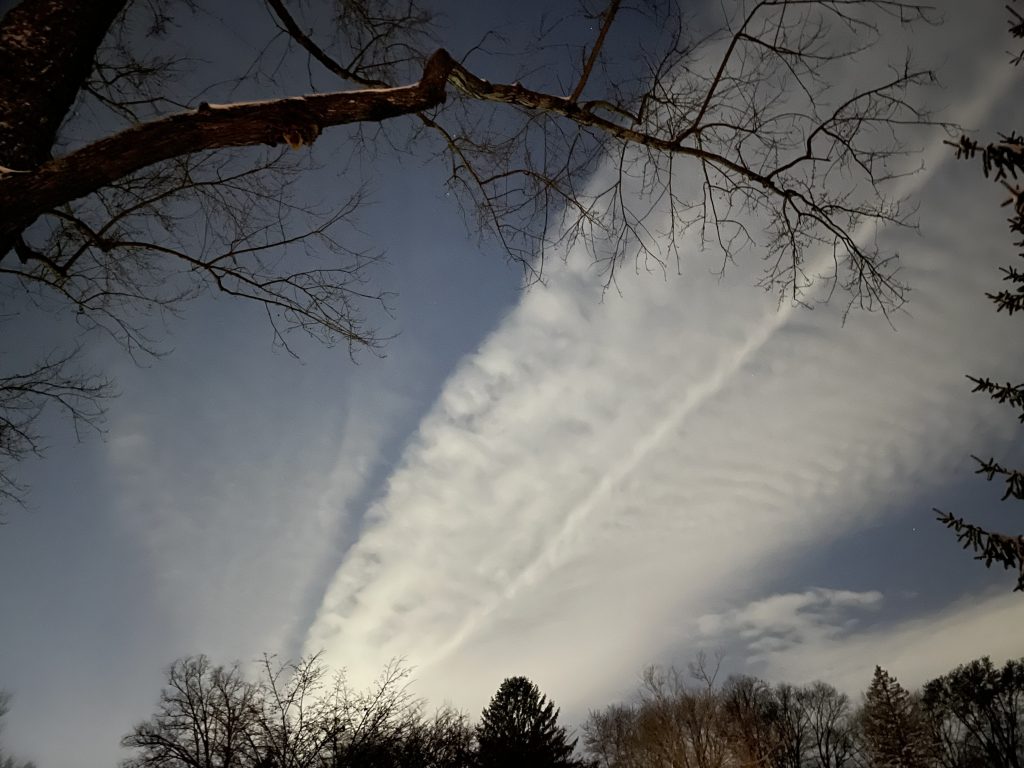
–Simon
Tales from Easement Acres
Ah yes – more snow! The Spanish water demons are upon us some more!
Plus a cool winter arcus.
–Simon
A weeknight wound down. I was drifting into pleasant unconsciousness, in an uncharacteristic moment of mental serenity. The mind was not stressing over the next day’s hellscape, nor the kid’s academic performance, nor whatever unfortunate event would drain my finances next before I had sufficient time to replenish them. Liz sensed this, and mentioned, in such a casual tone, that oh yeah! – something’s leaking in the basement.
To date, here’s what’s leaked in the basement:
Each of these resulted in varying degrees of water damage. Ergo, to determine the level of severity and therefore the immediacy of action required, I asked some pointed questions, such as: “Where?” and “What?”. To which I received vague and somewhat unconcerned answers.
All right then, everyone out of bed! Trifle not with leaks.
Of course, nothing at that moment was leaking, so I performed a cursory inspection of the usual suspects. The aquarium was being good, and I’m happy to say that my kitchen sink plumbing repair was still in working order. So, I started turning on faucets.
Eventually, a small drip appeared in the laundry room. Following the path of gravity, which is generally straightforward, I was led here:
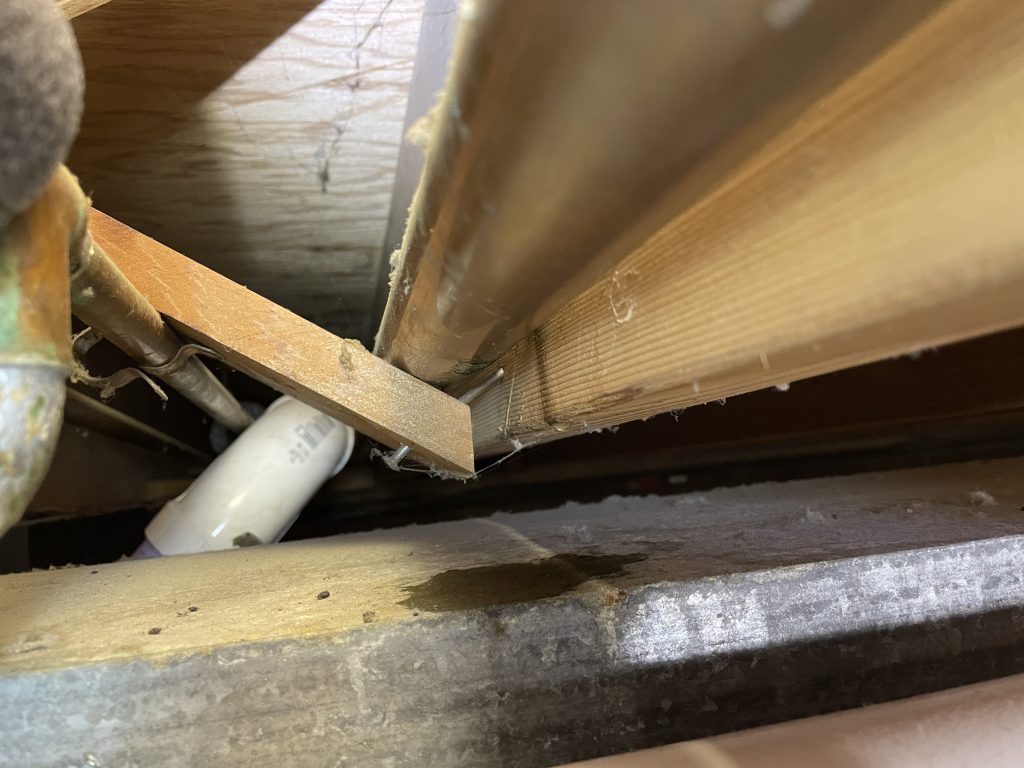
This was the copper drain line from the kitchen sink. At least it was unpressurized gray-water. But why would it start leaking now? The answer, as you might guess, was once again attributed to some dumbass thing a prior homeowner must have done.
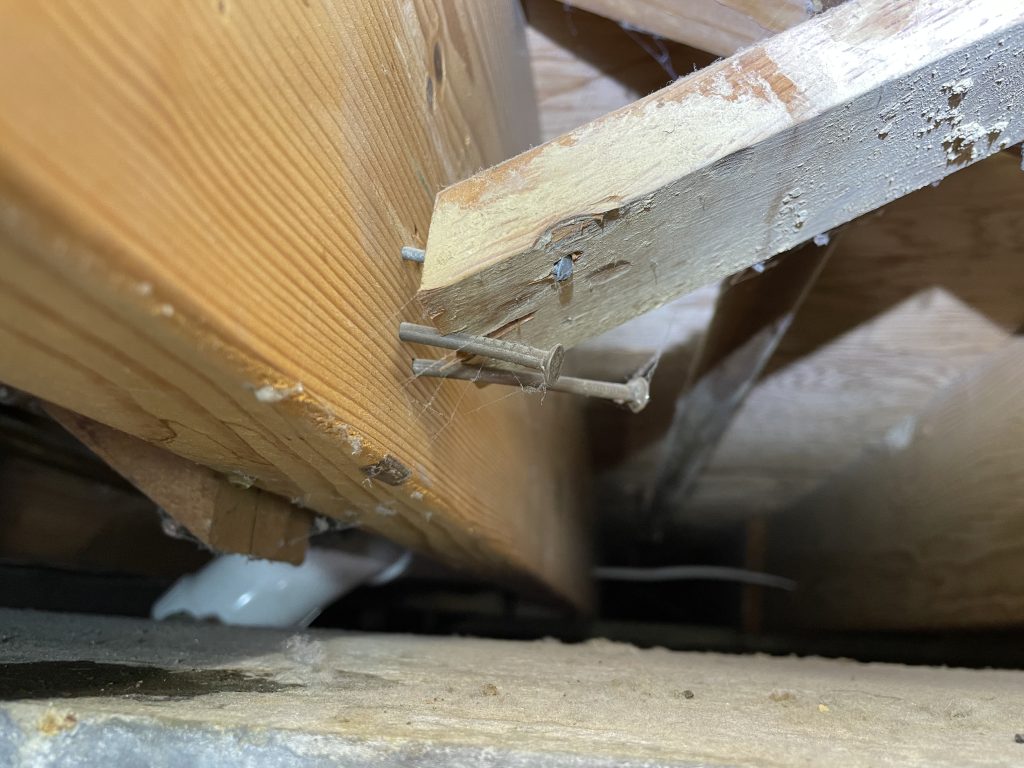
This cross-beam joist support had apparently become detached, and someone partially hammered in extra nails to keep it from falling – not that it was doing anything at that point anyway. If there’s no lateral pressure from the joists, then it serves no function and should have just been pulled down when it separated. Instead, a barbarian with a hammer decided upon a more violent approach. Which led to…
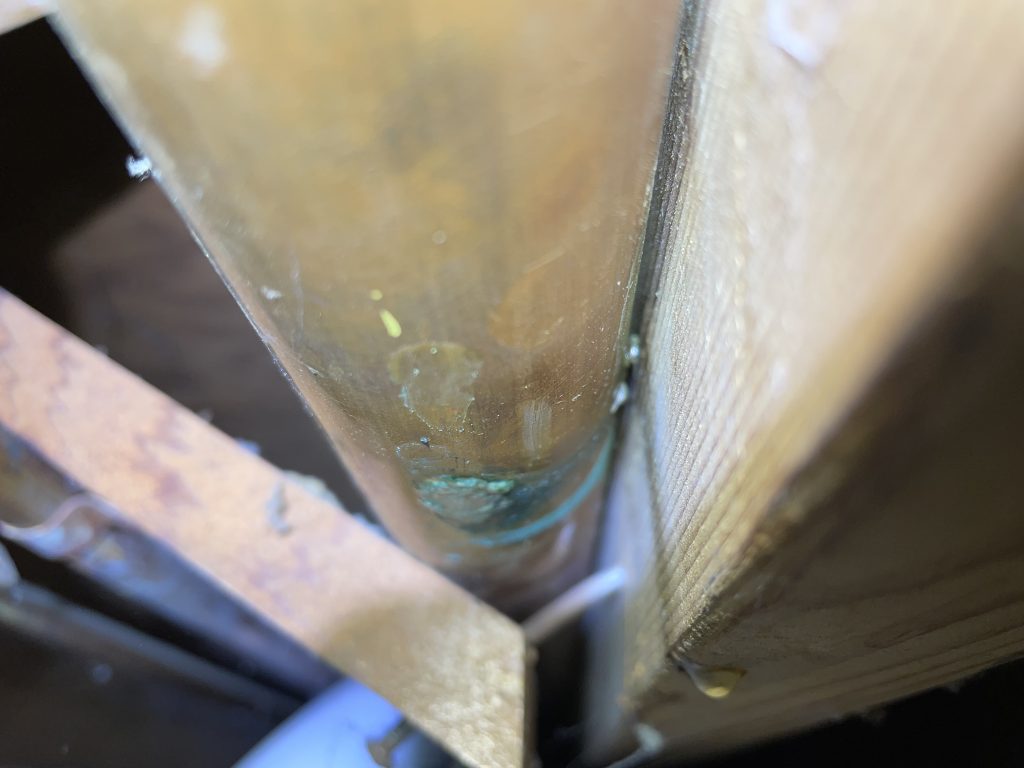
…a punctured pipe.
I’m guessing that the only reason we’re seeing the leak now is that the nails had previously corroded to form a seal, but have now eventually corroded to the point where that seal is broken. I think I’ll pull the nails out and attach a rubber seal with a hose clamp, since there’s really no way to access the pipe for soldering without total disassembly. Then maybe someone else will complain about my own haphazard repair, but that will be minor in comparison to this boneheaded lack of attention to detail.
And maybe, this type of matter might be brought to my attention during waking hours in the future. Hmmmm……?
–Simon
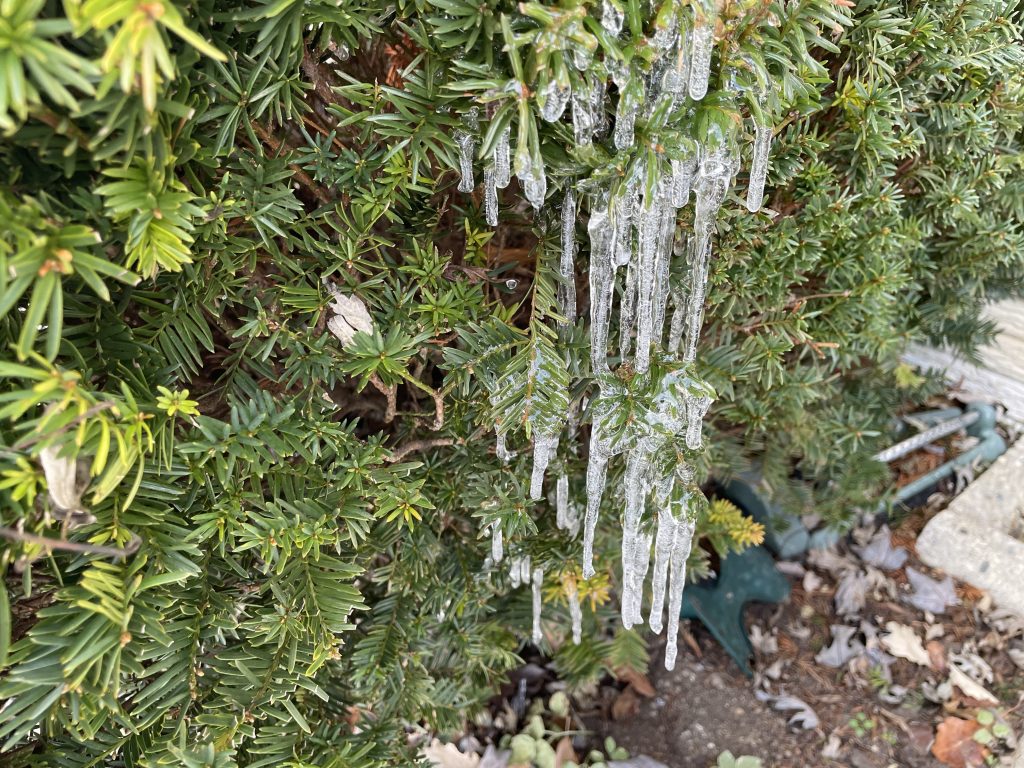
El Niño, La Niña – one of these. A wet winter was predicted, and so it has been! Trifle not with the apparently Spanish sea gods. Here’s the second big one of the season:

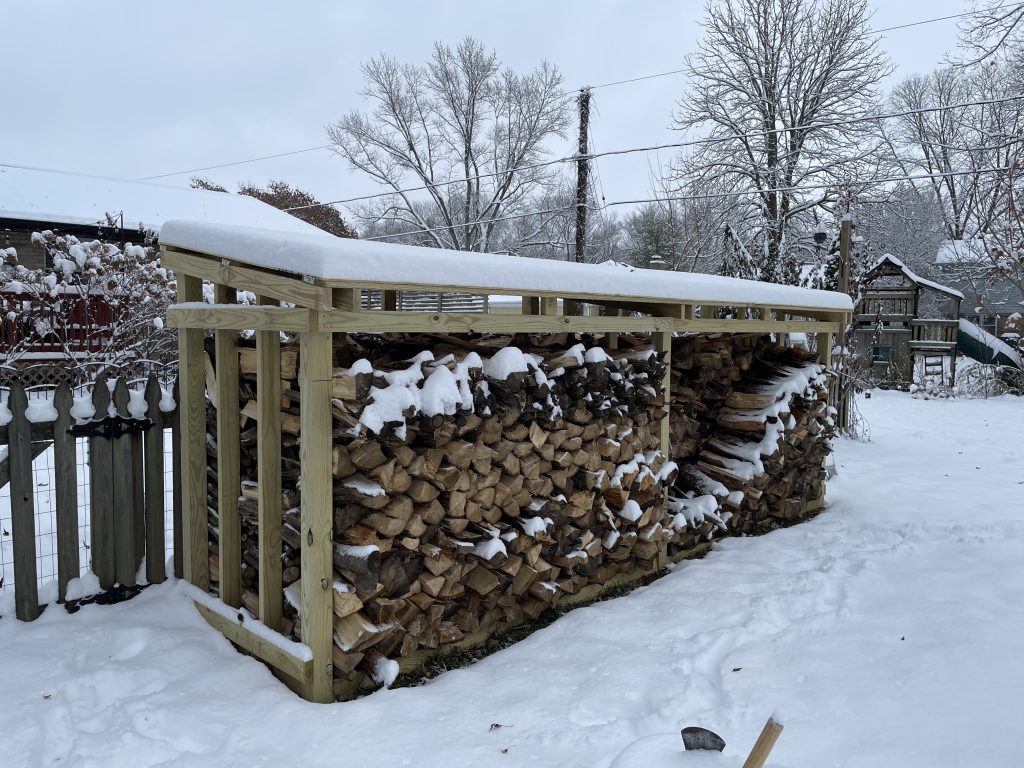
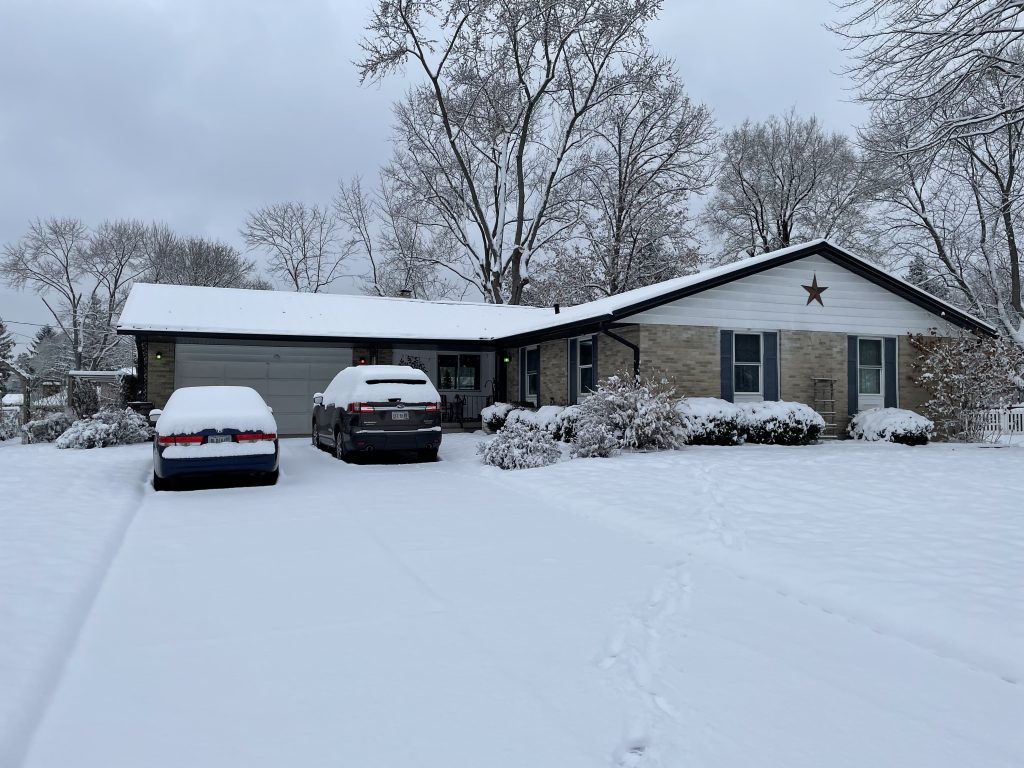
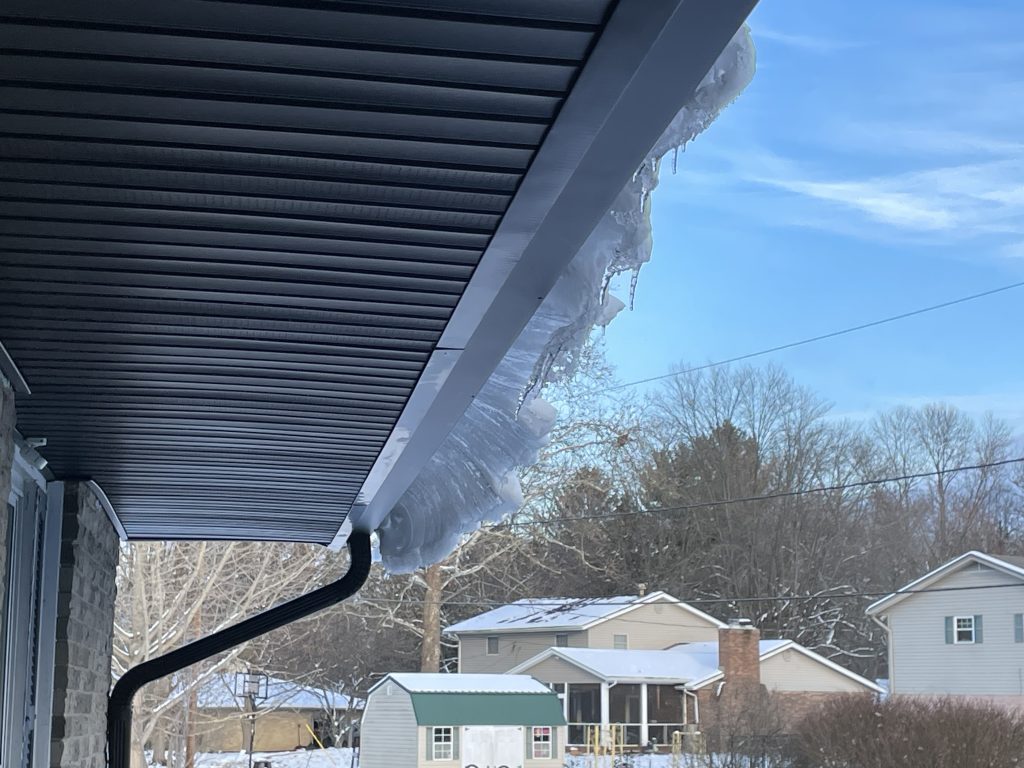
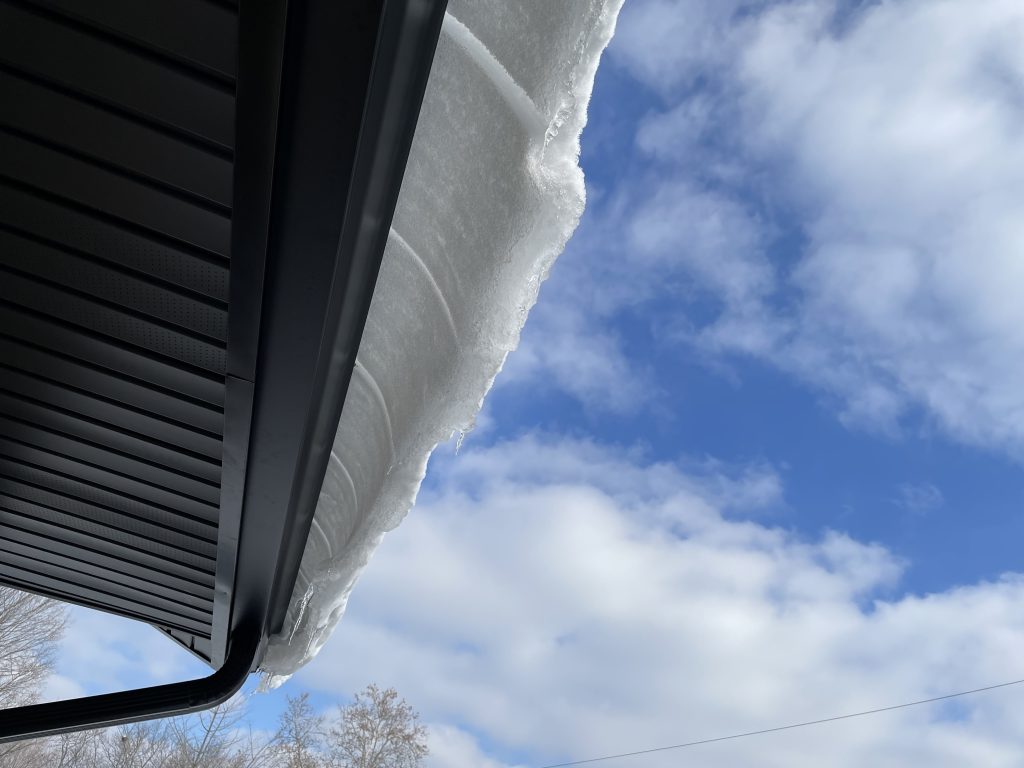
Additionally, there were some unanticipated consequences from the metal roof install. Most notably, the glaciers that develop, which catastrophically cascade. Some snow shield installs are in the future.
–Simon
Development has continued on the firewood holder, weather permitting. And of course, my own physical health permitting. So it’s been slow, but still progressing.
Adding a roof was critical to the project. Keeping the wood off the ground and neatly stacked was the main goal, but keeping it dry and free of falling debris would negate the panicked run to restock the patio supply prior to a rain prediction. Plus, it’d look nicer. So, here I would learn how to build trusses.
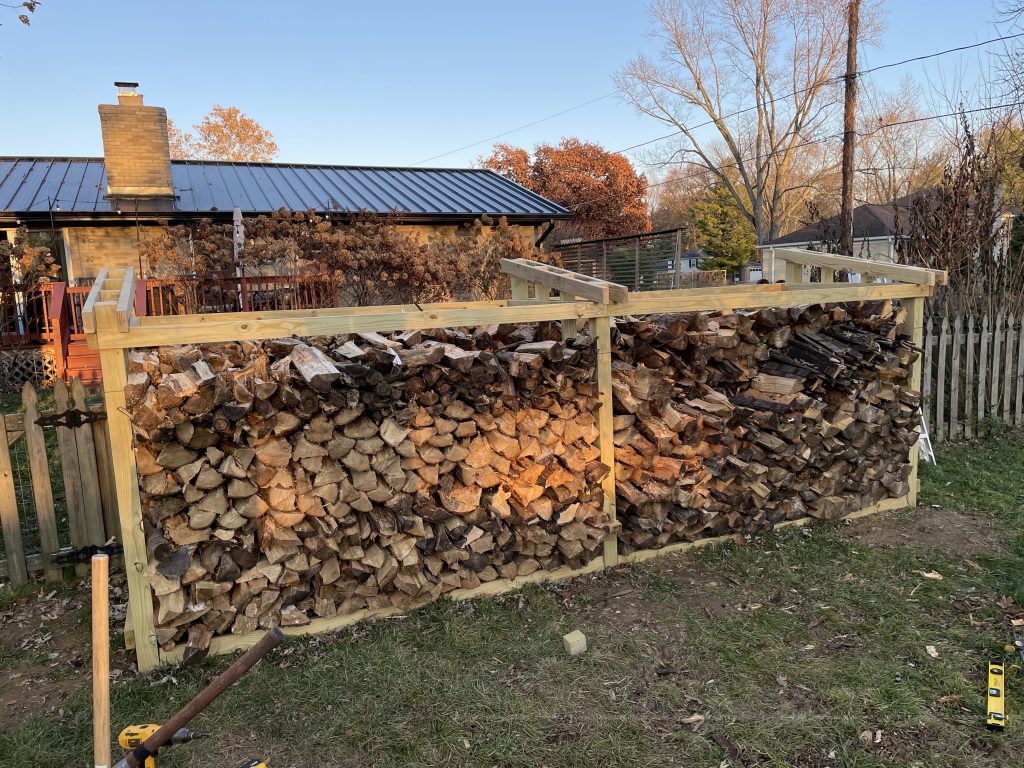
I attached some 2x4s at a 10 degree angle – which seemed like a happy medium. It’s apparently the minimum grade for shingled roofs, and while I plan to attach leftover metal paneling from the house roof, it give me a little extra buffer.
Next, I added some decking planks as rafters to support the roof. Fairly straightforward:
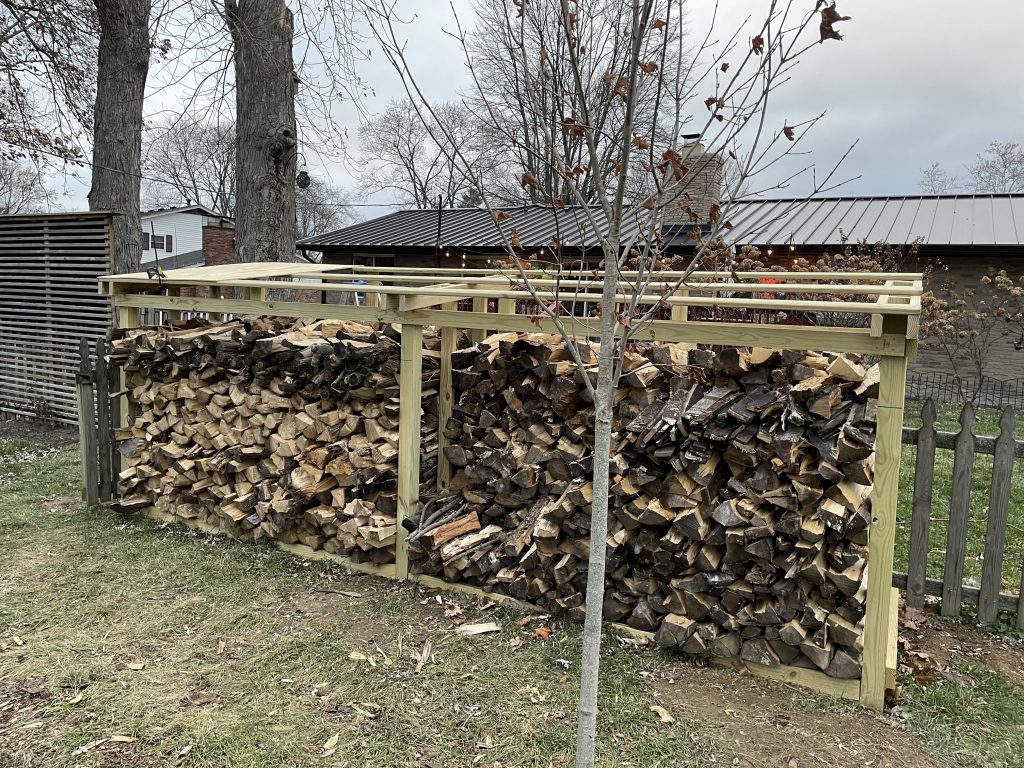
Finally, some externally-rated OSB:
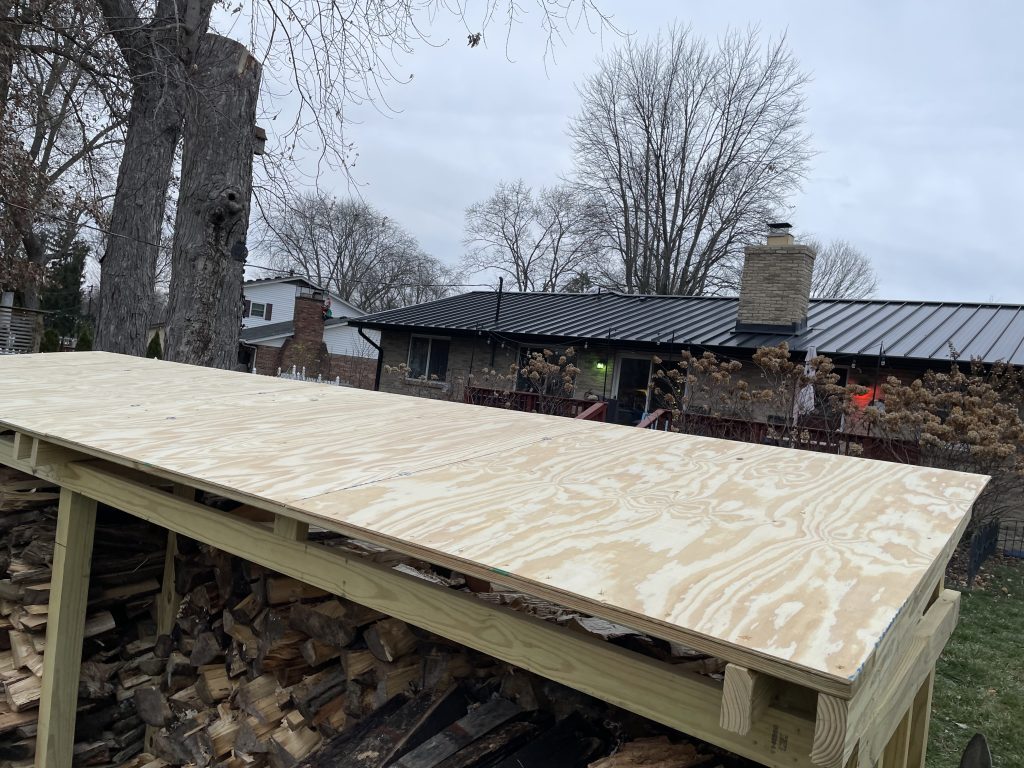
Unfortunately, the weather turned sour and halted work. I had hoped to get to the metal portion sooner rather than later, as the moisture is starting to warp the OSB. If that poses a problem, I might swap it out in favor of more deck boards. But that’s TBD.
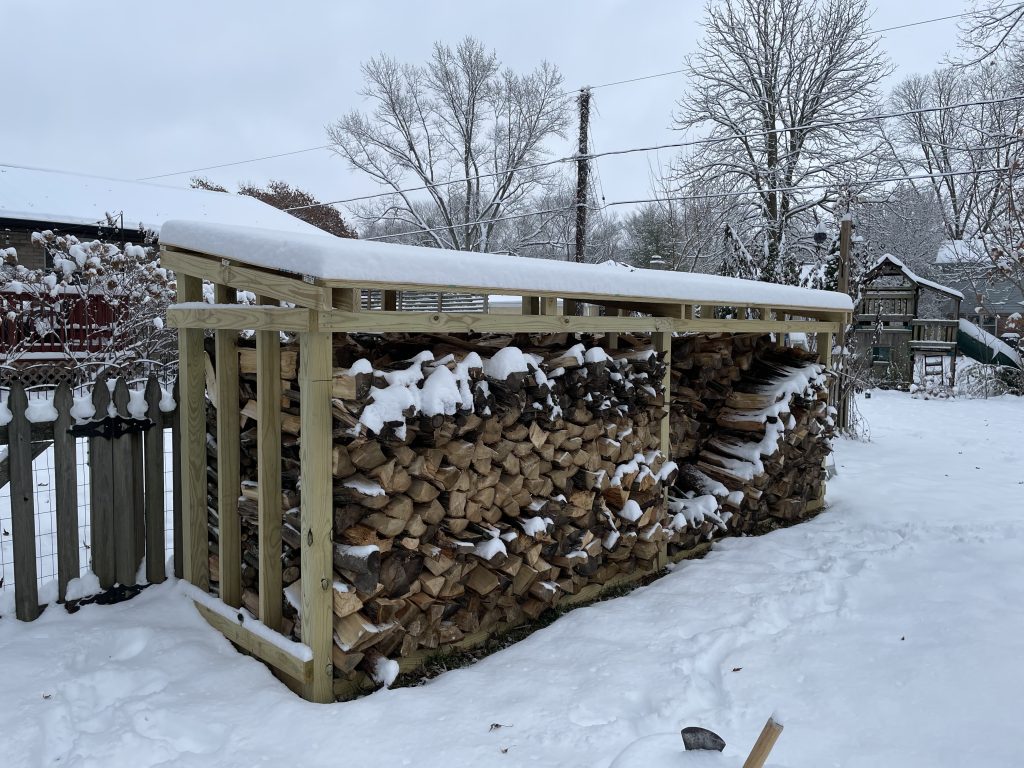
In the meantime, it does conceptually work as intended. The wood, for the most part, is shielded from precipitation. Once I have a dry day I’ll get the metal on and finally be done with this.
–Simon
White trash is a derogatory term in American English for poor white people, especially in the rural areas of the southern United States. The label signifies a social class within the white population, especially those perceived to have a degraded standard of living.[1] It is used as a way to separate the “good poor”, who are “noble and hardworking”, from the “bad poor”, who are deemed “lazy, undisciplined, ungrateful and disgusting”. The use of the term provides middle- and upper-class whites a means of distancing themselves from the social status of poor whites, who cannot enjoy the same class privileges, as well as a way to disown their perceived behavior.
-Courtesy of Wikipedia (Above emphasis mine)
Operative words to consider: distancing, disown. Indeed, poor social graces do not necessarily tie oneself to a socioeconomic class, and a “peer” within that class who exhibits such traits does not need to be accepted as an equal on those grounds, either. Nor being of the same race. “Redneck” is an inaccurate term to use in this story, but it was alliterative and therefore made for a catchier title. No – this story involves unarguably: white trash.
And the reason I believe trash tends to hate me so much is due to this distancing and disowning. If you’re not in my honor circle, then it’s impossible for you to take any action or make any comment that offends me. A child might target me with profane comments, but they’re ultimately empty. I can’t seriously consider a child’s words to have any merit. Against my character, they’re meaningless. There’s little point to engage in a duel of honor and wits with an inferior. Children and trash rank similarly on this ladder. They know it, and I know it. And they hate it.
But that doesn’t stop them from trying.
So it was that, some years following my last trash encounter, a different one would give it a go. No doubt emboldened by their idol of such behavior – our current president – this one made an attempt, apparently not realizing that our president is a billionaire, while he’s just a guy who cuts grass in an Ohio town with a population of 400. Not exactly a model for comparison.
On this particular day, the day after Thanksgiving, my father-in-law had invited my father and I out for some rabbit hunting on his property. With 8 acres, rising to a hill abutting a cow pasture, with neighbors on the sides, and the highway at the front, it does pose some limitations in safe shot placement. But with the hill, there are safe zones – all of which I explained to my father, not that he needed the warning. He’s been hunting since the 50s. I’ve been hunting for 20 years myself. We’ve got this.
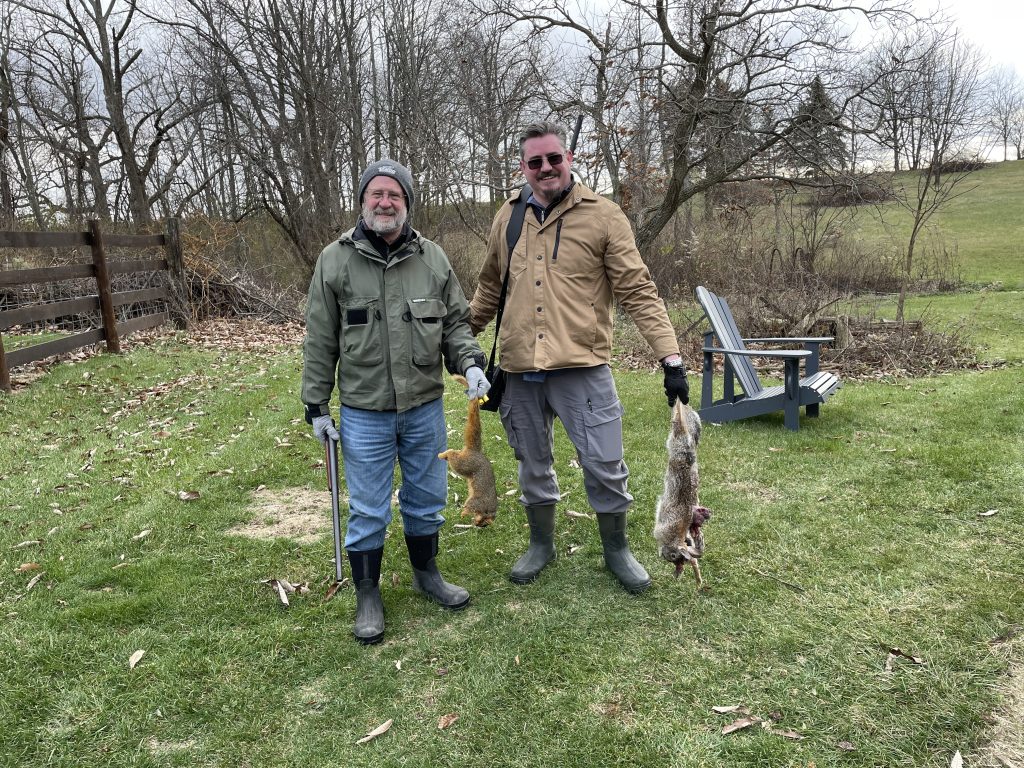
What followed was a grand afternoon of flushing rabbits out of brush and trying to get them safely positioned. My old man might be slowing down a little, but he did snag a squirrel. I managed two rabbits myself. It was a great hunting day! Even the cows came out to check on the commotion – ultimately concluding our ventures as they blocked the ridge. I had nice conversation with #64. Mooo. It trotted away indignantly.
But somewhere in the midst of the excitement, I noticed a fog gathering. The fog turned out to be Trash Neighbor lighting his…trash. At that moment. On a windy day. He was, I assume, trying to smoke us out. A petty passive-aggressive attack, which I of course ignored and continued hunting.

And since being ignored reaffirms one’s lower social ranking (as previously mentioned), this enraged him. As I was retrieving my final rabbit from the brush, I heard yelling. But I was caught in blackberry thorns at the time, so whatever it was could wait. Of course, that gave me enough time to figure out the situation, so when I emerged triumphantly with my kill, I walked away and towards my dad to herald my prize. Ignoring the trash was also safety decision. I was overtly armed with my Remington 870, and I assumed Mr. Trash also had a gun.
I should also mention at this point that, some years back on an unsuccessful rabbit hunting expedition, he drove over to my in-laws to complain. There were no rabbits and I hadn’t fired, so his complaint was limited in nature: I was pointing my gun at his property and staring menacingly in his direction (I’m paraphrasing, since I wasn’t there to hear the accusation).
But now I had fired shots, and since I knew that he had lied before about trying to intimidate him with a weapon, I assumed any confrontation would lead to more lies, with the potential for a “defensive” need to pull a gun on me. There were a more than a few reasons to nope out of that situation. As a result, his initially neutrally-worded albeit aggressive hails turned into sputtering monologues of profanity. I had made the right call.
Unperturbed, I went about field dressing my rabbits, but first decided to call Liz and give her a heads up. Based on past events, I didn’t think Mr. Trash would let this go.
He didn’t. He spammed my in-laws’ phone, prompting them to block his number. That’s some next-level dismissive ignoring there! Your own neighbors in the country won’t even acknowledge you now. Take a hint, trash.
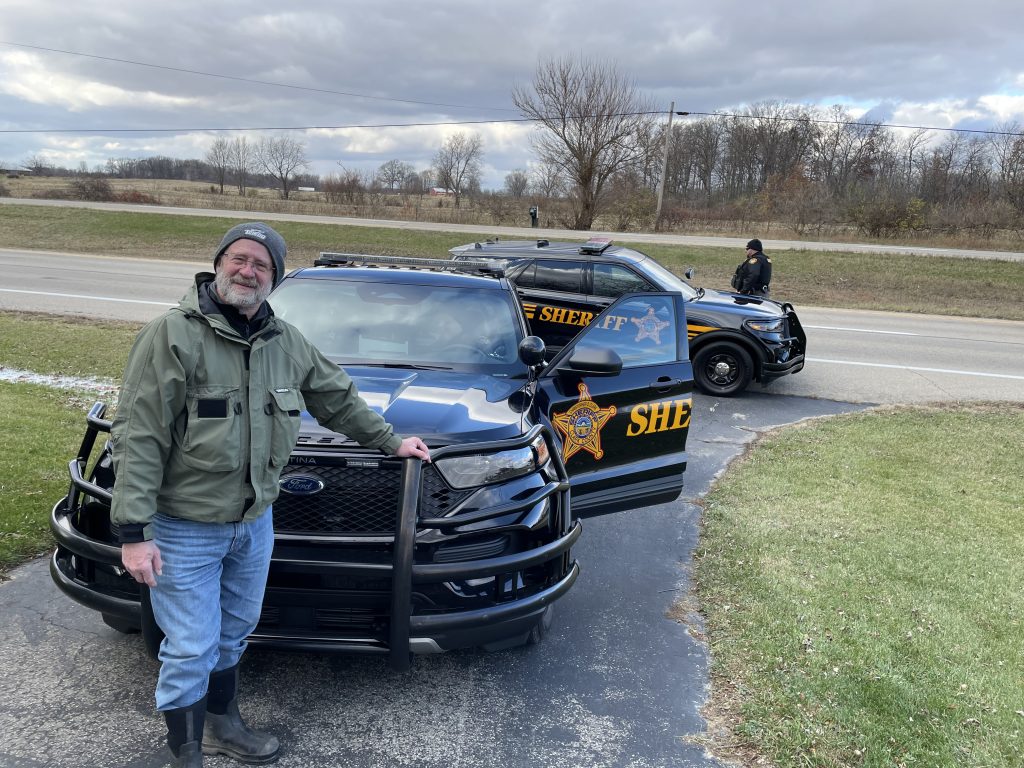
But the shriveled remaining vestiges of his geriatric masculinity overpowered reason, though on some level he still retained a sense of self-preservation and, deciding against a second attempt at direct confrontation, decided to call the sheriff instead. Big man.
Turns out, he upgraded menacing waving of a gun to dodging my shotgun pellets which were apparently coming towards him. That’s one hell of a ricochet. #6 birdshot bouncing 90 degrees from their path of flight and arcing over the hill into his yard by his fire pit.

Is it possible that a direct line of sight shot would have hit him? Yes. Is is possible that an arcing shot into the air above the ridge line would have hit him? Yes. Did I do either of those? No. The only explanations, therefore, are either a shot that defies Newtonian physics, or a lie. And while I often jest about my guns in video game multiplayer matches having phasic rounds, I’ve never seen my Remington pull that off.
The authorities, it would turn out, either agreed, or at least didn’t pursue the issue out of lack of evidence. That or a trash resident with a local reputation didn’t hold much credibility against a family of educated and productive members of society. (Some Facebook comments from locals also insinuated he might be suffering from Angry White Man syndrome and has a drinking problem.) Oh, and neither my dad nor I have warrants on us! Go figure.
It was a memorable Thanksgiving week, worthy of the family archives.
But wait, there’s more!
Seeing a recurring pattern with potential for future encounters, I began a dossier. Upon asking, the Clark County Sheriff’s Department turned out to be very accommodating with their records. I mean, they have to be cooperative in theory, but it was still nice that they didn’t fight me on anything or make the process difficult. Sadly, there was no 911 call or official police report – only the initial dispatch record:

Still good to get the official details. And amusing. Note that Mr. Trash, in his last pathetic vestige to appear as alpha male, said that I “took off running the other way”. Again, he couldn’t handle being ignored, so he fabricated an image of his imposing and intimidating manliness. I’ll wager he even truly believes it, too.
On the other hand, note that he thinks I’m in my mid 30s. Aww, thanks, Mr. Trash. It must be all that not smoking and not eating spam that’s maintained my youthful complexion.
It also turned out that I could request a copy of the body cam footage. There’s a fee to do so, as personal info has to be redacted and there’s no doubt some administrative work to go along with the video extraction, but I certainly couldn’t pass up that opportunity! I was hoping for some footage of Mr. Trash, but I don’t think the responders ever spoke with him directly. But I do get some amusing still-frames I can extract and print off for family gifts.

My dad likes to preserve notable memories with shadow boxes, and this gives me a lot of material to work with. So not only did I get to go hunting and spend some time with Dad, but I gave him a good story, too. And I now have another gift in the making for him come Christmas. All in all – what a great holiday!
Thanks, Mr. Trash.
–Simon