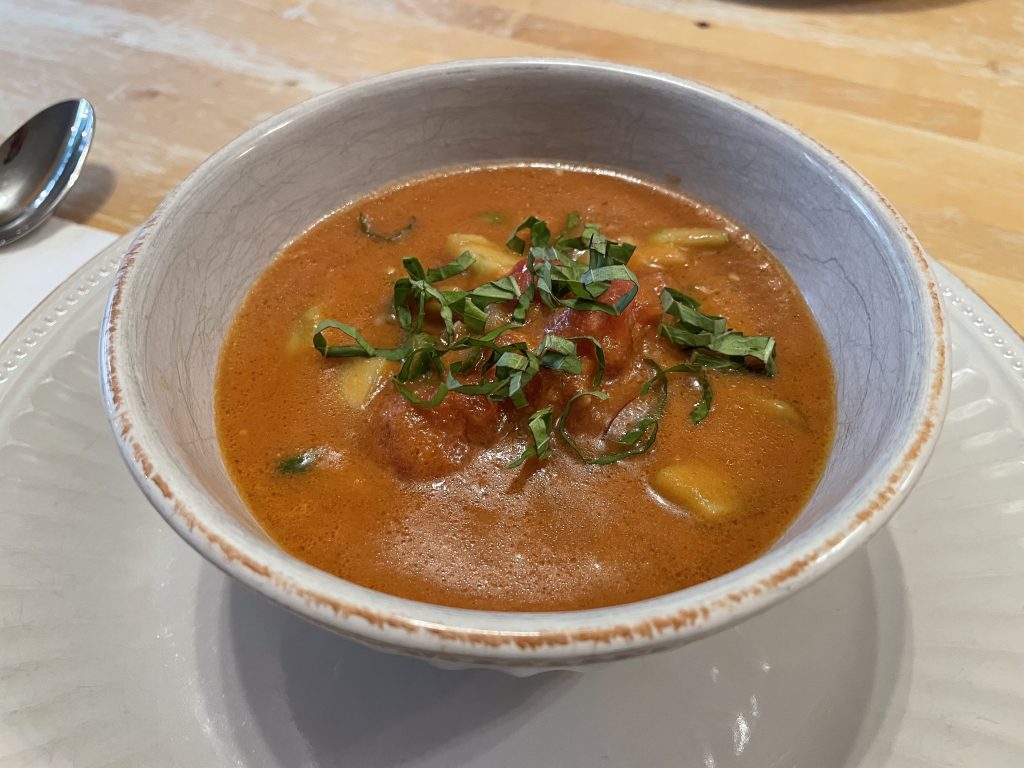
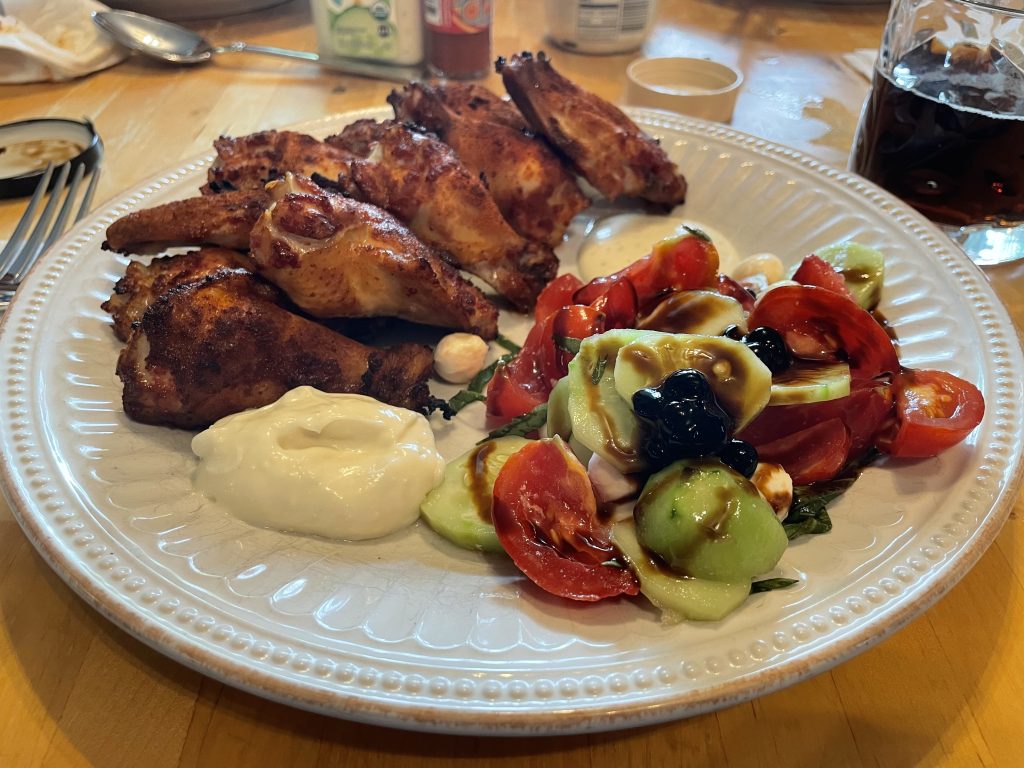
With some slight modifications: powdered cumin, because Liz doesn’t much care for it. And serrano peppers instead of bell, because that’s what I had. But otherwise, it’s pretty true to the recipe.
Also the portions were a tad modest, so I’d increase it in the future. But I supplemented it with garlic bread and that did the trick. Will definitely try again when I have an overabundance of summer veggies.
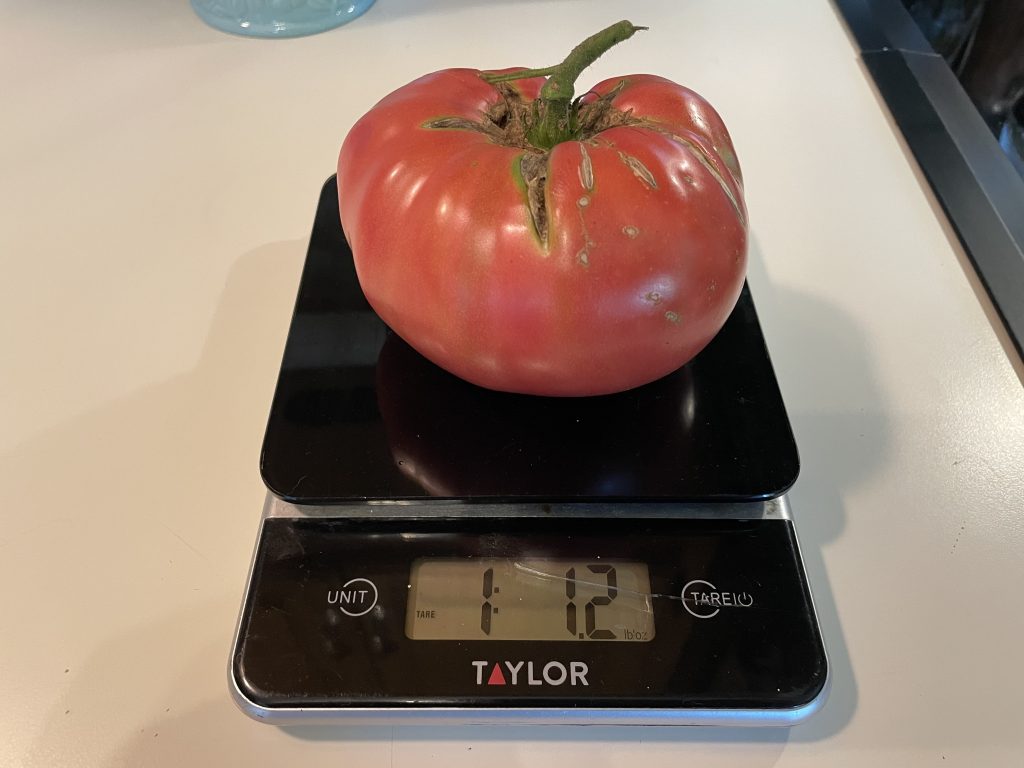
Every year there’s one, usually either a beefsteak or a brandywine. An early fruit, if unmolested by wildlife, will eventually become the largest of the season. Here are the winners from past years (it would not appear that I documented them all):
Americans have an odd association with the Japanese. Following generational subsiding of WWII resentments, their culture crept into our cinema, represented as a dichotomy of both warriors and meditative perfectionists, personified in the Miyagi-type character (although technically Okinawan). Then apparently they became relentlessly career-oriented, who work themselves to suicide.
And from this toxic life path, Americans are oft compared as a sort of half-sibling, who admire their relentless capitalist pursuits and supposed ability to maintain their dignity of the soul while still contributing to the greater society. I can see it. Work forever to provide and go to church.
But I think we’re more like the Chinese. We approach capitalism in a similar manner of unsustainable growth and consolidation of the wealth therein produced, continue to allow those least suited to lead determine our government policies, and we hate each other (supposedly). And really, no one likes themselves, so dissenting ideologically with an entire culture is probably more telling of a similarity than a difference. (Don’t even get me started on Russia.)
But I also own a katana and aquascape my aquarium. So I’m not entirely disassociated. And then there’s also The Way of the Househusband, which resonates.
And bonsai. No, I don’t practice the art, but I’ve refined my own version: macro bonsai. Translated literally, that would sound like a paradox, but hear me out. As a non-native Ohioan, I like trees. Alas, they are expensive and slow to grow, but not the black locust!
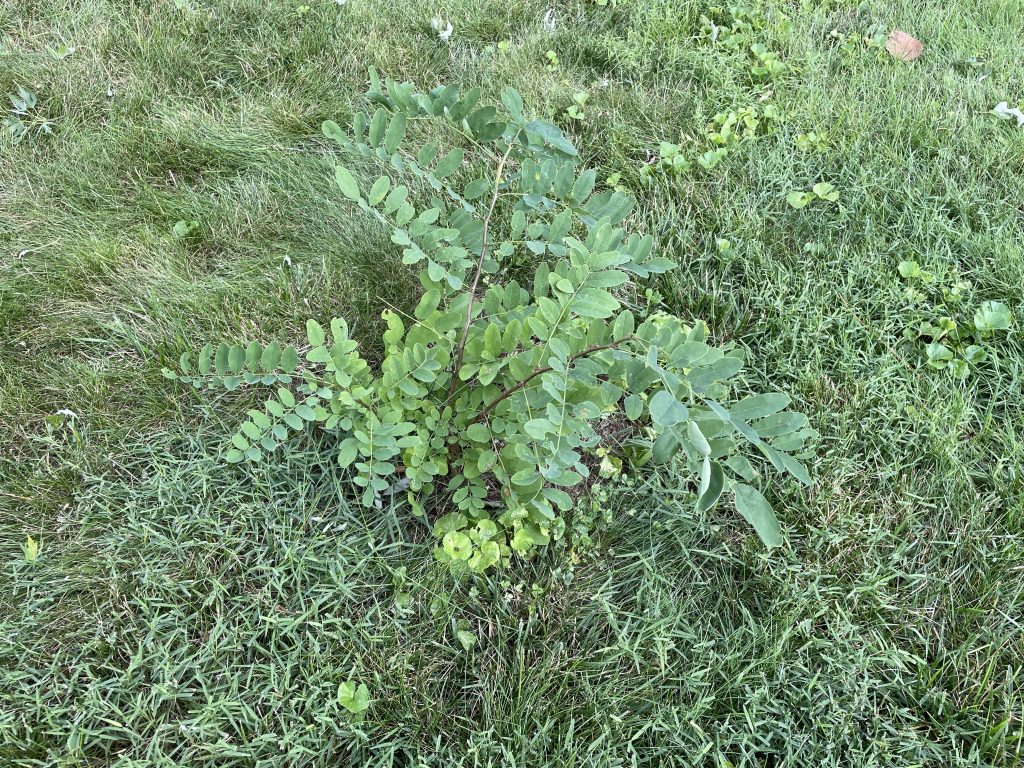
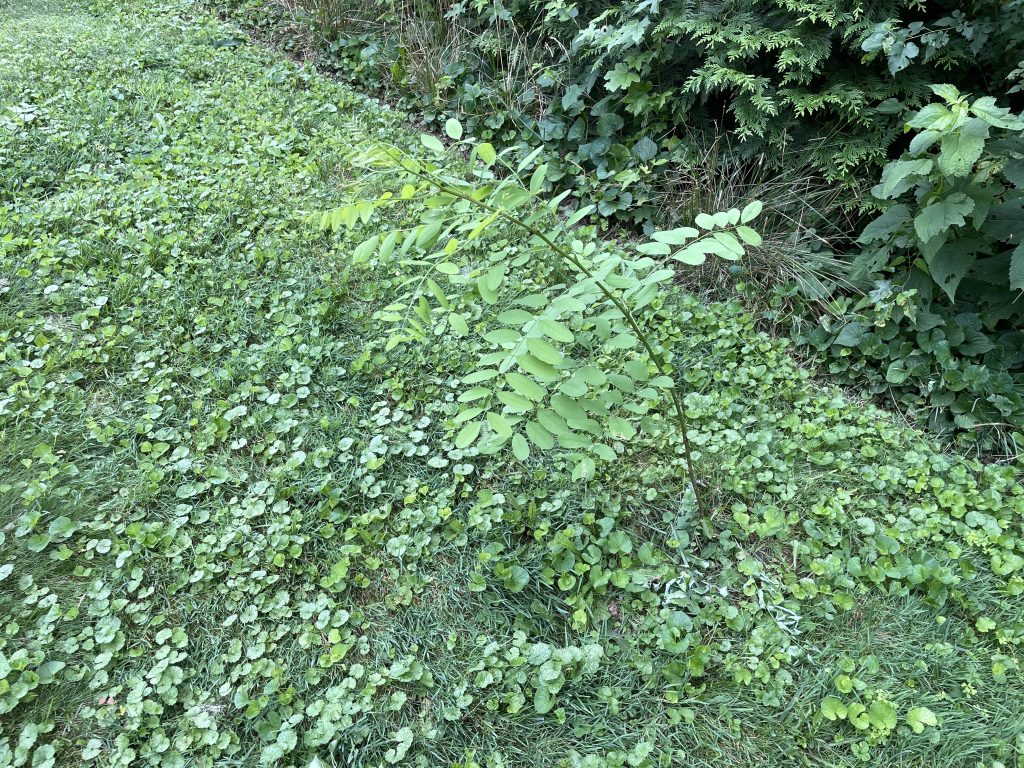
Stage 1 specimen
Locusts have some “advantages” as suburban trees, depending on how you look at it. They’re colony plants, meaning they appear in non-forested areas before other trees, thereby starting the first stages of forestation. Obviously in areas where suburbanites don’t want trees, such as landscaped lawn where one’s landscaping company would charge extra for the bother of mowing around a tree, they’re undesirable. However, if one were to happen to appear in a desirable location, such as an open lot needing some shade, they present an opportunity to quickly attain canopy.
This is because they sprout from the ground as root suckers. A local parent plant, spreading its roots, will reproduce this way. The new tree, being attached to the parent, has access to the larger root system. So it grows quickly. Add to that the fact that locusts are legumes, and fertilization remains largely unnecessary. They’re completely self-reliant.
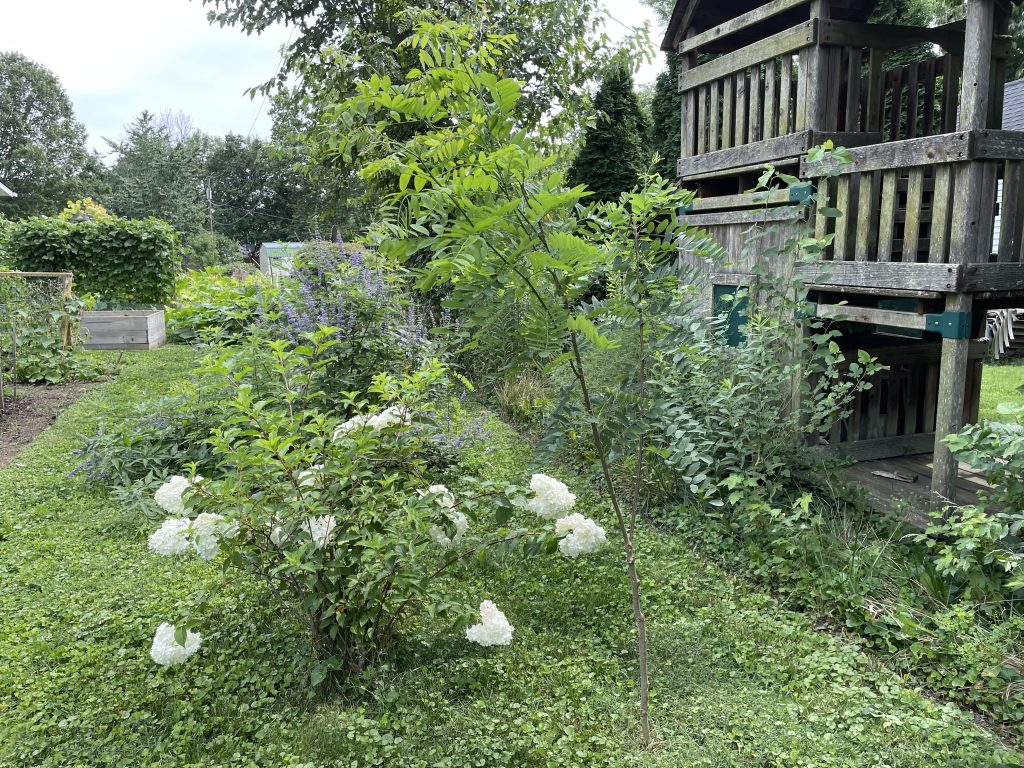
Stage 2 specimen
But they do need training. Following emergence, new growth is bushy. To obtain a tree shape, side branches need to be trimmed off as the plant grows. They’re also very thorny at this stage, but fortunately my trees are of the variety that the thorns stay small and disappear completely on larger trees. Regular trimming will also force upward growth, leading to quicker canopy.
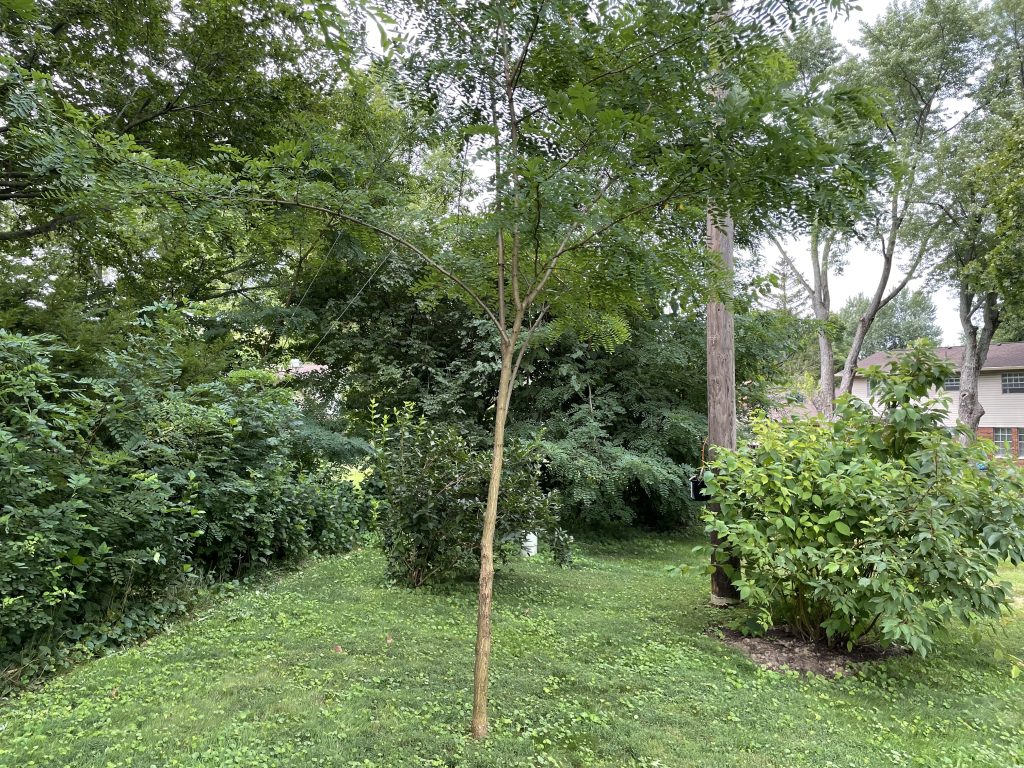
Stage 3 specimen
Ultimately it’s a matter of personal taste as to which side branches should be left to grow, and each tree and its location is unique. But all side branches should be removed unless the growth is vertical, until the minimum desired height is achieved. In my case, my own height is the benchmark. If I can walk under the tree without ducking, then it’s at minimum required height and I start letting side branches above this height start to grow and fill out the canopy.
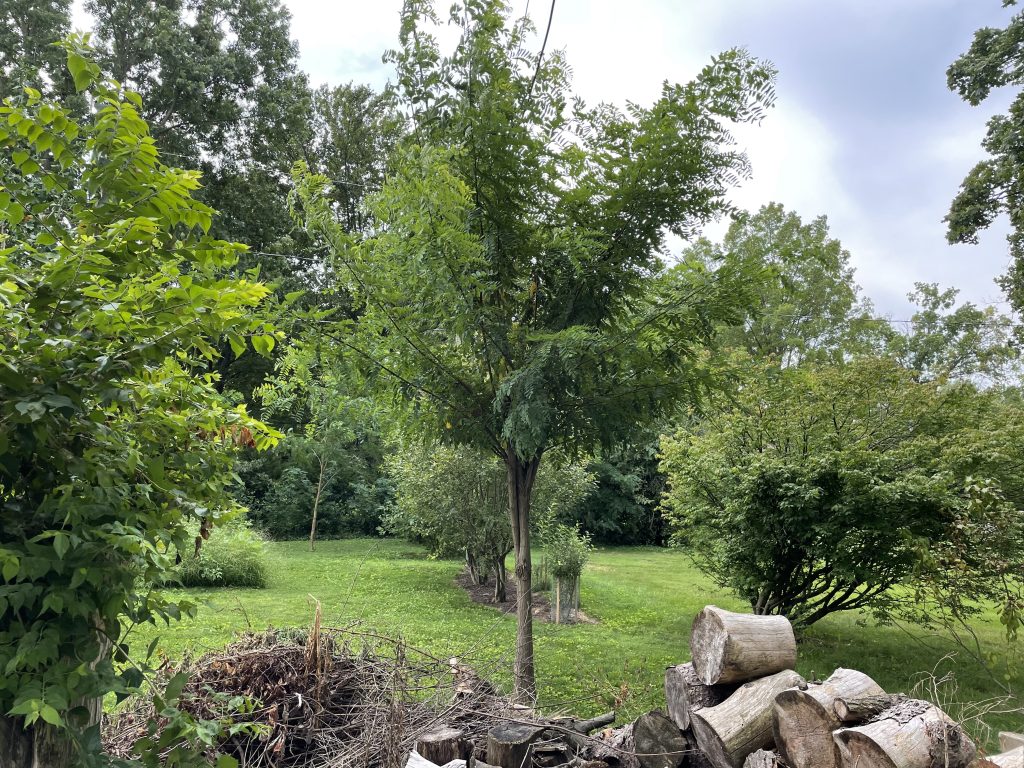
Stage 4 specimen
Beyond this, it’s just a matter of letting it grow until it becomes the electric company’s problem. Total time involved: 2-3 years. Not bad for a free tree, and it’ll grow faster than anything manually planted.
Stage 5 specimen, which had the unfortunate experience of being pollarded by the falling silver maple, but bounced back nicely.
It’s a much shorter timeframe, and using much larger trees (a native, in fact), than bonsai. I think I’ll call it dendroforming instead, to give it a more western type nomenclature. It certainly isn’t Japanese, but I’ll give them a respectful nod at their influence.
How many times have we been told that human attention spans are getting shorter and they’re even shorter than that of a goldfish’s? I don’t know how that was calculated, but I’m guessing it’s one of those silly bits of “knowledge” that gets passed around, yet no one verifies. Like old glass being amorphous in nature, which is why farmhouses have ripply windows.
Maybe it’s getting harder to focus on a singular task, collectively. But where’s the reference point? I remain skeptical, but for the sake of entertaining the theory, I’ll give a potential example: hunting. Memories of my youth recall excitement with lots of game and running through brush after rabbits with my dad. Last time we went together, however, it ended with him picking mushrooms and me sifting through the fields identifying wild carrots. So maybe it’s true. Or maybe there just isn’t as much wild game anymore.
Whatever the case, a day in the woods now capitalizes on all nature has to offer. It is no longer an adventure with a singular objective. And as such, my father is now a mushroom forager.
There’s one in particular he seeks out: Chicken of the woods. Because, in his words, they’re edible and highly unlikely to be mistaken for any other type of mushroom (i.e. unlikely to be confused with a mushroom that causes catastrophic renal failure). Plus, there’s the coolness factor.
And his last excursion was very successful, so he brought some down. They’ve been in the freezer long enough for me to forget about them, but a recent freezer cleanout revealed the forgotten bounty. It was time to give them a try.
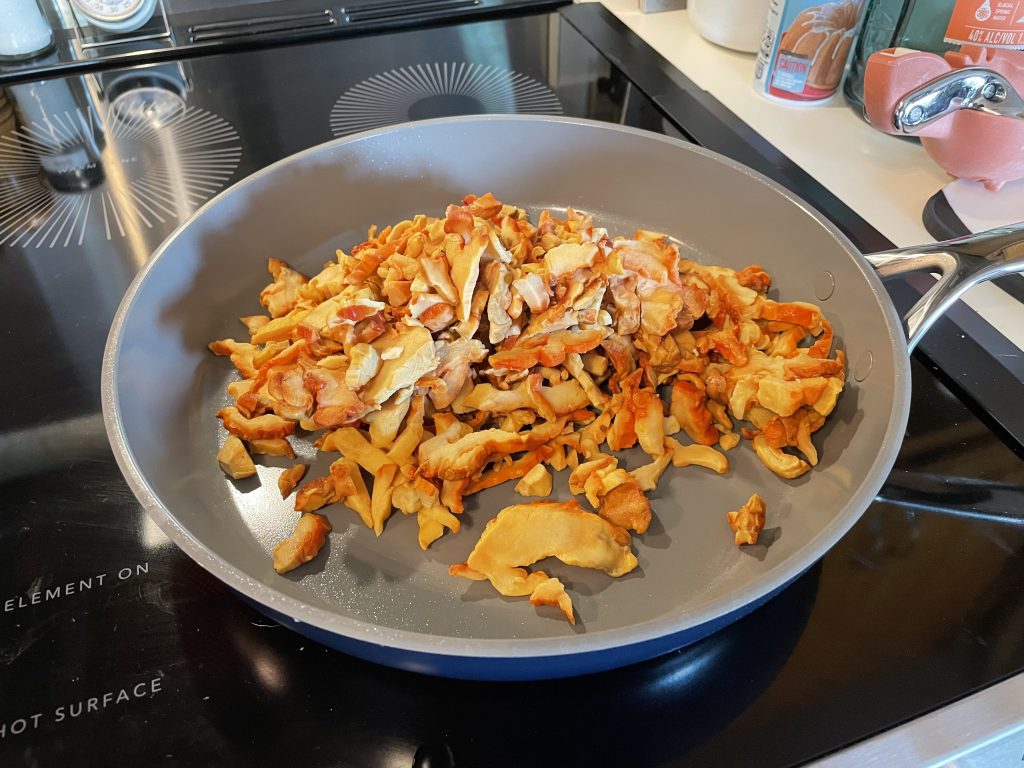
In their raw form, tossed into a saucier to dehydrate.
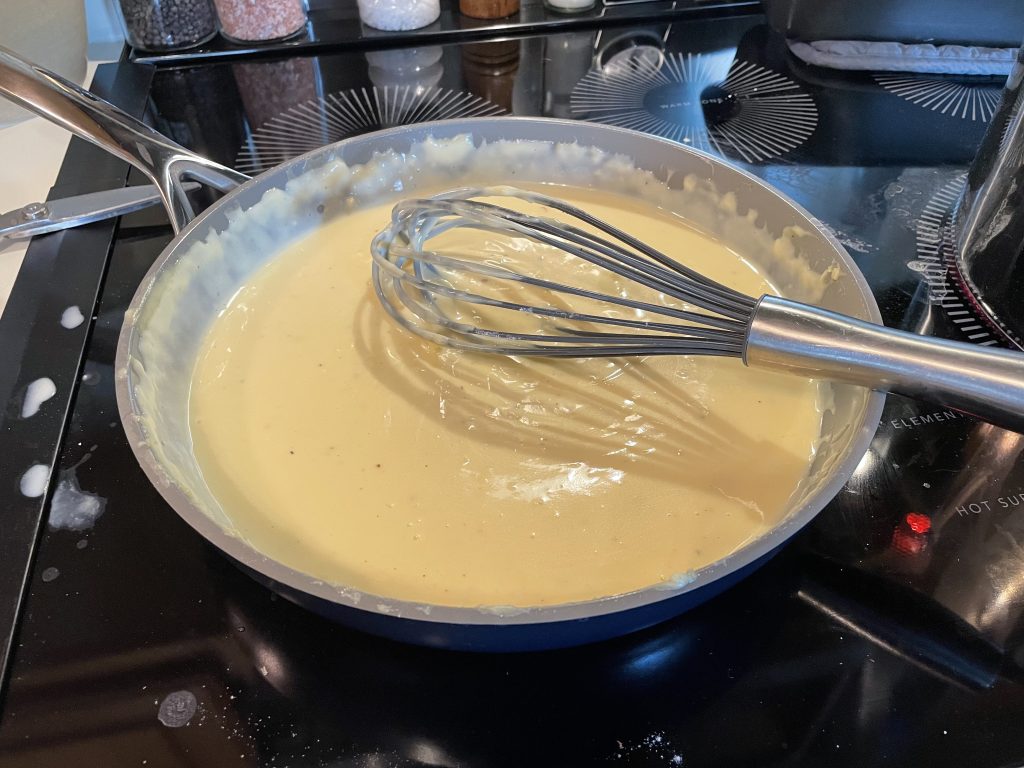
And a mild cheese bechemel.
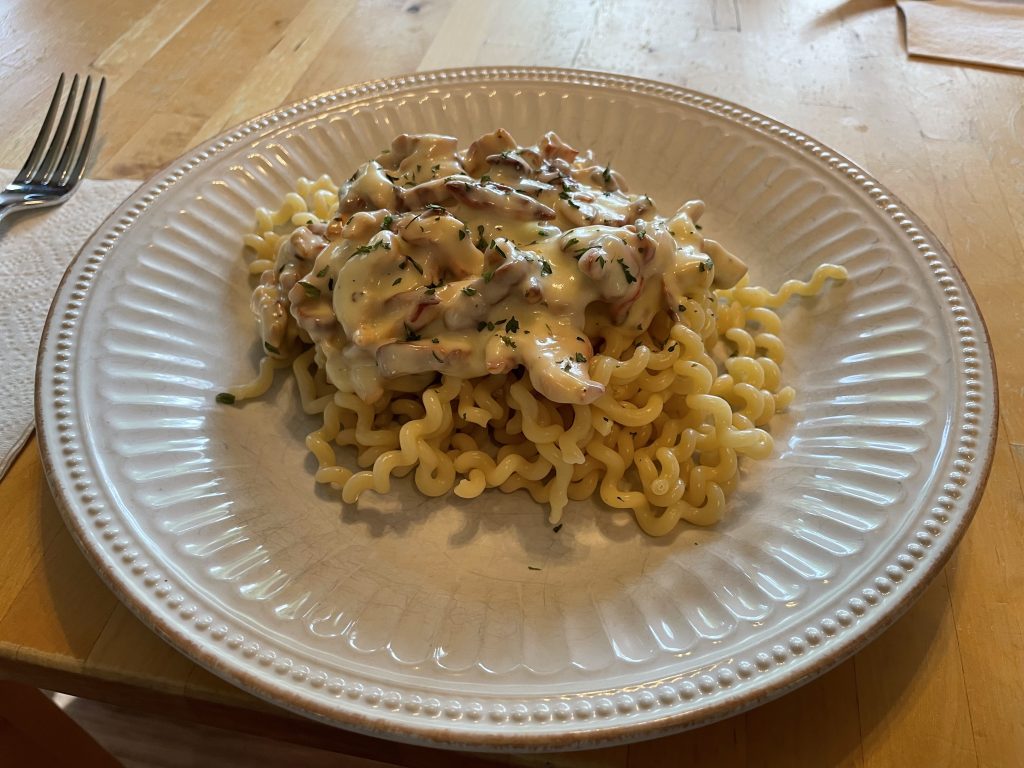
And noodles.
And I must agree: it does resemble chicken meat, especially in texture. Flavor was mild, not so much like good chicken, but more like Tyson-brand cheap chicken. Worth the grab for a distracted mind when no squirrels are out. It might not be meat, but it’s still a good find. Thanks Dad!