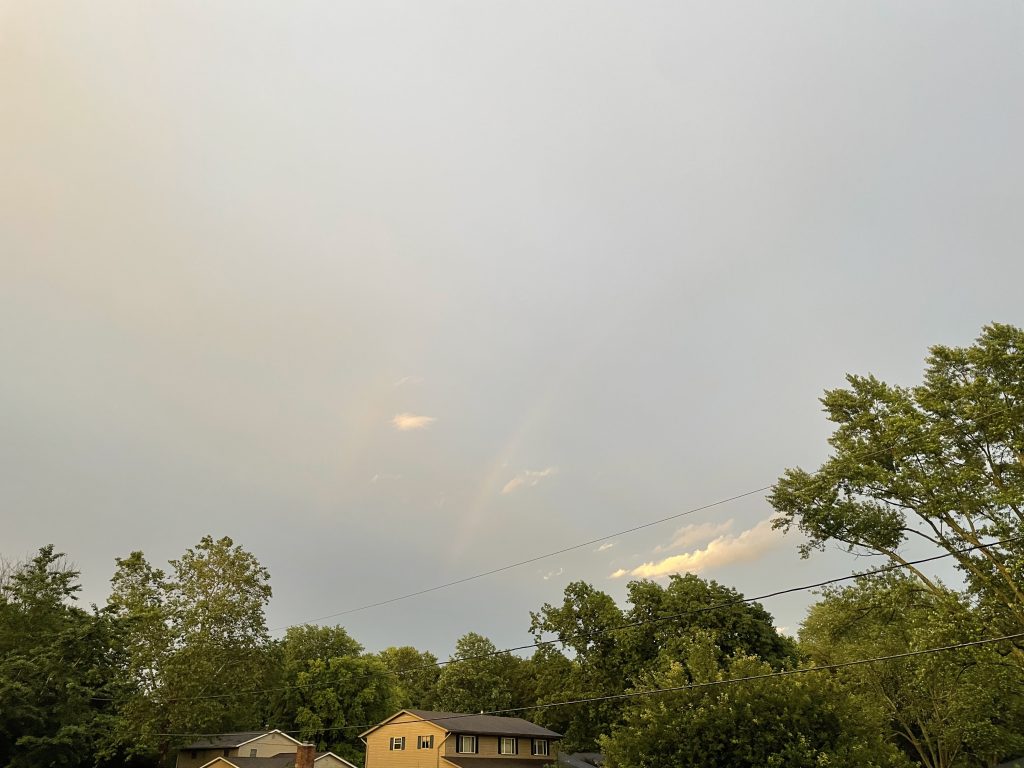
One of the few perks of constant rain. Here’s another, and a double, albeit faint:

–Simon

Tales from Easement Acres
One of the few perks of constant rain. Here’s another, and a double, albeit faint:

–Simon
I don’t buy this “pollinators are dying off” panic. There’s certainly no shortage of documentaries crying out over Colony Collapse Disorder with our commercial honey bees and how our food supply is in peril as a result. But first of all, our largest agricultural crops here in the US are maize and wheat – both of which are pollinated by wind – followed by soybeans and potatoes, which are self-pollinating and propagated through cuttings, respectively. And two – honey bees aren’t native to North America – they were imported from Europe. Our most important native pollinating bee here is the bumble bee, which doesn’t suffer from CCD (although they are experiencing population declines in urbanized areas, but so is every species displaced by human development). What we’re really whining about is the peril of beekeepers’ livelihood and their co-conspirators – the cash crops that rely on non-native pollinators because they themselves aren’t native, like almonds and apples. Interestingly, bumble bee hives have been commercialized, but no one talks about them because they aren’t as cute and they don’t make large amounts of honey.
The real problem is the ubiquitous use of residential pesticides, but that seems to be tapering off, at least in my own neighborhood. People are starting to show reluctance in trading lawn grubs for lymphoma, I’m guessing. I mean, I haven’t taken a poll or anything, so this is strictly observational. I don’t see nearly as many lawn care companies dumping chemicals on grass, and there are more young families. And there are tons of bees in my gardens (YoY informal personal measurements (hey – I’m in finance)). So progress, I think.
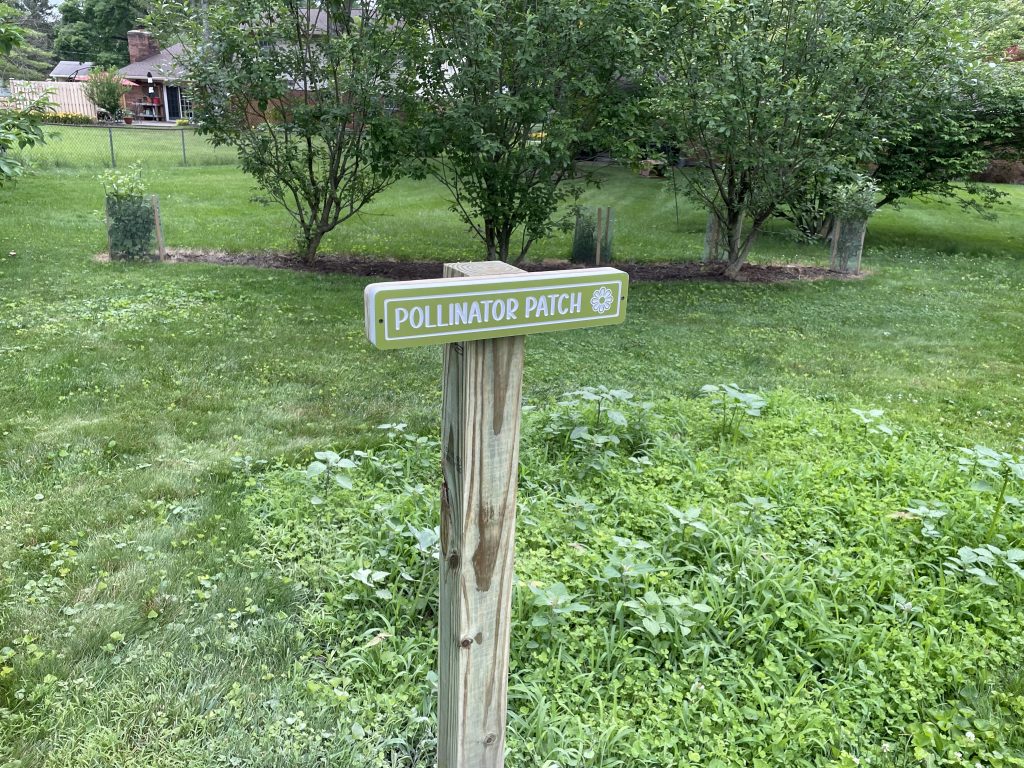
And here to help them along, I have dedicated a patch of my personal greenspace to benefit them! I offer up last year’s squash patch, which didn’t turn out too well. Too close to the greenbelt I think, and the deer helped themselves. So now it’s repurposed, with a custom sign to boot! Anniversary gift from Liz.

Right now it’s just a bunch of weeds, since the rabbits ate all my intentional plants before the grass filled in. But we’ll see how it goes and adjust the seed accordingly. If nothing else, the rabbits are choosing it over my cucumbers, so either way it’s a win.
For the bees!
–Simon
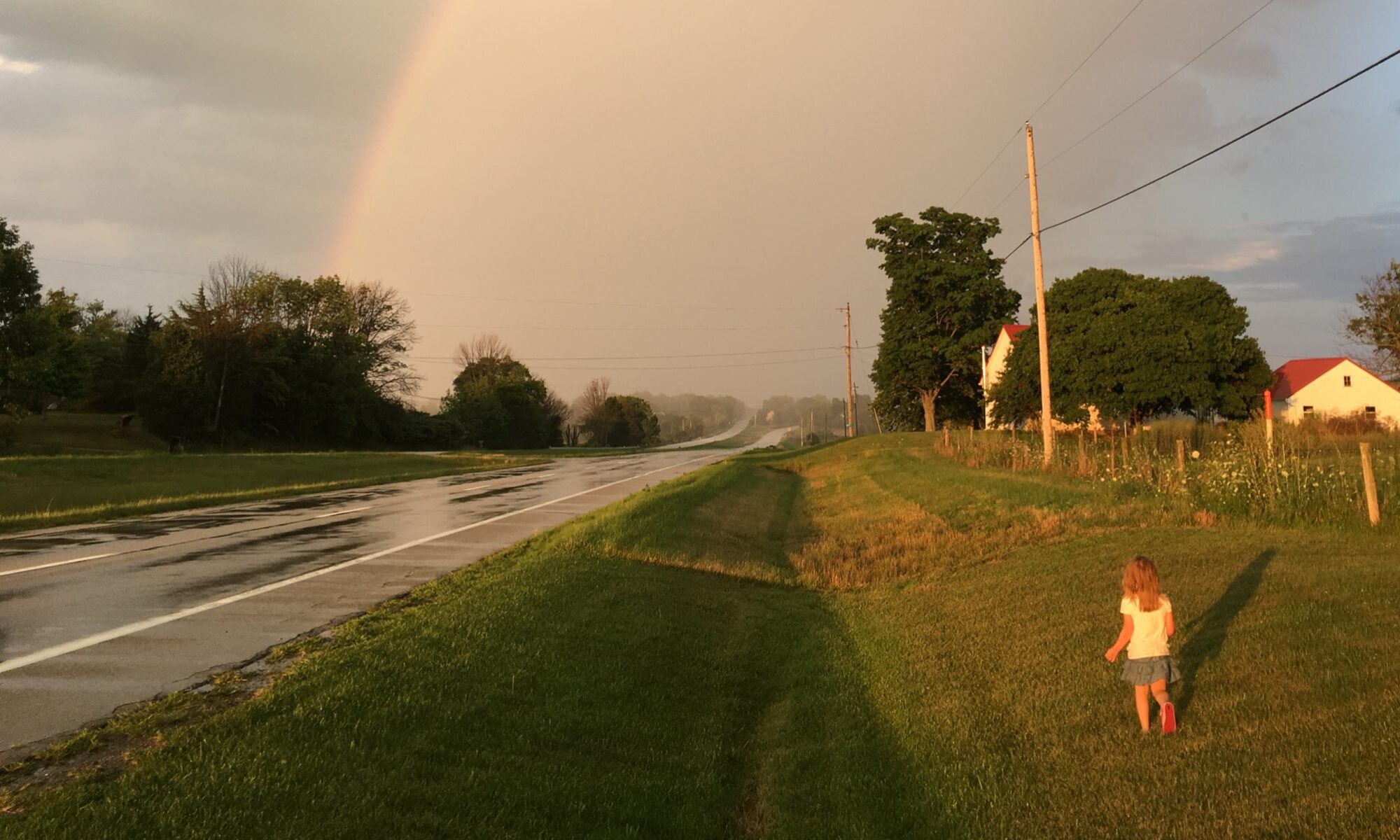
Summer storm rainbow this time.

–Simon
In continuing my theme of asinine titles for meteorological terms, here’s a more dramatic sequel to April’s inclement weather.
A particularly nasty bit of weather had descended upon us the evening of May 16, preceded by the familiar calm. And as the wind picked up, I checked the weather radar. This time, I was more concerned than my usual apathetic American High Plains upbringing self would normally be. And this static image doesn’t replicate the still image transitional timeline. There was a very clear storm rotation in progress, and one of the most easily recognized of radar signatures was to our southwest.

A hook echo, and so well-defined that the NWS had issued a radar-confirmed tornado warning. And it was 100 miles out and on a direct path to us. Admittedly, that’s a bit far to expect a tornado to travel on the ground, but it’s happened before.
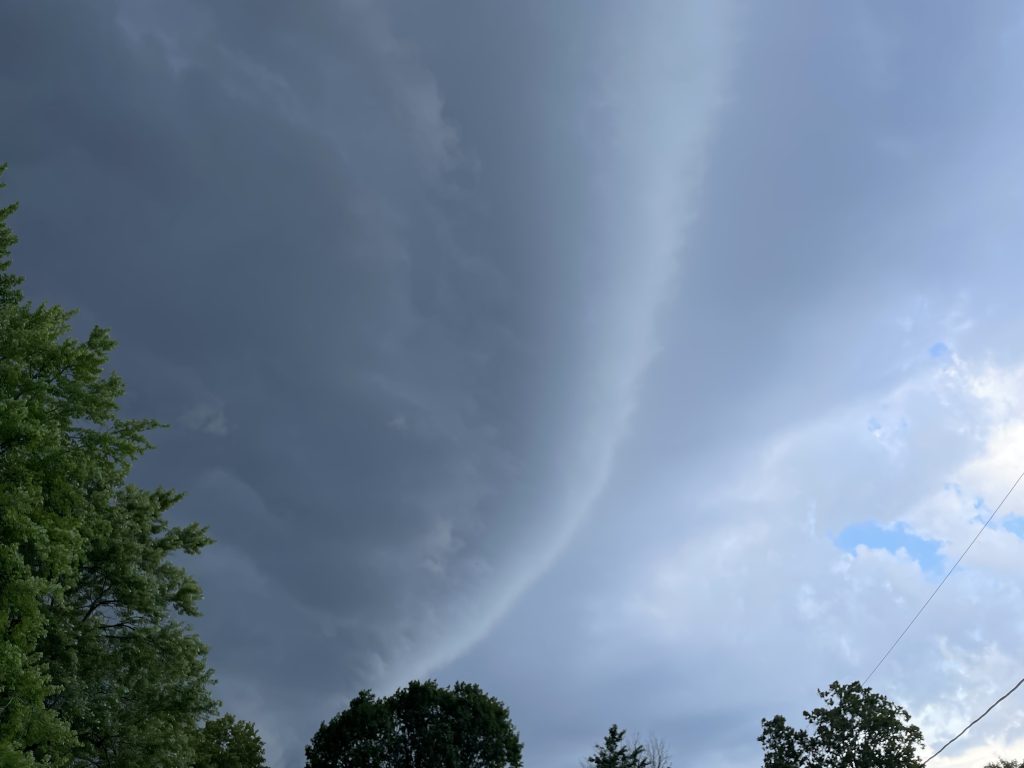
There were 5 confirmed tornadoes in Indiana that day, presumably this among them. Fortunately for us, it dissipated before reaching our home. But as the remnants of the storm passed overhead, it was obvious it hadn’t lost its rotation.


There’s the devil’s sphincter for you.
Out west, these storms were always rain-wrapped, so the funnels were not so clearly defined. They were ominous masses of dark creeping across the cotton fields, and they were clear indications to move your ass. Here though, you can see shapes, and these were the clearest I’ve seen up close. This time, winning the meteorological lottery came with pictures.
(23 people died in the storms that weekend.)
–Simon
A year ago I installed a mosquito bucket, inoculated with Bacillus thuringiensis, which supposedly kills larvae before they pupate into bastard bloodsuckers. I remained unconvinced.
It turns out that the color of the bucket makes all the difference, as mosquitos, being the tiny demons that they are, like darkness. So when last year’s bucket cracked, I replaced it with a black one.

And behold!

It’s difficult to tell from the photo, but there were larvae (those white grub things). And one was dead. I’ll take that as confirmation that the deathtrap is now finally working!
Small victories.
–Simon