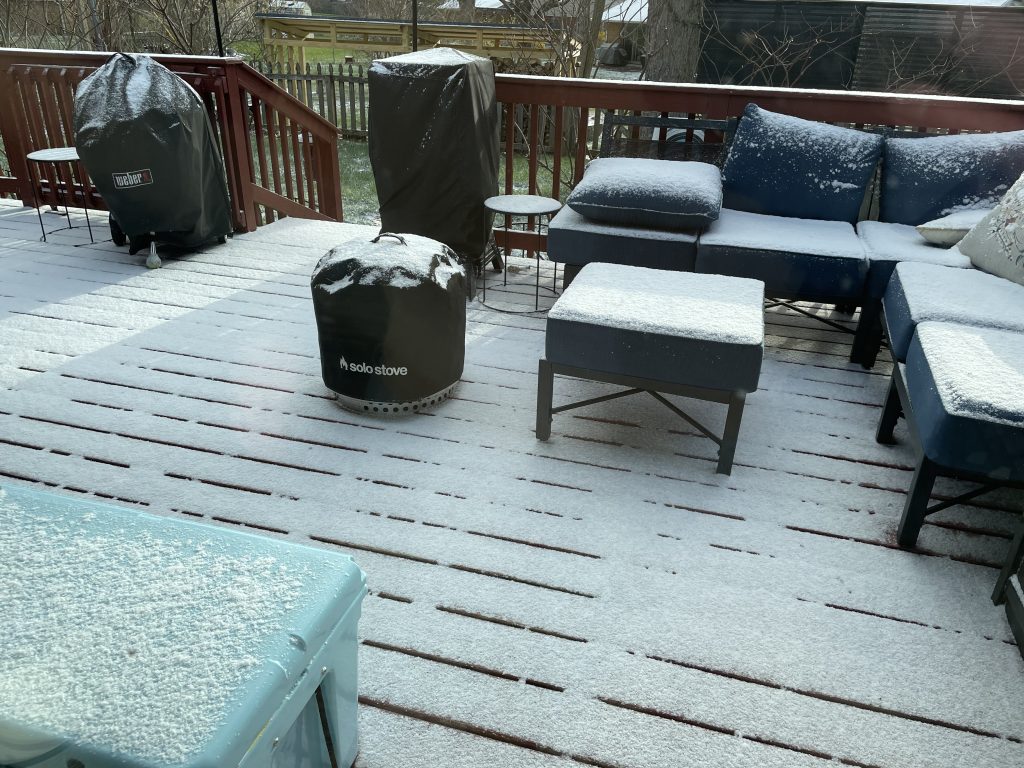
A little late to the post, but we did get one more round of snow, presumably the last for the season.

–Simon

Tales from Easement Acres
A little late to the post, but we did get one more round of snow, presumably the last for the season.
–Simon
In the spirit of phenologic trend monitoring, here are the first crocus blooms of 2026, as of 2/25:


3 days earlier than last year, but that’s probably insignificant. I’m making the guess that this year’s weather patterns will be similar to last year’s.
Next up: starting tomato seedlings.
–Simon
Four years is hardly a sufficient data sample by which to predict trending weather, but I took my historical phenologic observations and graphed them nonetheless. It would turn out to reveal a short-term trend.
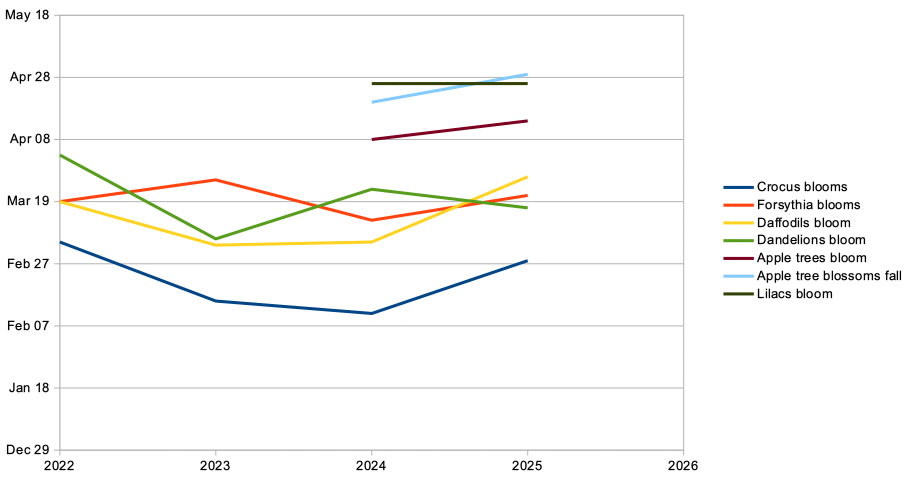
Dandelions are the outlier, and I didn’t start measuring all events on the same initial year, but there’s a noticeable dip – indicating a warm spell. That 2-year period returned to previous values last year.
I have yet to observe crocus flowers, but they are starting to bloom. And with all the recent snow, it would appear that we’re beginning to return to a cooler seasonal climate.
Interesting. I shall continue to monitor this. I may delay planting dates.
–Simon
In the world of units of standards and measure, there are weight distinctions to make. They’re confusing to the uninitiated, so here’s a quick reference guide in increasing ranks:
Crap Ton < Ass Load < Fuck Ton < Mother Load
Some of these are archaic, others are preferred in different industries, and some are the result of the Metric vs Imperial system.
These shouldn’t be mixed up with other measurements that append a descriptor to simply emphasize an ephemeral state. An example: “cold as balls” and “hot as balls”. Neither make much sense in an etymological sense, but that’s besides the point. You get the message.
So how to measure the weight of snow? I propose “Cold Ton”, but until that becomes standardized I’ll default to the American “Short Ton” of 2000lbs, vs the European “Metric Ton/Long Ton” of 1000kgs.
So when it snowed recently, during a cold as balls weekend, what originally appeared to be a Fuck Ton of snow quickly superseded Mother Load status upon measurement. It warranted such data collection, as it was the most snow I had ever seen.
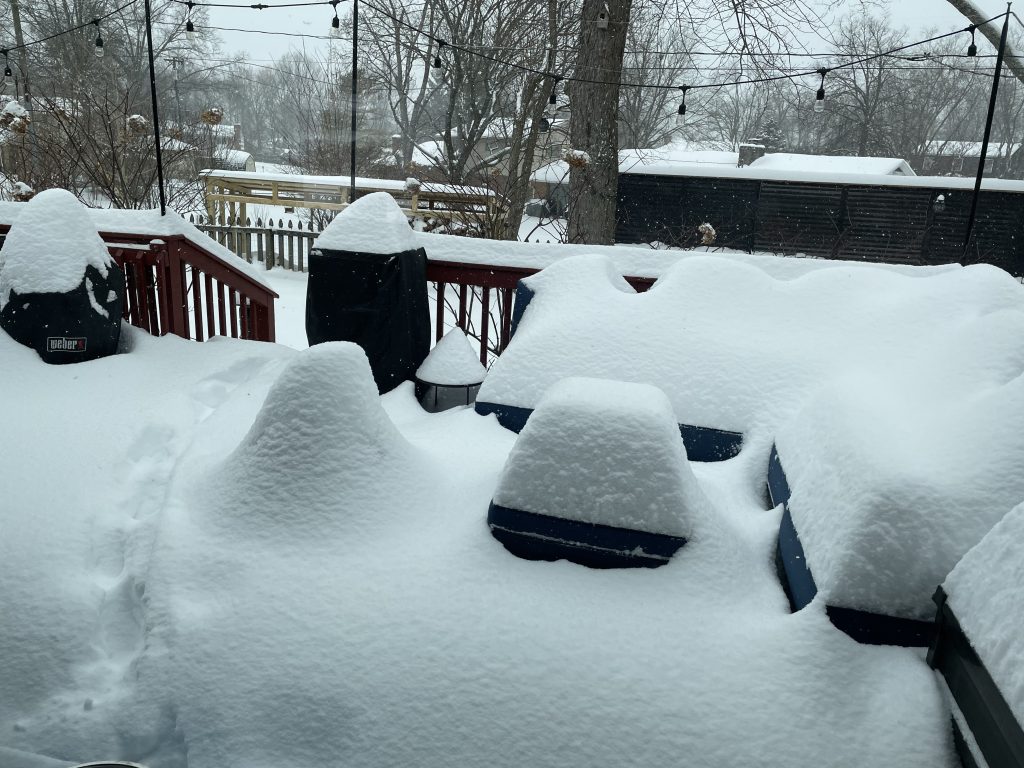
Working from home, I’m generally not terribly inconvenienced by snow, so long as it doesn’t damage anything or knock out the power. So let’s first look at some nice pictures:
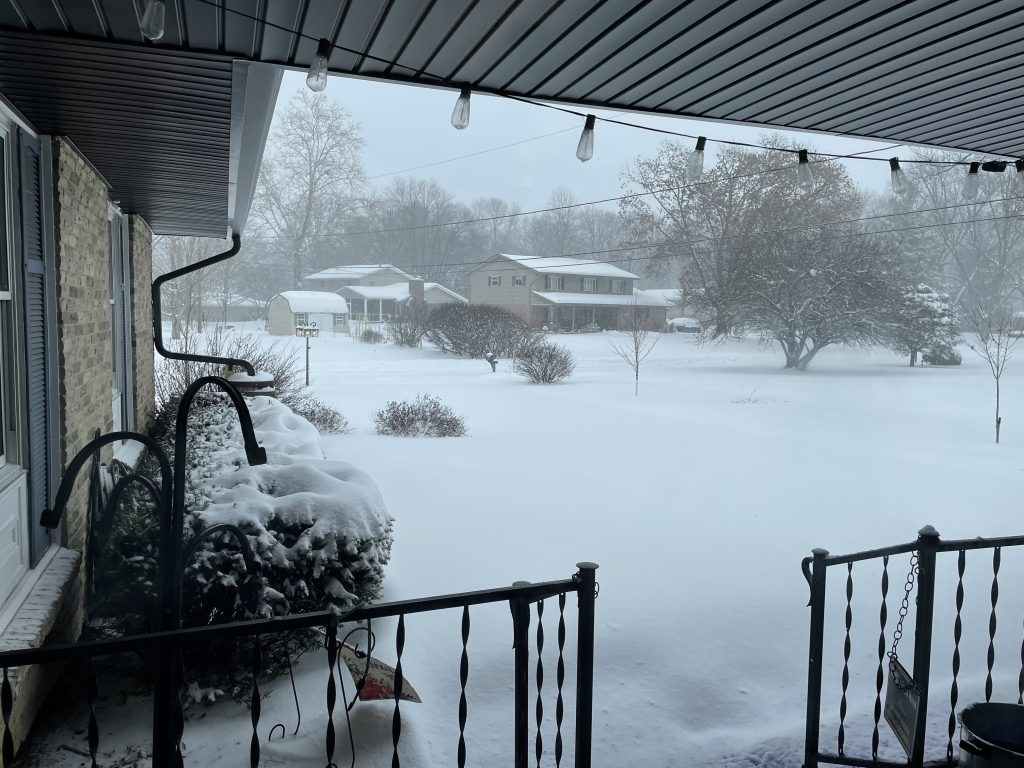

But, I still have to shovel it off the driveway, and even with the help of conscripted labor, it required two days and 16 Ibuprofen. Such a feat required me to measure the final weight of our adversary. Because data and math!

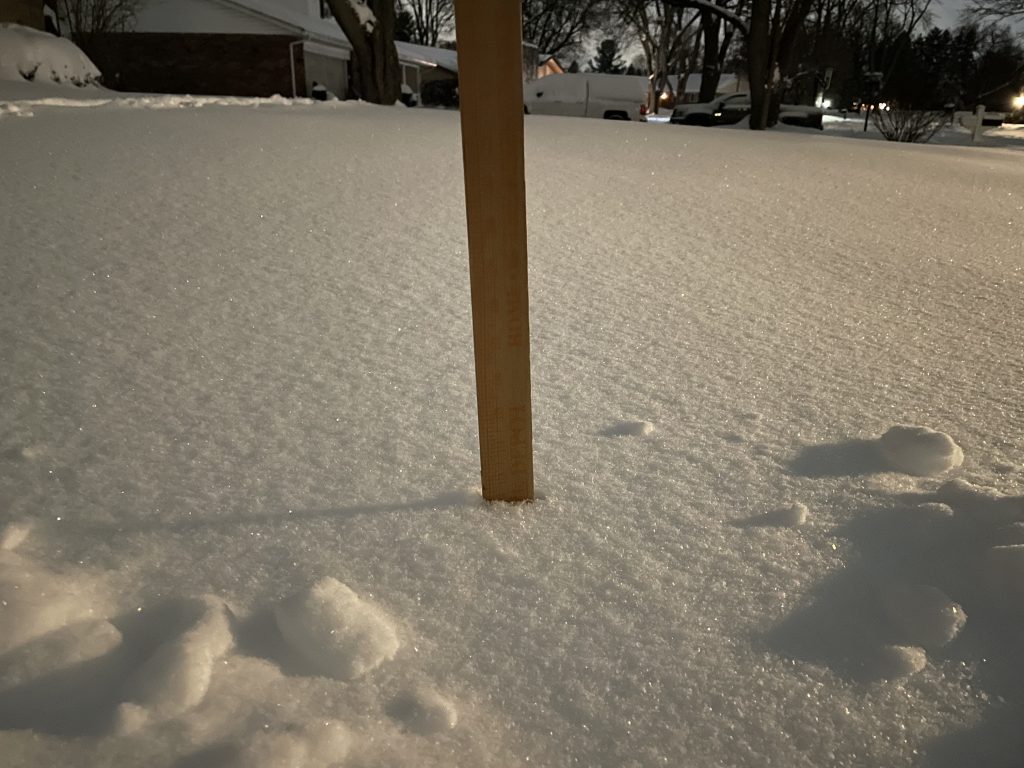
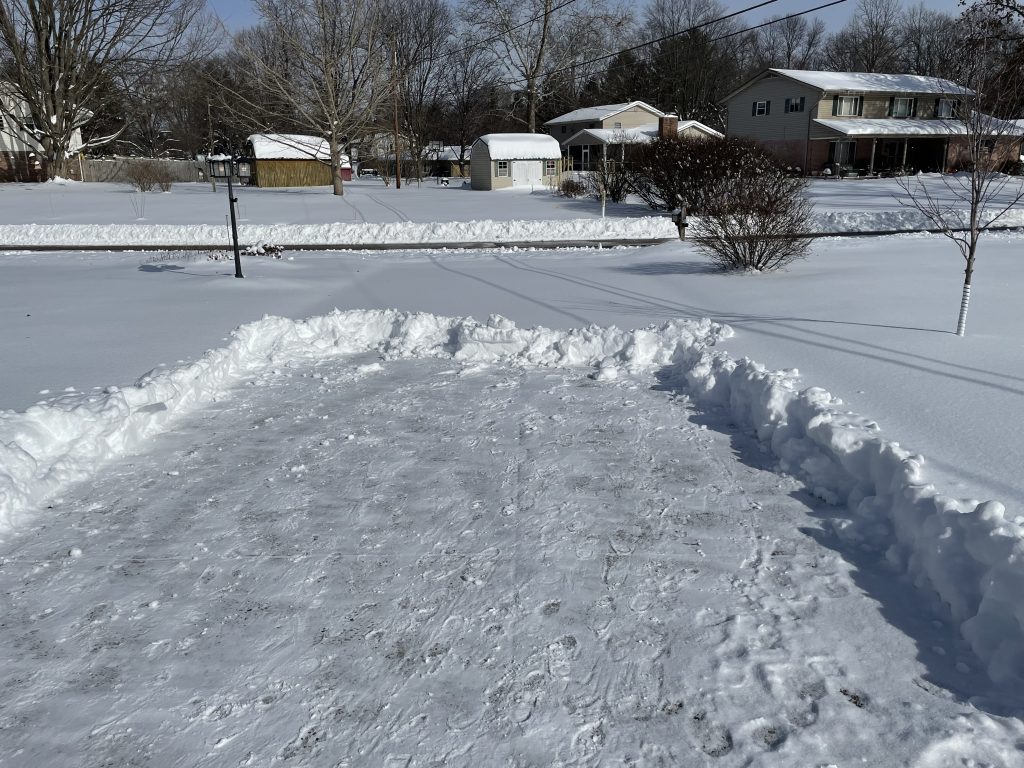
First off, I established a weight/volume baseline, because snow density isn’t a universal constant. Using a measuring cup and a kitchen scale, I determined that one cup (8 fluid ounces) of non-packed snow weighed 1.2 ounces by weight. And with a cubic foot being 957.5 fluid ounces (our snow in question therefore weighed ~9 pounds per cubic foot), and my driveway being 1581 square feet (which equals the same in cubic feet because we got almost exactly one foot of snow), and of course 1 pound being 16 ounces by weight…
We removed 14,191 pounds of snow from the driveway. Which equals about 7.1 Short Tons of snow!
(My proposal: Cold Ton = Ibuprofen / Short Tons. We received 2.25 Cold Tons of snow.)
Here’s what that amount of snow looks like visually. The portion shown in this photo is about half of the total:
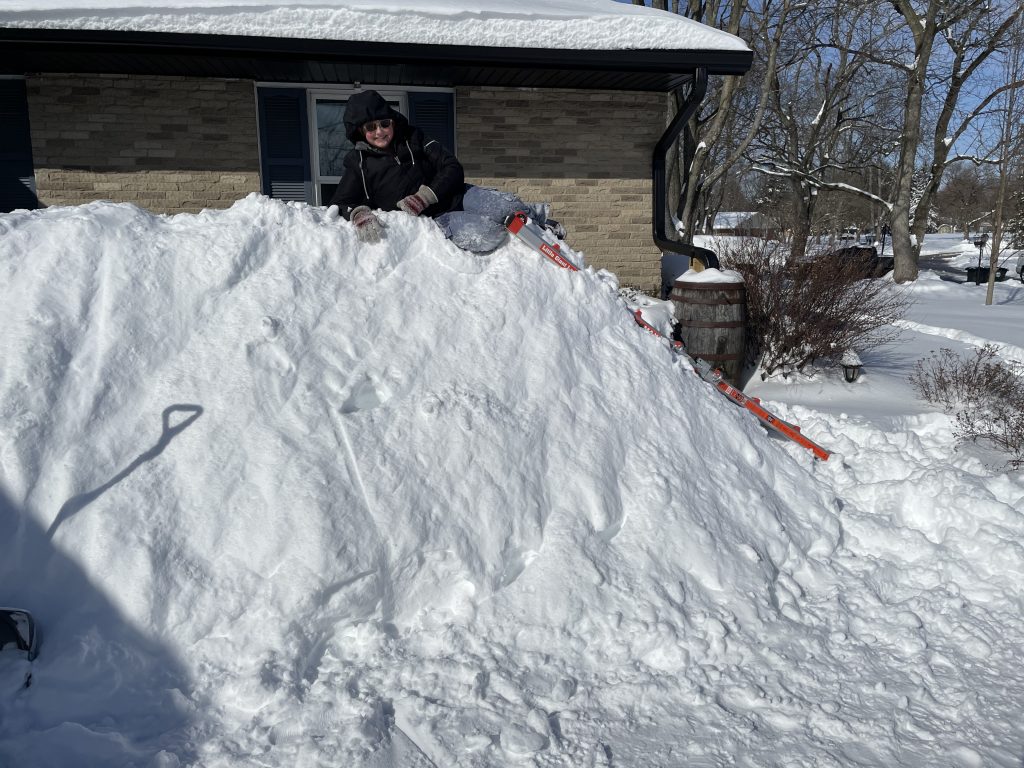
Snow is heavy, and I certainly understand now how little of it will kill you if buried in an avalanche. Or why people get heart attacks shoveling it.
–Simon

Arcus, or jet contrail? Hard to tell.
–Simon