It’s been unexpectedly difficult finding a TV stand. There isn’t a shortage of course, but their contemporary designs don’t trend toward accommodating my setup. They tend to be too tall, with compartments too small. Were I to use a common design, my TV would be uncomfortably high, and my audio receiver would need to sit on top–obviously not a practical configuration.
Wondering why this was even a dilemma, I discussed the problem with coworkers. I quickly discovered that most people do indeed mount their televisions up high, like a movie theater. I also found out, to my surprise, that people don’t generally use audio receivers. No one wants to bother with wiring speakers, and so forego surround sound configurations in favor of sound bars which provide a small improvement over TV speakers, and they don’t require an external receiver since they have built-in input switches.
Older TV cabinets have massive compartments, probably due to technology being physically bigger back then, and in a time before high-resolution viewing there seems to have been a greater interest in high-fidelity audio, and so audio receivers were more commonplace. But these older cabinets can’t accommodate a modern TV’s size, so again we were stuck.
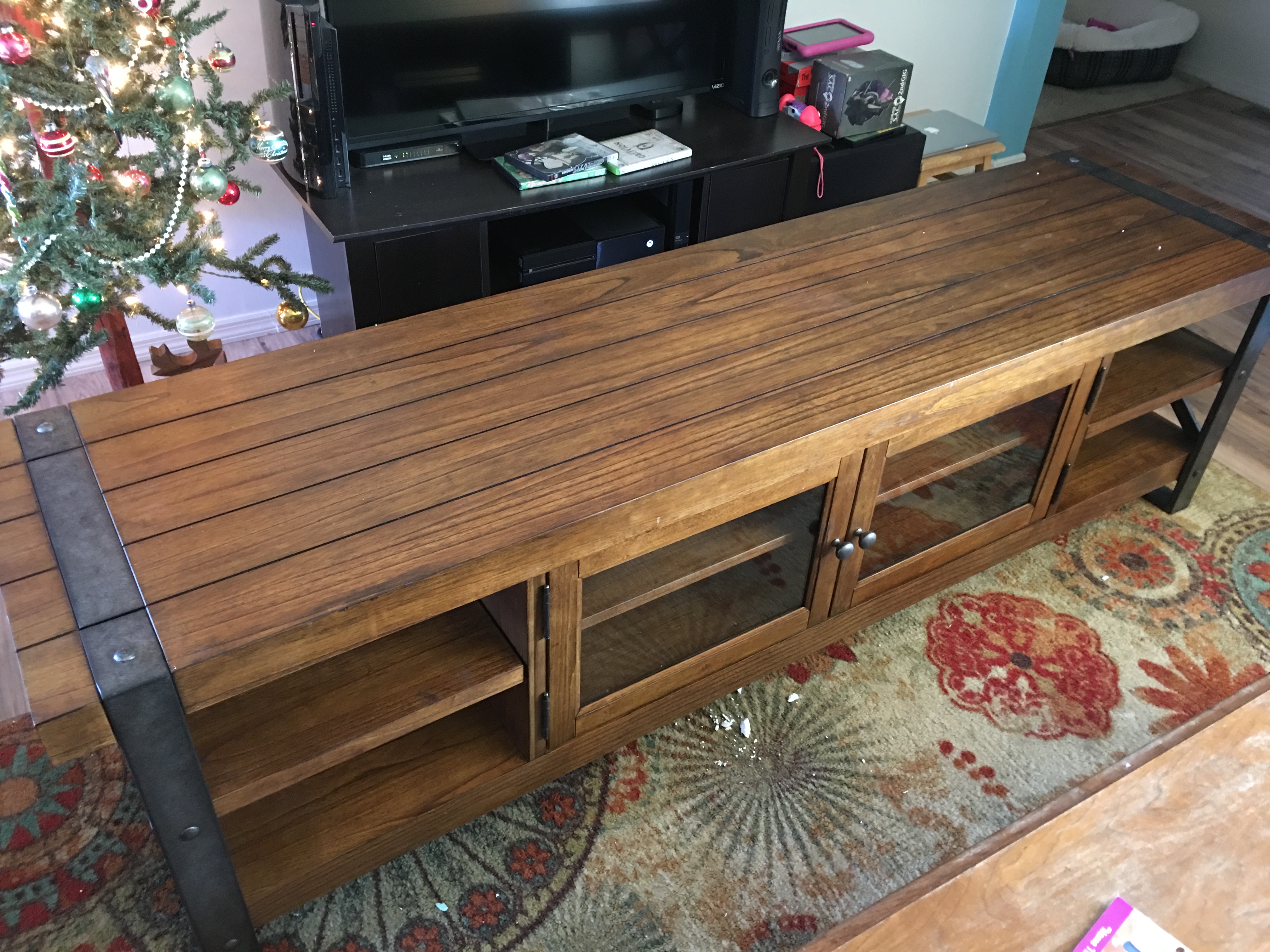
And so we’ve kept an old and ugly particle-board stand, bought on the cheap from Target. And ever since, Liz has been on the lookout for a new stand. And then, finally, she found something. We took very careful measurements of all components, and behold! They would fit! My normally frugal nature gave way and I not only didn’t dissuade her from making the purchase, but I actively encouraged.
Although she probably would have bought it anyway
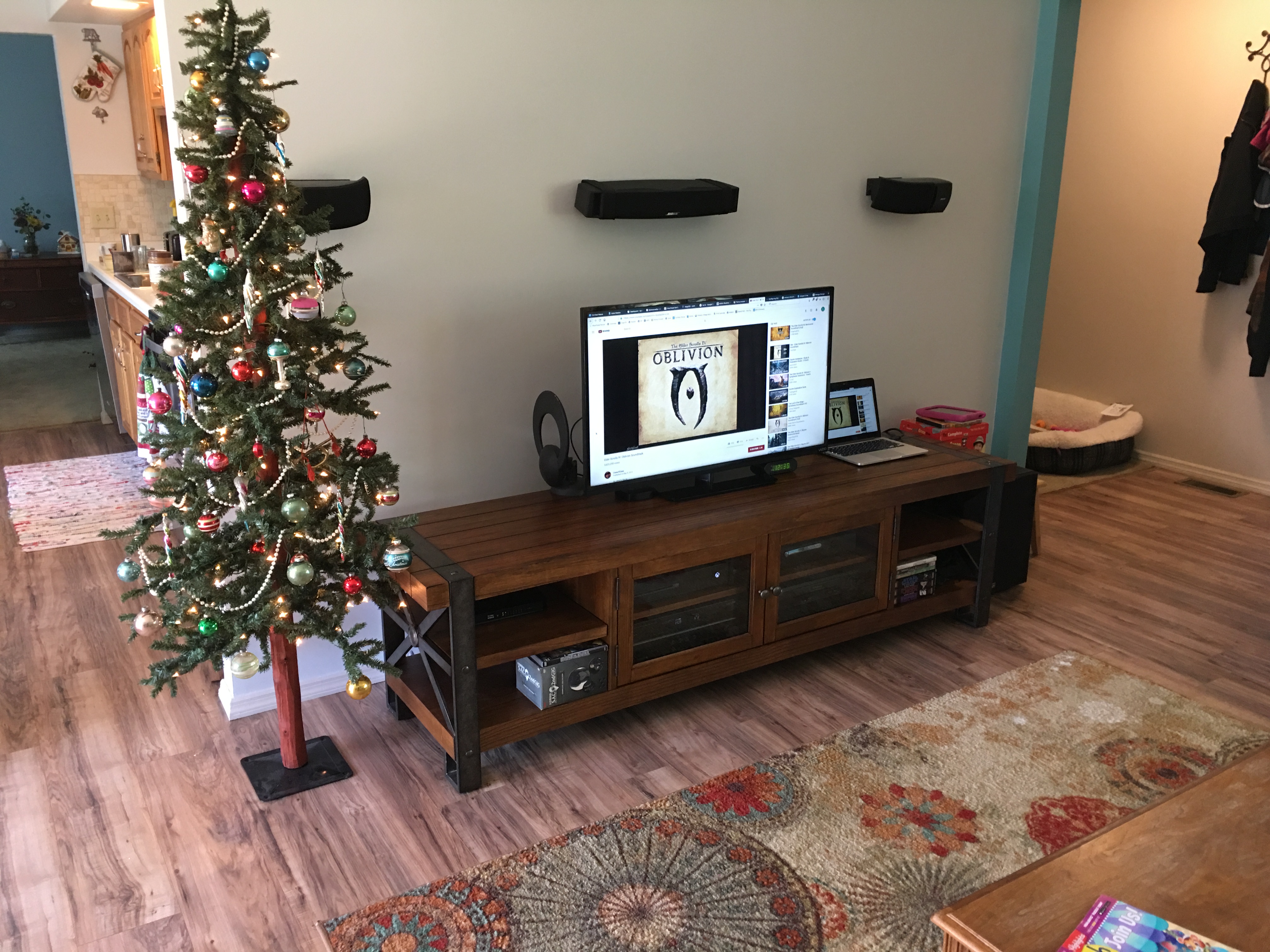
I spent 2 hours rearranging and rewiring everything, but now we have completed our setup of adult furniture. And since everything’s now behind glass I don’t feel quite so nervous when the kid walks past with a beverage.
“Adult” maybe being defined a bit loosely here (note the Elder Scrolls YouTube soundtrack on screen and the Ghost in the Shell DVDs on the shelf
Liz then immediately decided we needed a bigger TV, now that there’s more room on the stand. Sigh.
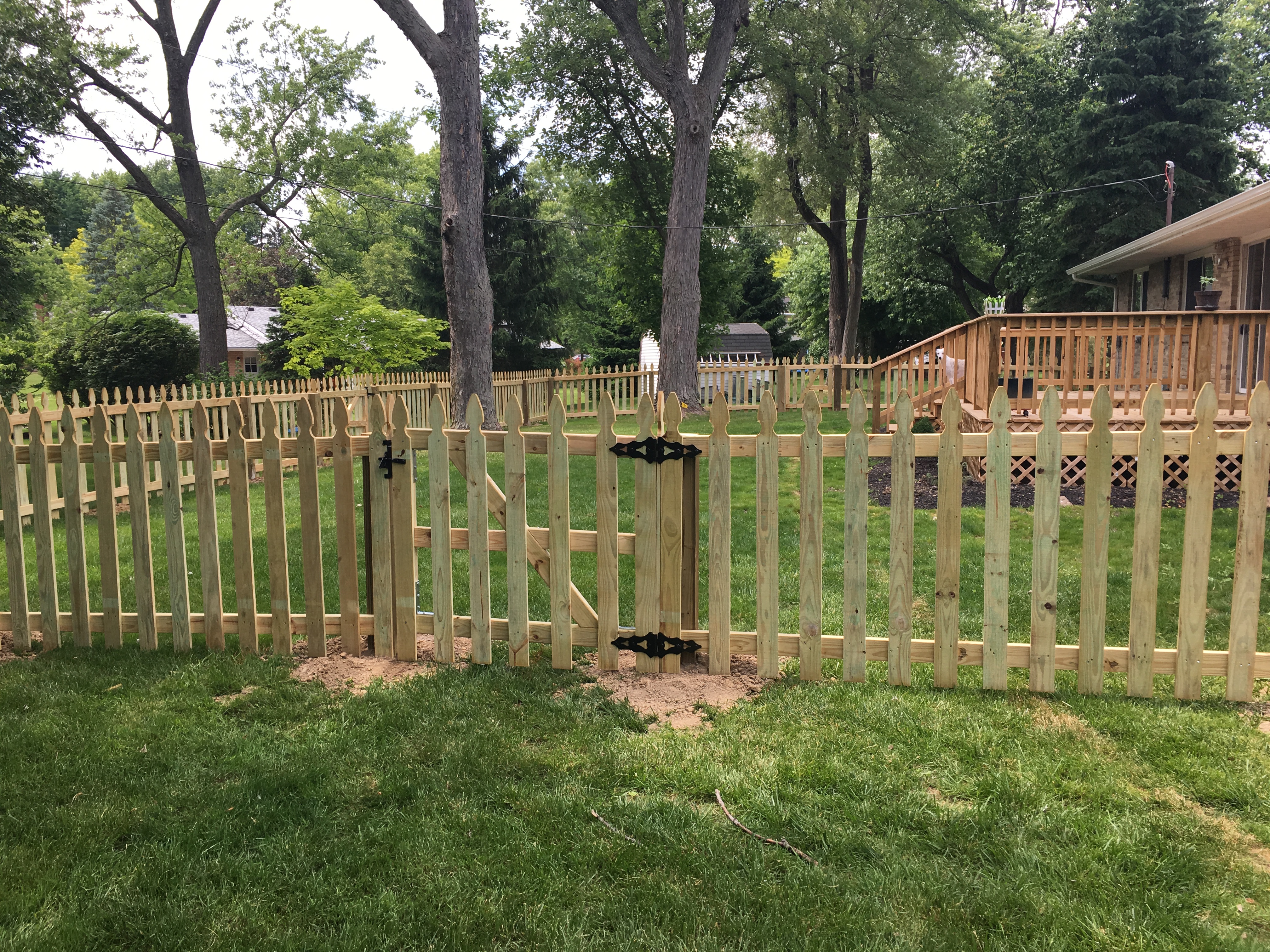
When we bought the house, we had a fence installed. Factors such as the pipeline and the honeysuckle hedgerow prevented a full circumference of the lot, much to our dismay (see any post where I talk about a certain neighbor). But, we at least needed a corral for the whippets, since their potty runs can measure into the quarter-hours.
And so, we ended up with a nice little 4-foot gothic picket fence. The quality of the install was, shall we say, mediocre, however; and the railing spacing varied from 4 to 8+ inches. Consequently, the little whippet quickly figured out that the fence was a mere suggestion–a suggestion which became less and less considered throughout the summer months. So when I let her out, she would chase a squirrel, immediately slip through the fence, then when she decided to wander back, mysteriously couldn’t figure out how to slip back in, resulting in me having to go get her.
This culminated in a recent day in which I was working at home, had joined a conference call, then had to let the little whippet out (because she always waits until I’m busy to tell me). I quickly became occupied with work and forgot about her…until The Heckler (The Village Elder’s wife), returned the dog to the front door. True to her name, she then offered select commentary on my negligence, ultimately telling the rest of the village an embellished story about how I was mindlessly engaged with something unimportant and consequently unobservant to the world around me.
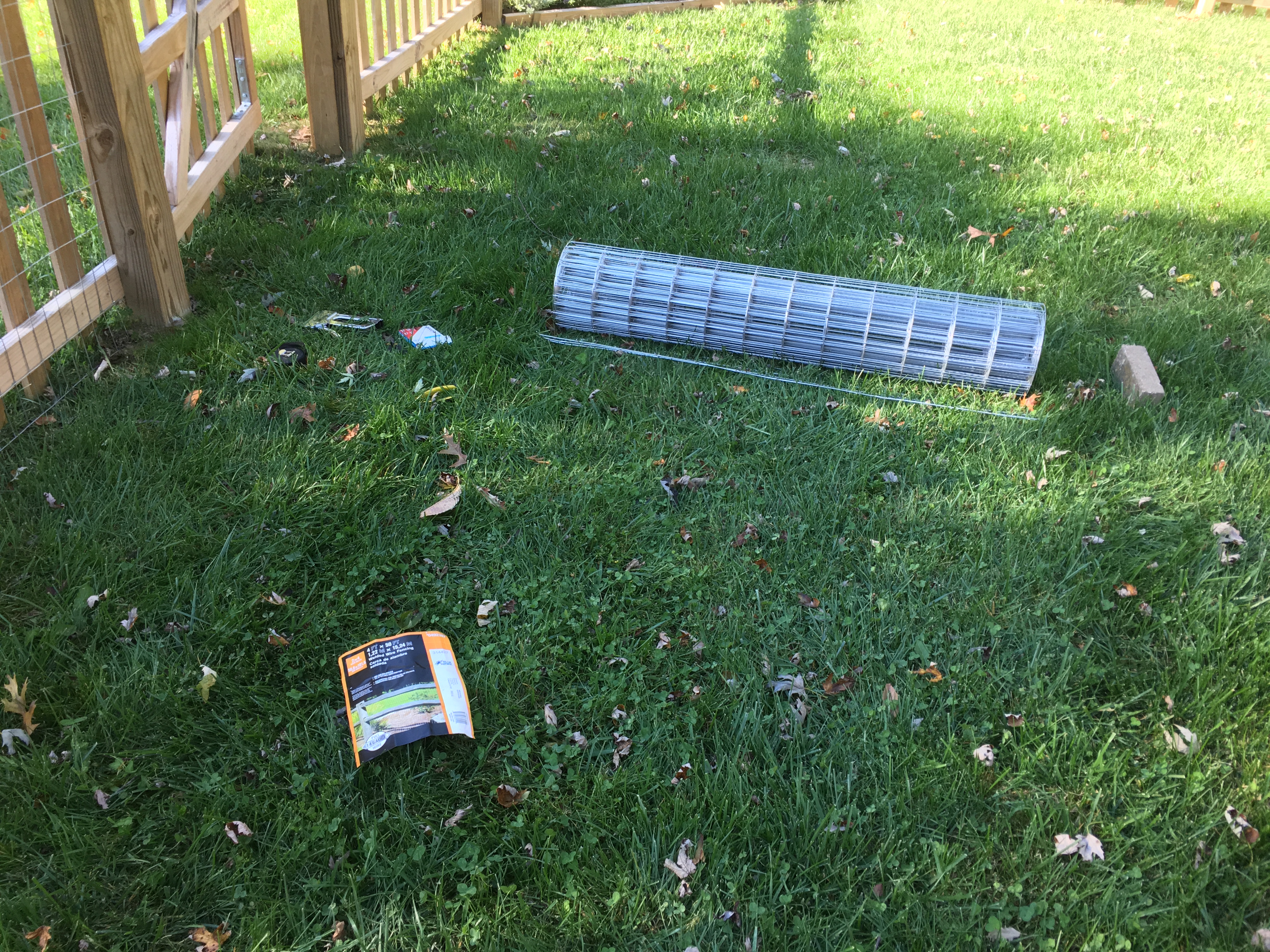
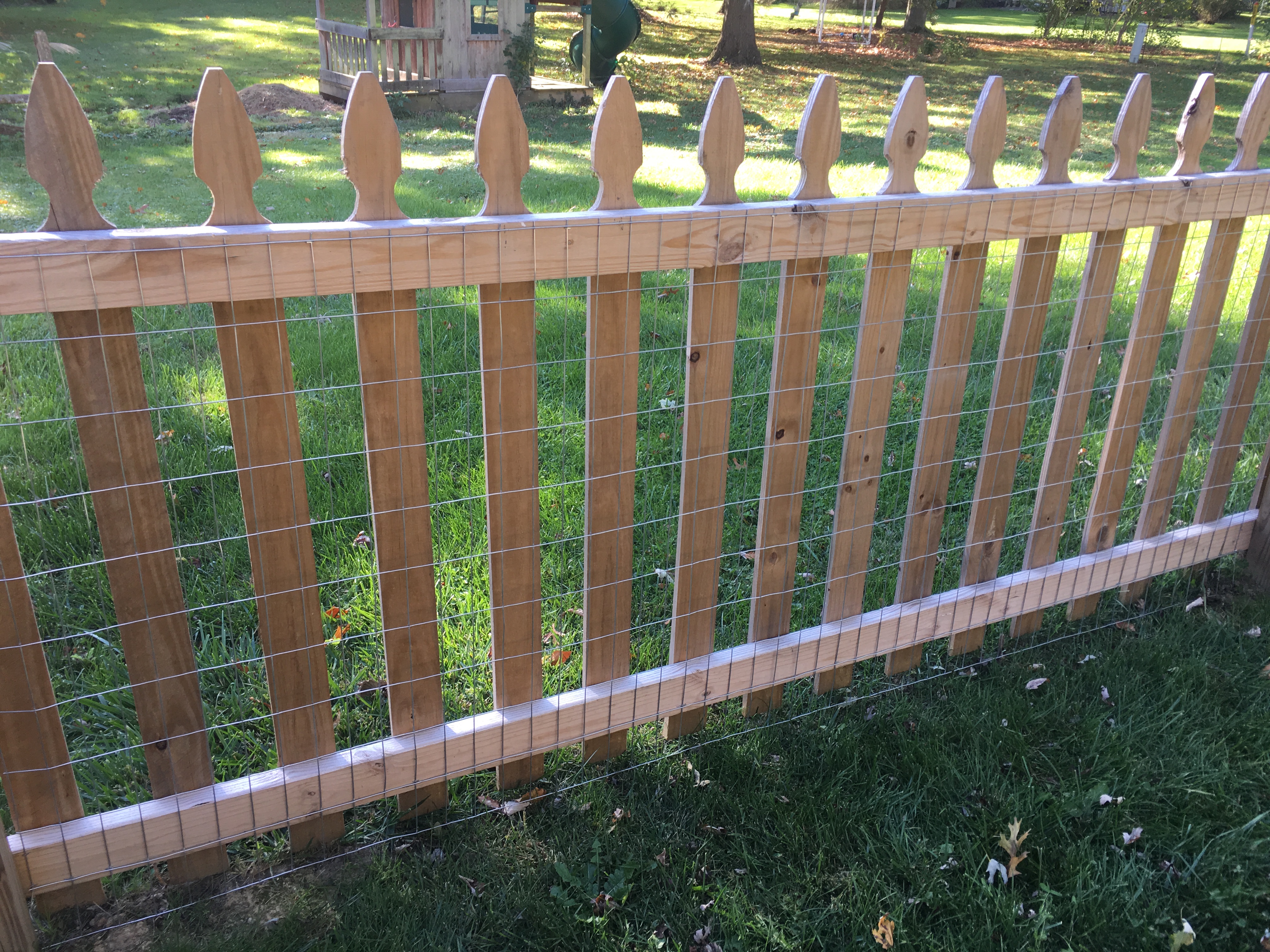
It was the final push I needed to proceed with the project I had already considered: attaching wire to the fence, thereby sealing in any canines wishing to turn feral. Thus, as part of the shop light project, I acquired 150 feet of fencing wire.
Armed with staple gun, wire clips, fencing pliers, gloves, tape measure, and determination; I got to work. Unfortunately, it wasn’t so easy as stretching the wire for the entire run. Since my goal was to also make it aesthetically-pleasing, the wire couldn’t be simply attached to the posts, 4 inches away from the pickets. Nor could the wire be attached to the outside. This meant that I needed cut-to-measure individual segments. And, since the segments weren’t always rectangular, but various forms of parallelograms, I often had to cut to fit while in the process of stapling. In short–it was incredibly time-consuming and physically painful. Between squeezing wire clips and the staple gun, my hands and forearms got a good workout.
I also greatly under-estimated the time required. My 2-hour prediction turned into 6. And it was the last hot day of the year too. But my stubbornness was rewarded and it looks quite nice, or as nice as fencing wire can look anyway.
I feel I need some sheep in there with this setup. And then I wouldn’t have to mow inside the fence! Bonus!
And the best part was when I let the little whippet outside to test it. She quickly returned, and after being let back inside, laid down in her bed and started me down with indignation and betrayal.
During my recent plumbing project, I considered that connecting pipes, if done wrong, at least wouldn’t kill me. Still, I found the process irritating, and after the pain of cinching down threaded pipe connections took its toll on my elbows, I concluded that I would much rather be doing electrical work. Besides which, if I wear leather gloves, the shock of 120 volts is reduced to a mere tingle even if I screw up the breaker.
Still, despite this mitigated lethality, when I find something done wrong, I grow concerned. So it was that I decided to tackle the unattached electrical outlet in the garage. I really should remember to take before pictures, but I didn’t this time, so I’ll have to explain the setup.
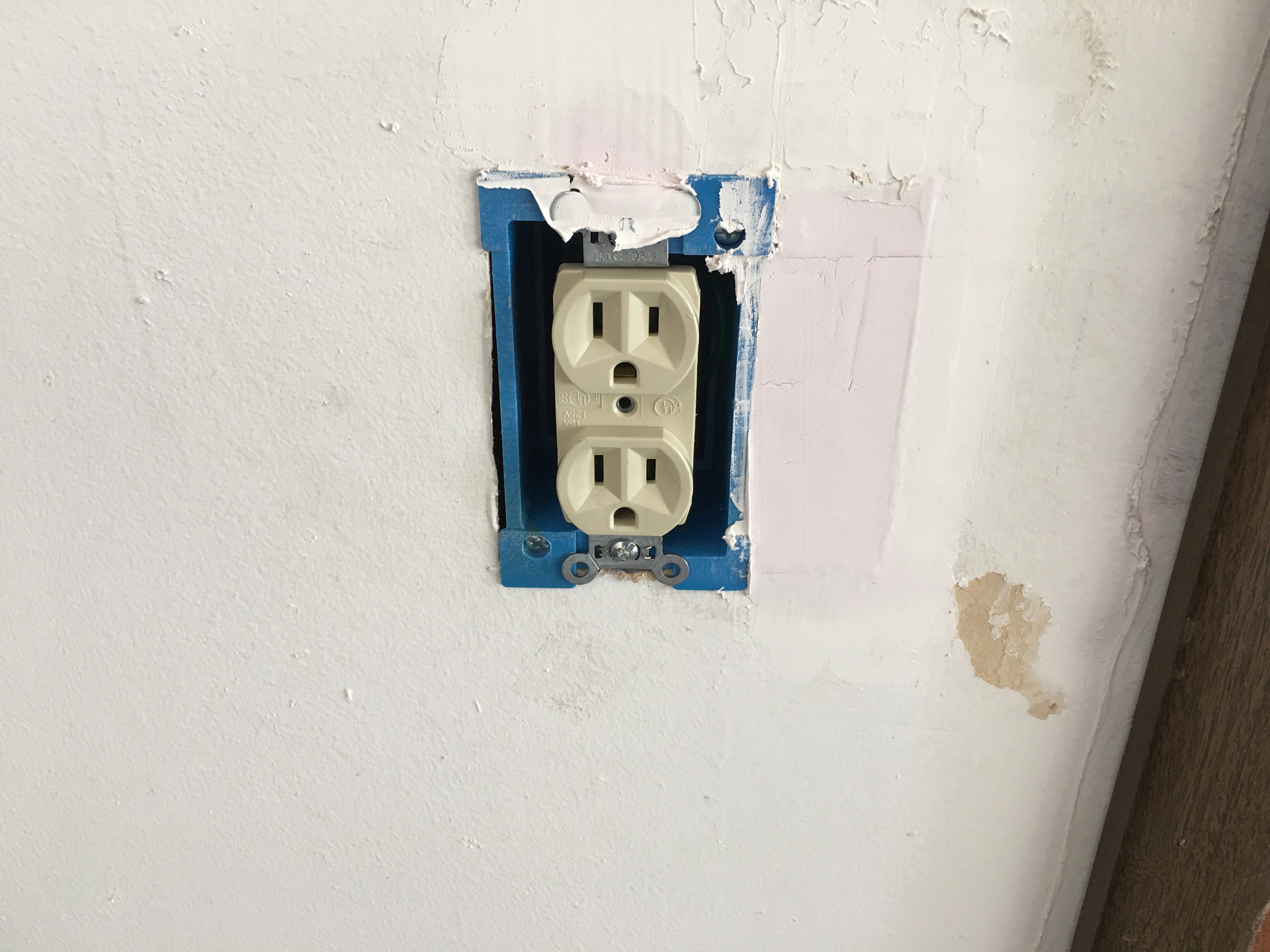
First, I’ll mention that it was a 2-pronged ungrounded outlet. That was part of the problem, as an obviously bad choice for the garage, which would presumably be more likely to power higher-amperage devices. More troubling was that the outlet wasn’t bolted into the wall box, and the wall box itself wasn’t even attached to either the adjacent stud nor the drywall. In short, there was an electrical line leading into a loose box, then wired into an ungrounded and unattached outlet–a hole in the wall with exposed hot wires. What could possibly go wrong?
My main concern was that the kid might poke a finger in there, so I had taped up the cover. And as the outlet lacked a ground, as mentioned, it was of limited use anyway. But then, as I was shoving rolls of carpet into the attic one day, I considered: how hard would it be to run a separate ground to that outlet and make it serviceable again? The basement has a ground line running through the joists, so perhaps the attic had one too. I searched around, but no ground wire was to be found. That seemed odd, seeing as this was the only outlet in the house which didn’t have a ground. For a moment, I panicked, thinking that none of the outlets were grounded, but these fears were quieted when I opened a junction box and discovered that all the wiring was modern Romex with connected grounds.
I followed the wire from the box to the obvious spot where it dropped down and fed the outlet in question. This wire, too, was grounded, which begged the question: Why wasn’t the outlet grounded? And where was the ground wire?
Climbing down, I checked the outlet box again. Turns out that the wire did indeed have a ground, but it had been clipped off at the point where the outer insulation had been stripped to separate the wires. So someone had deliberately installed an ungrounded outlet on a grounded line, and had removed the ground. Why? Tugging on the line, I discovered there was no extra wire, so I couldn’t simply connect the ground to a new outlet as-is. And of course, the box wasn’t mounted so I’d need one that would. Sigh.
My motivation to complete this project coincided with Liz re-painting the living room. With my entertainment center out of action, and the threat of being drawn into a painting project looming, I concluded that this electrical problem needed an immediate resolution. Off to Lowe’s!
In the electrical isle, I wondered why both metal and plastic boxes were the norm. Why would one be used over the other? Maybe metal was for industrial buildings. But for me, I rather preferred to use non-conductive material to house electrical wires. I also bought a roll of 14 AWG wire to extend the ground.
Back at home, I followed the usual procedure of sequentially flipping breakers until the correct (and least logical) circuit was found. Then I got to work removing the unmounted box, which wouldn’t fit through the outlet’s hole in the drywall. I wonder how it got in there to begin with. Was it installed before the drywall, but never mounted? The prior owner had done some weird electrical projects in the basement, none of which inspire much confidence, so this could very well be one of them.
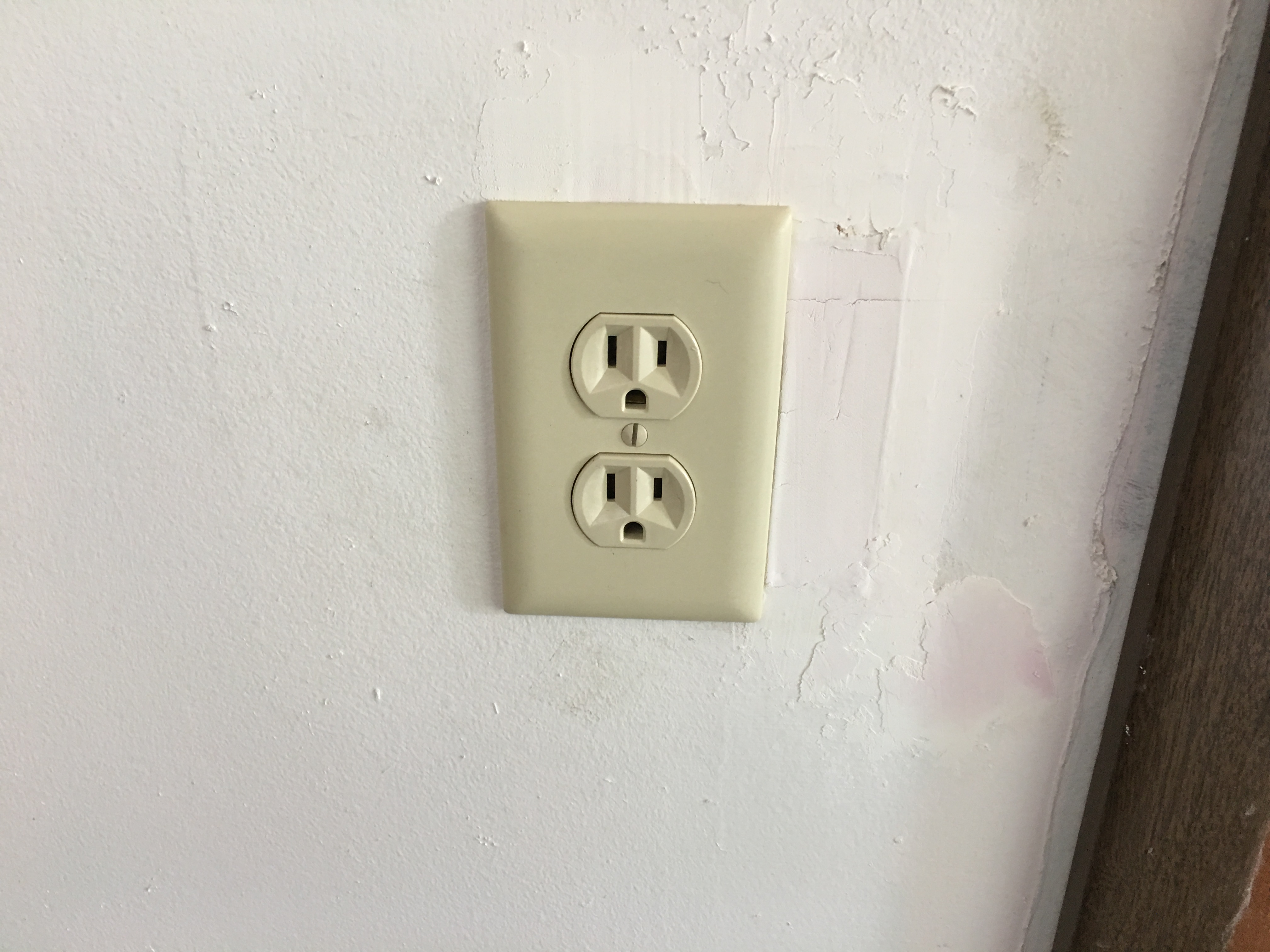
At least it was the garage, and the drywall isn’t painted out there, so I didn’t feel much hesitation in sawing through it. I removed the useless metal box and installed the plastic one, having poked the wires through and extended the ground. The outlets in this house are worn out, so I’ve been replacing them as demand necessitates. This is the 5th such outlet to need replacing, so I have a supply of them on hand.
I patched the hole with leftover drywall and spackle. It doesn’t look very clean, but it works and is far safer than the prior potential disaster.
What the hell was wrong with this guy? You’d think that electrical work is something worth doing right the first time.
Fortunately, my project was finished quick enough that I was able to help out with the painting after all…lucky me.
So in Part 1, I chronicled my woes regarding a seemingly simple task: connecting a garden hose to an unused water softener spigot in the basement. In short, it was not as easy as I had thought, and I had resorted to an unconventional solution. Unfortunately, that unconventional solution did not withstand the test of time, and when I used the hose later, the sealant popped loudly and water sprayed the wall. The pressure was just too great.
Curious as to how much pressure was in these lines, I researched what standard pressure should be. The answer: 40-60 psi, no more than 75. This only served to cause more questions though, like how deep does water have to be to reach that pressure? Hmm, back to the Internet.
The answer to this question: about 30-40 meters. That’s…pretty deep. I certainly wouldn’t ever want to be that deep under water. And that’s residential pressure, after the reducer. It’s no wonder broken fire hydrants turn into geysers, and why water towers are so creepily tall.
But back to the job at hand. I was determined to get this project to work, so I decided on another tactic that I had toyed with at the time: splitting the washer hookup and connecting a hose directly to that.
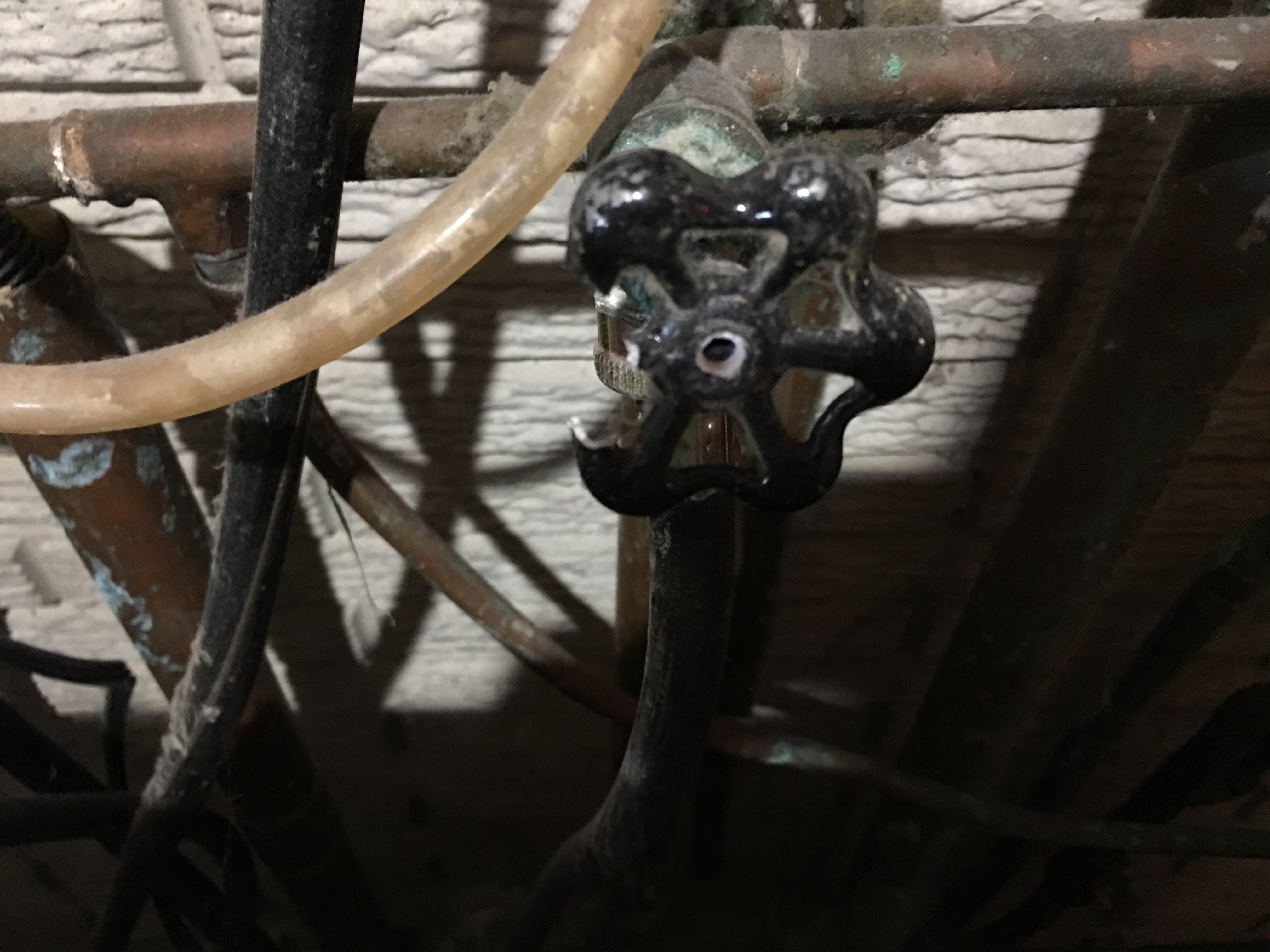
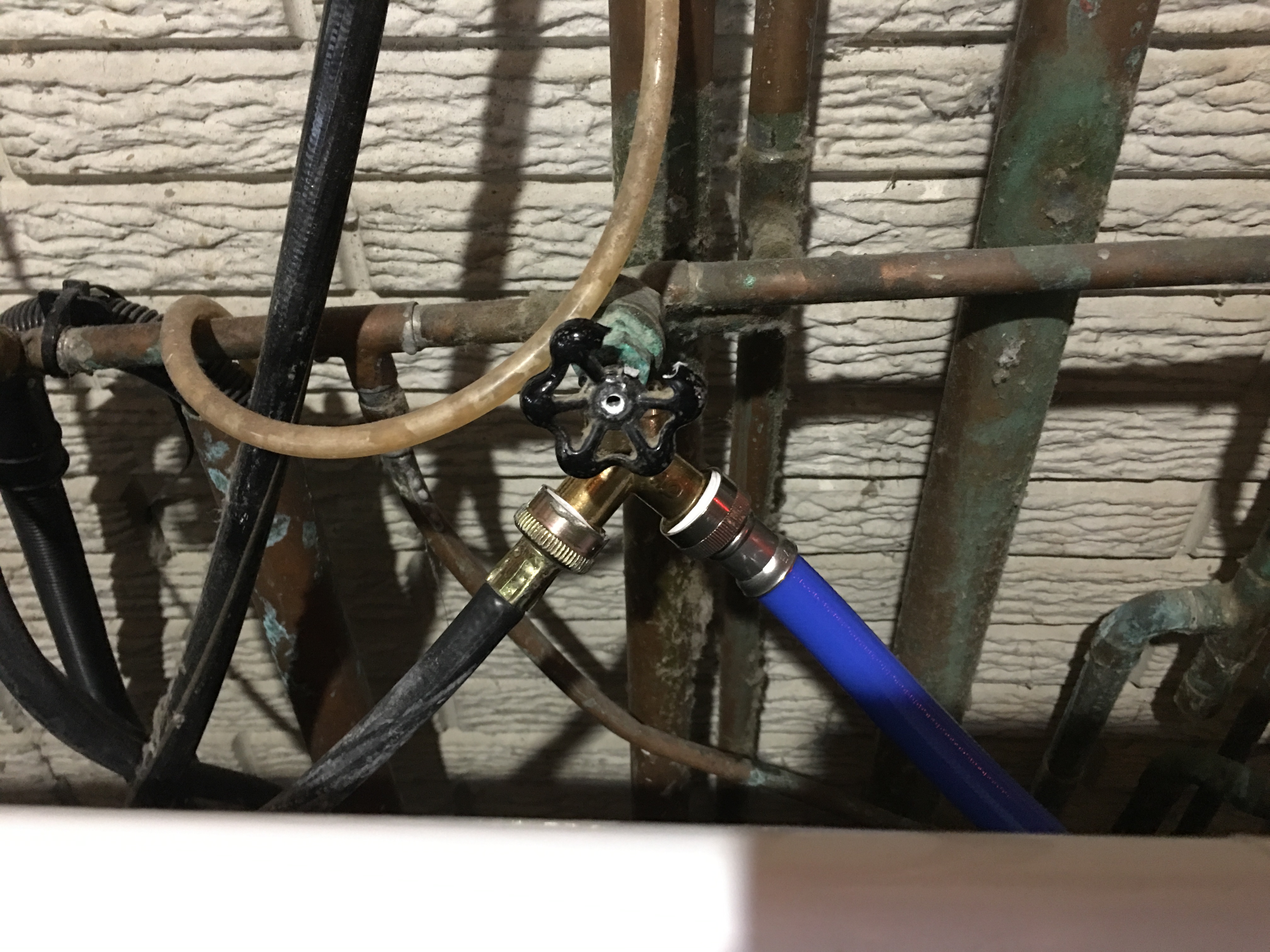
This spigot has certainly seen better days
Once again, it was off to Lowe’s to stare at pipe fittings. I admit–I rather enjoy just looking at components like this, formulating solutions in my mind, then allowing my attention to drift to potential future projects. The trouble is, staring blankly at rows filled with utility infrastructure sends visual messages to those around, manifesting into thoughts such as: “This guy has no idea what he’s doing,” or “He’s going to break something or hurt himself,” or “Maybe I’ve watched too much 90s-style man-of-the-house-deprecating sitcoms and I’m judging him too harshly when I really don’t know what he’s capable of.”
I highly doubt that it’s ever that latter thought, however, so in general I try not to tarry too long. Fortunately, my years of work experience have taught me a useful skill: how to look busy when I’m not, and how to look like I know what I’m doing. I must have pulled it off, because no one approached me. And besides which, figuring things out is part of the fun of a project. I don’t want a detailed walkthrough for everything I do in life.
Anyway, I quickly found a copper hose splitter. But–would this fit the laundry hookup? I presumed it would, but I also presumed I would find something to fit the water softener spigot, thinking everything in plumbing was standardized and easy to figure out. Also, the laundry hose stays pressurized, and since I didn’t want to leave a garden hose pressurized constantly, I would need to split the hookup, and then install a value on the hookup I would use for the hose.
Then it occurred to me: I would buy another wash machine line, which is designed to stay pressurized, then terminate it in a valve, then attach the garden hose to the valve. Plus, having a washer hose in my possession at the store would allow me to determine if the splitter would fit. So, I wandered over to the appliances, found a set of hoses, opened the box, and attached the splitter. I was gambling, of course, that the existing hookup and hose were the same size, but since I couldn’t find any size other than 3/4 in the entire store, I took that to be reasonable confirmation that it was a standard.
The next objective: attach the utility hose to a ball-valve. All the valves were female-threaded, so I had to find a male connector. Fortunately, that was easy through trial and error, though I later found out that hose threats and pipe threads are different, but a male 3/4 pipe thread will still attach to a 3/4 female hose thread (though not the other way around). And fortunately, the Internet was pretty unanimous in that doing this, while not the way things were designed, wouldn’t cause any problems. So, I didn’t bother swapping this out for another 3/4 male pipe to hose thread adapter–which is what I attached to the other side of the valve for the garden hose. For whatever reason, it didn’t occur to me that utility hoses had hose thread–something new to learn I guess.
The difference is that hoses use pressure to seal against a rubber gasket, because they’re also designed to be removed if desired, whilst pipe thread is meant to be cranked down and left sealed eternally (bypassing the need for a washer), and is so threaded finer to reduce gaps. For those who weren’t aware of or considered this distinction, myself included, there’s a brief explanation.
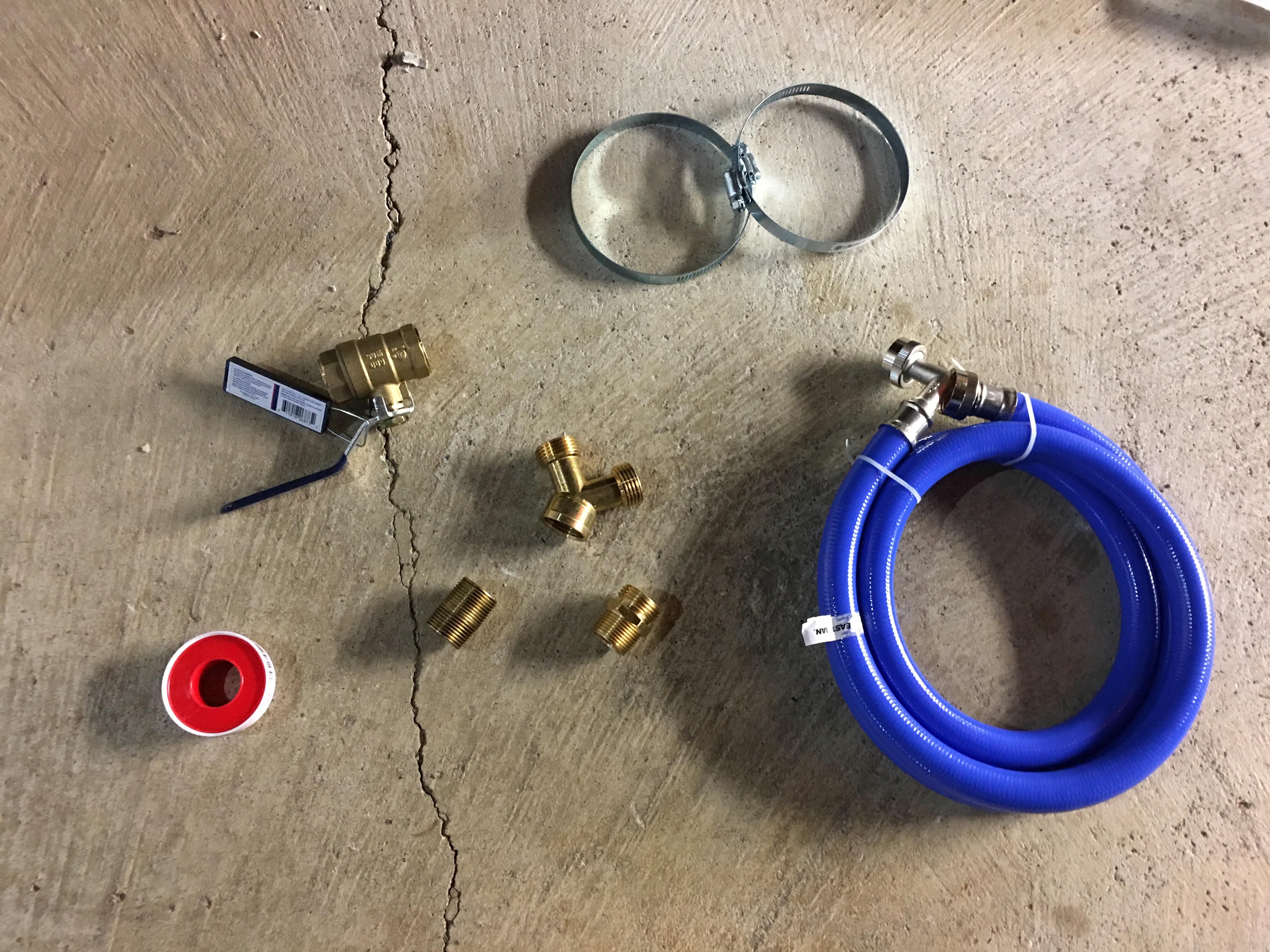
Having all the parts (splitter, utility hose, male thread connector, ball-valve, male thread connector to garden hose), I set off for home.
I never did use those hose clamps–they were too big
The splitter attached easily enough, followed by the existing utility hose, then the new one.
After doing this, I asked Liz how old that hose was, which we determined to be the one that came with the house, so it’s probably due to be replaced before it catastrophically explodes
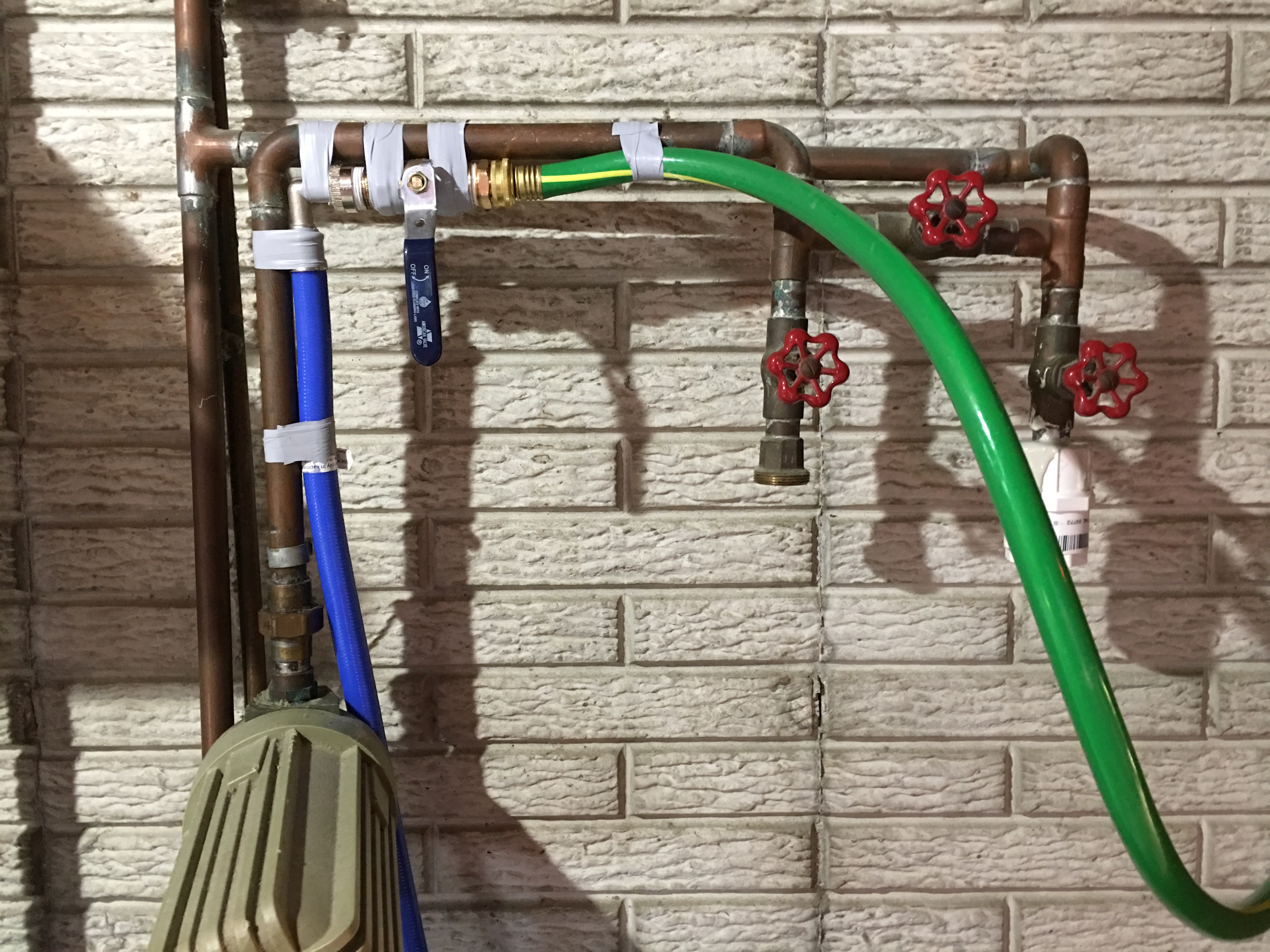
Then it was the fun part: assembling the copper parts. I really wonder how plumbers do this, because I applied the tape and cranked those bastards down until I ached all over, and they still leaked. Eventually, after experimenting with additional Teflon layers, I got the leaks to stop…mostly. The garden hose side still drips ever so slightly, but not enough to bother with taking it all back apart and adding more tape, and only when I leave it pressurized.
I let it sit for a time, ball-valve closed and the line under full pressure. For whatever reason, I expected my handiwork to explode violently, embedding me with copper shrapnel. But rationally, if anything were to fail, it would be that ancient rubber hose that’s been on the line since the 60s.
That silicon tape got a new use–it’s a much cleaner solution than duct tape, although eventually I might get the right sized hose clamps for a more permanent fixture
I feel much more confident with this setup, though my prolonged work back there with the piping shook my confidence with the existing pipework, like that old utility hose and the shutoff to the outside spigots that’s so rusted I can’t turn it. Maybe next I’ll learn soldering.