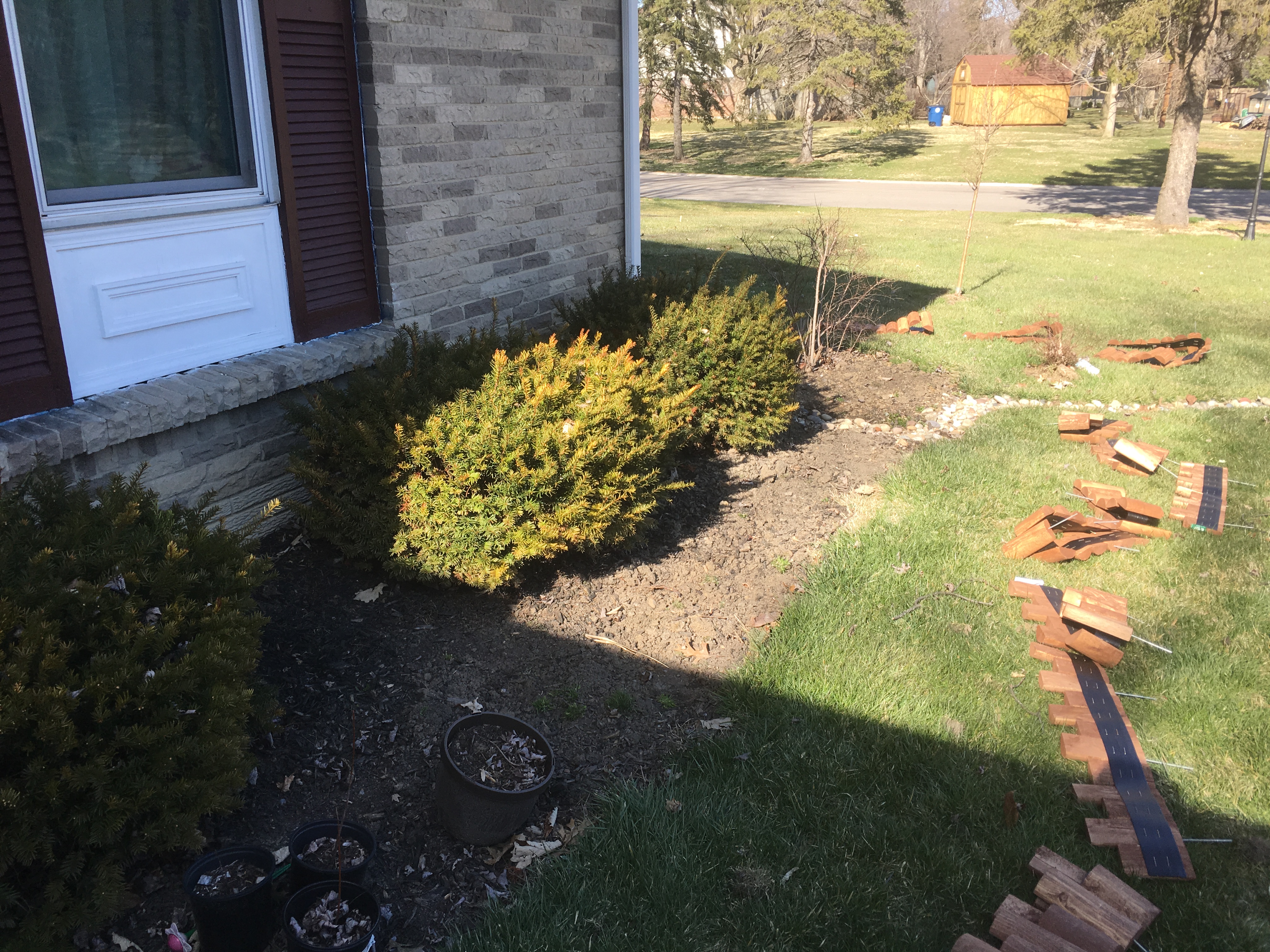
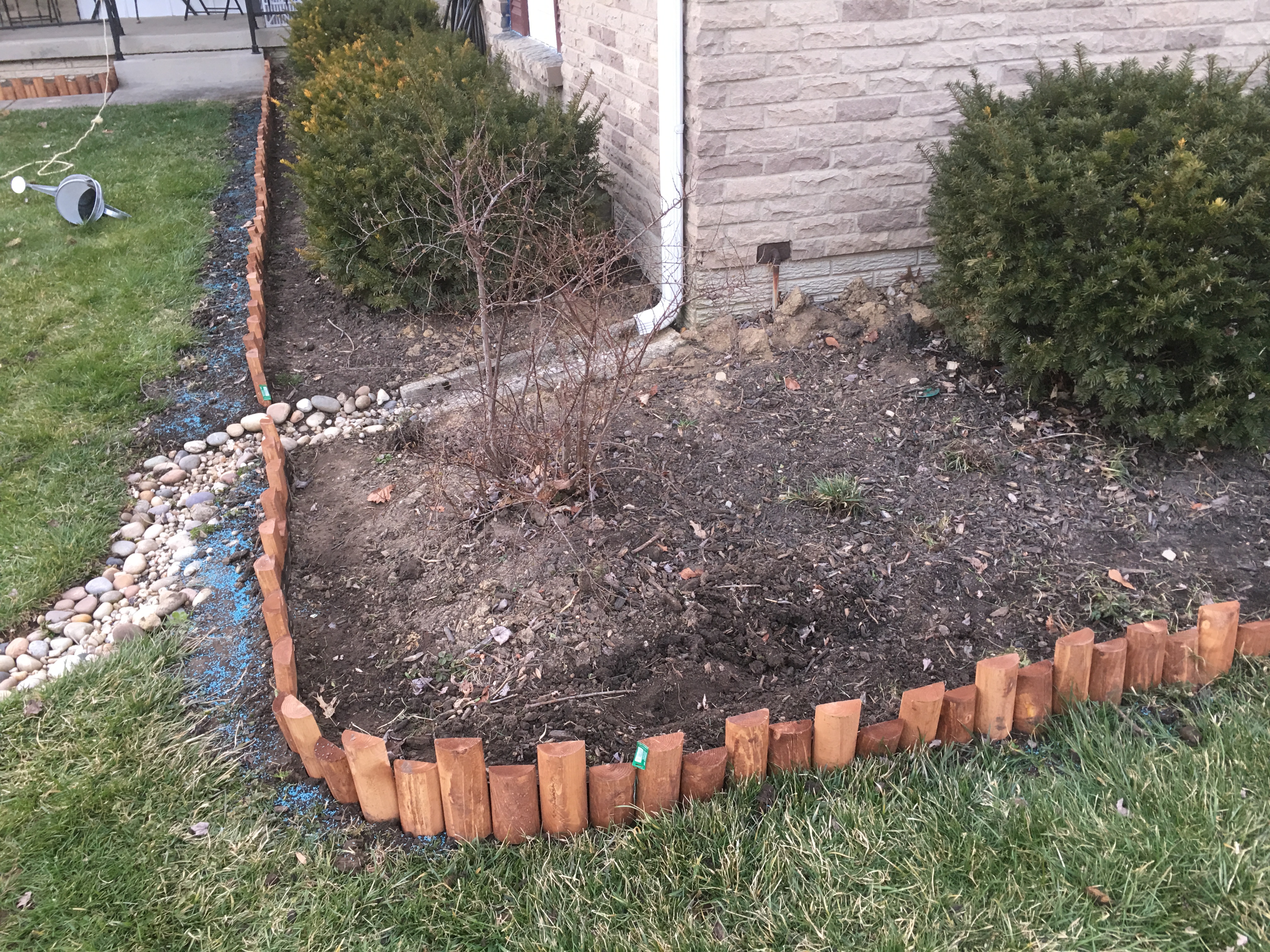
To further beautify the house, we got some expensive edging. I’m kind of ashamed to say how much the edging costed, so I won’t.
But we needed something, and as was evidenced by the fact that I pulled ancient plastic edging out to install the new–cheap plastic edging is ineffective (and ugly).
So after much digging, behold!
Fancy-ass edging. That is all (I mean, I’d talk about it more, but it’s edging. And I’m not paid by the word here).
Last summer, we constructed a strawberry garden out of old wooden boxes. It worked, but it was quaint, and Liz wanted a real strawberry garden. And I like strawberries and gardens, and I was itching to finally use that saw that’s been sitting in a box in my garage since we bought the house, so this seemed like as good a reason as any.
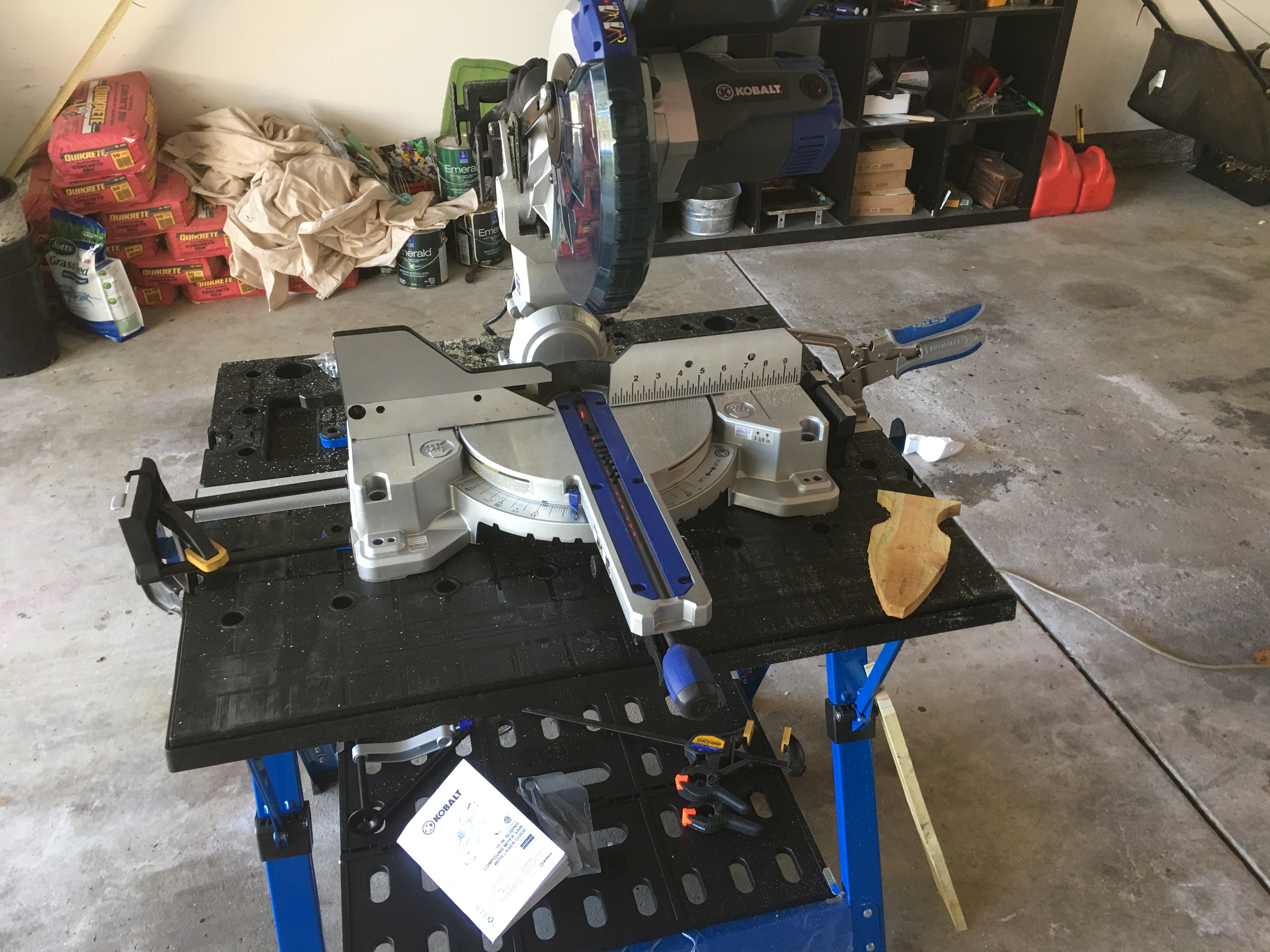
So after procuring some 2x8s and a work table from Lowe’s, I had a perfectly respectable setup, ready to butcher some lumber:
My blood coursed with suburban manliness (and histamine–Spring allergies that did not appreciate the sawdust)! I really only needed to cut a single board in half, but it was the manliest single cut I could make!
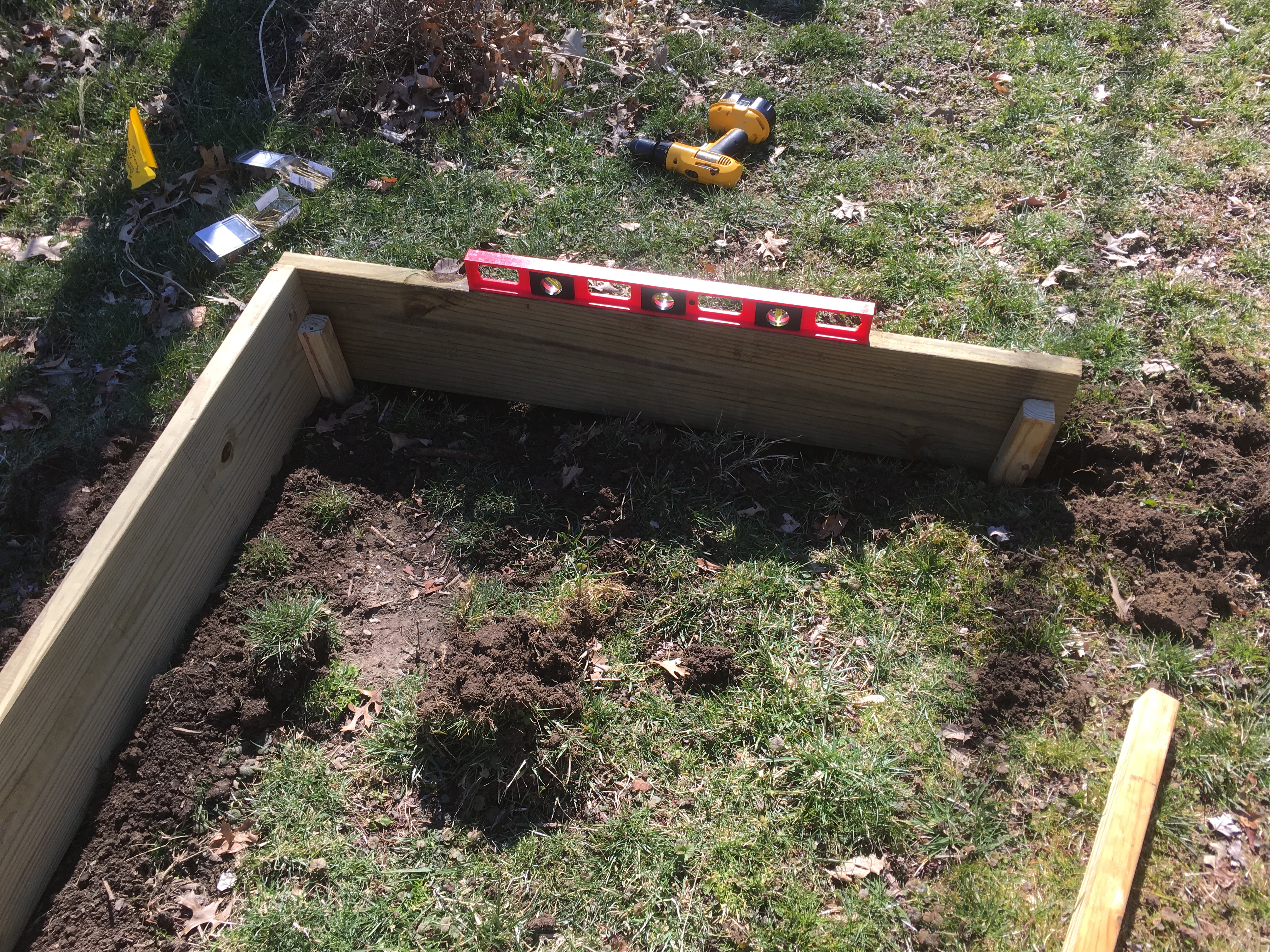
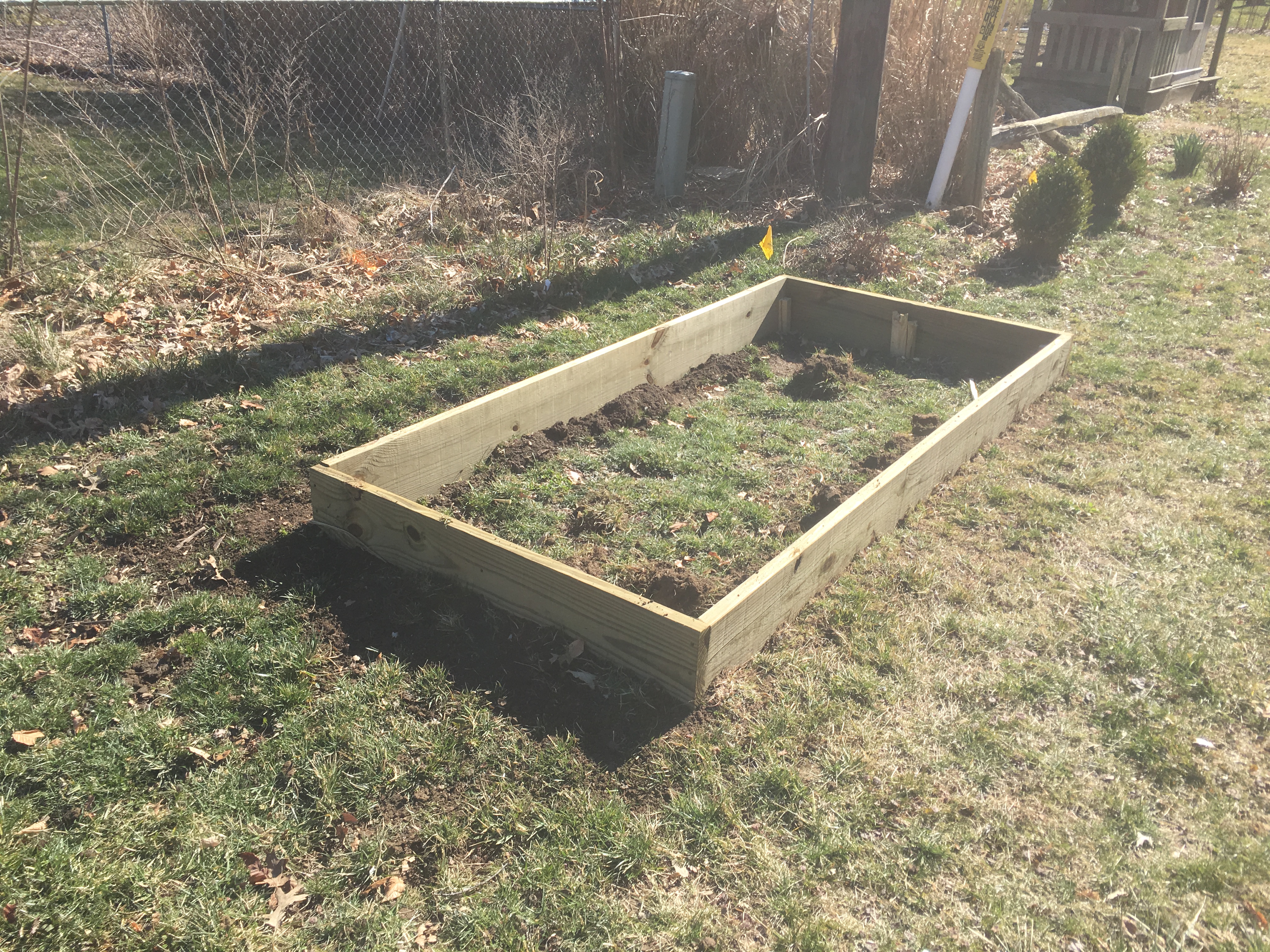
The majority of the work was far less creative and primarily involved grunt labor: digging trenches and hammering stakes. But I had no intention of installing a garden that would shift and become unsightly, so all boards were carefully leveled and secured with corrosion-resistant deck screws:
Okay, it just looks like a box (because it is), but soon it’ll be growing delicious fruit and look way cooler.
More on the indoor growing front. Well, nothing really new, just more photos.
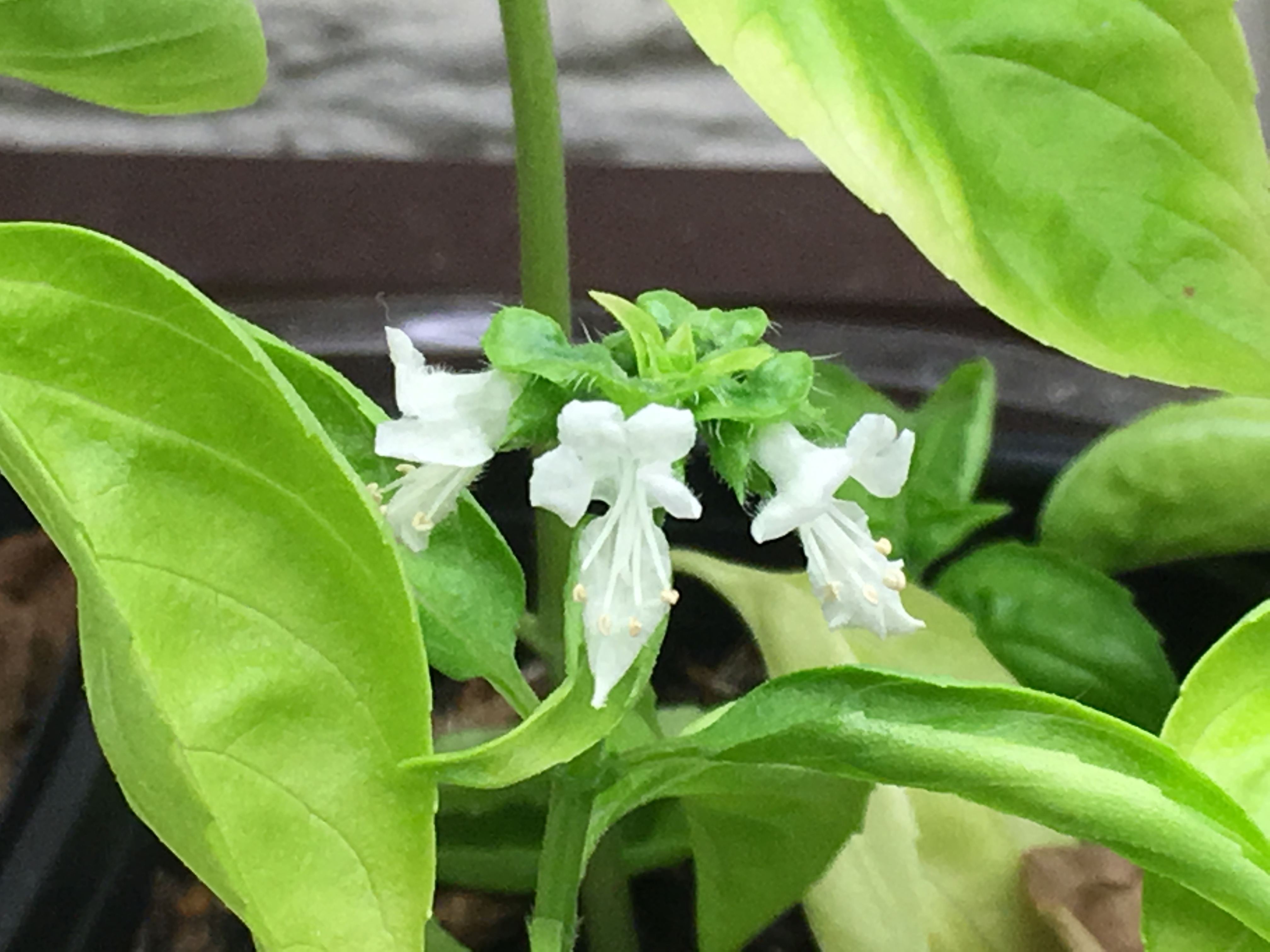
My attempts at growing basil inside have been technically successful, but basil really doesn’t appreciate the scanty light provided by fluorescents, lending me to believe, as I had suspected, that the photos of those green and busy basil plants on the boxes of grow kits to be bullshit. Even so, they managed to flower (which means they’re not happily making lots of leaves as they should):
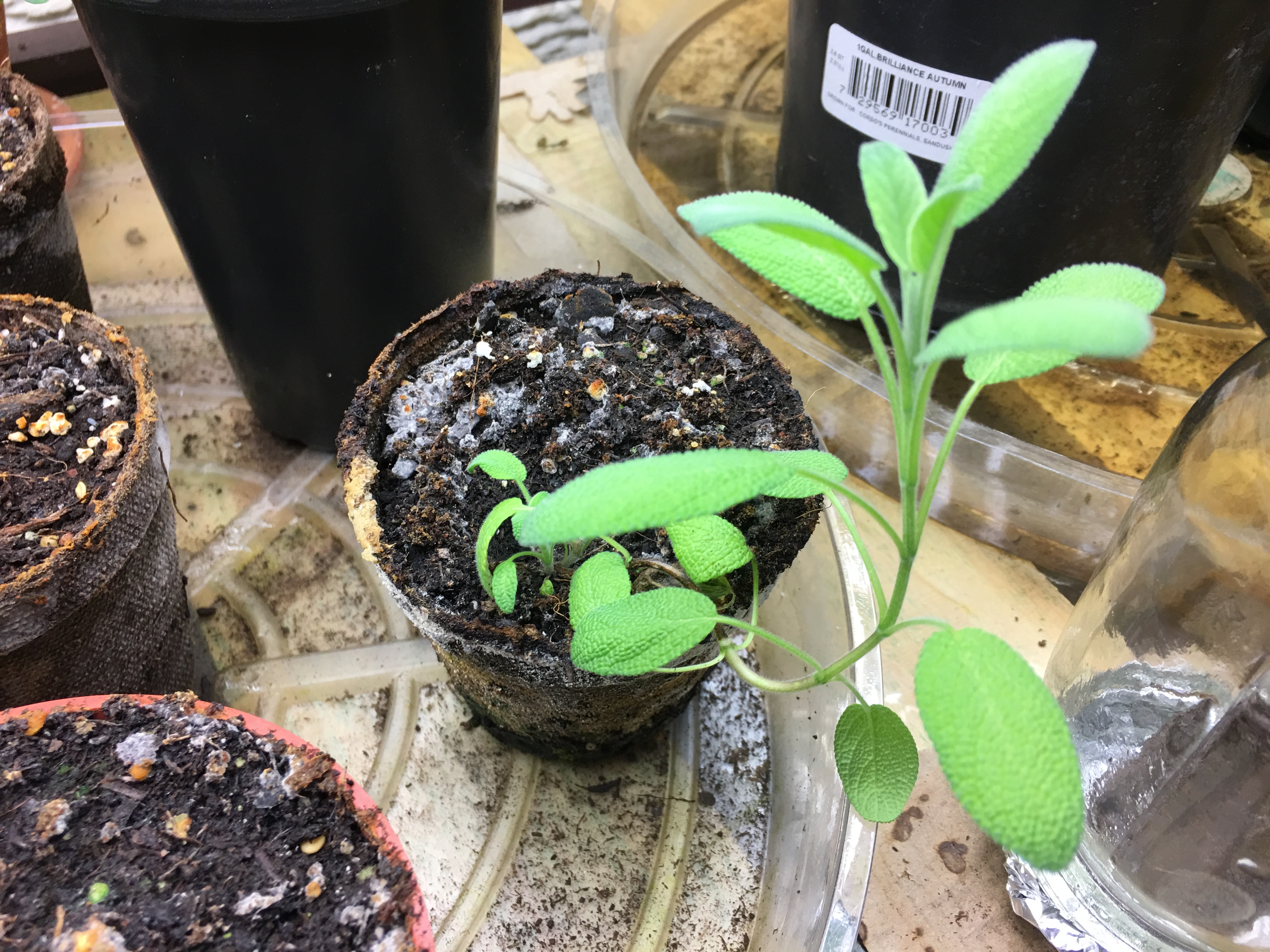
One of the plants that’s historically been really easy to grow inside is sage. We have no need for more sage plants, but I started this one because it’s from the seed that my first sage plant produced–the one in the pot that I started from seed years ago that finally went to flower. I’ll probably gift this one:
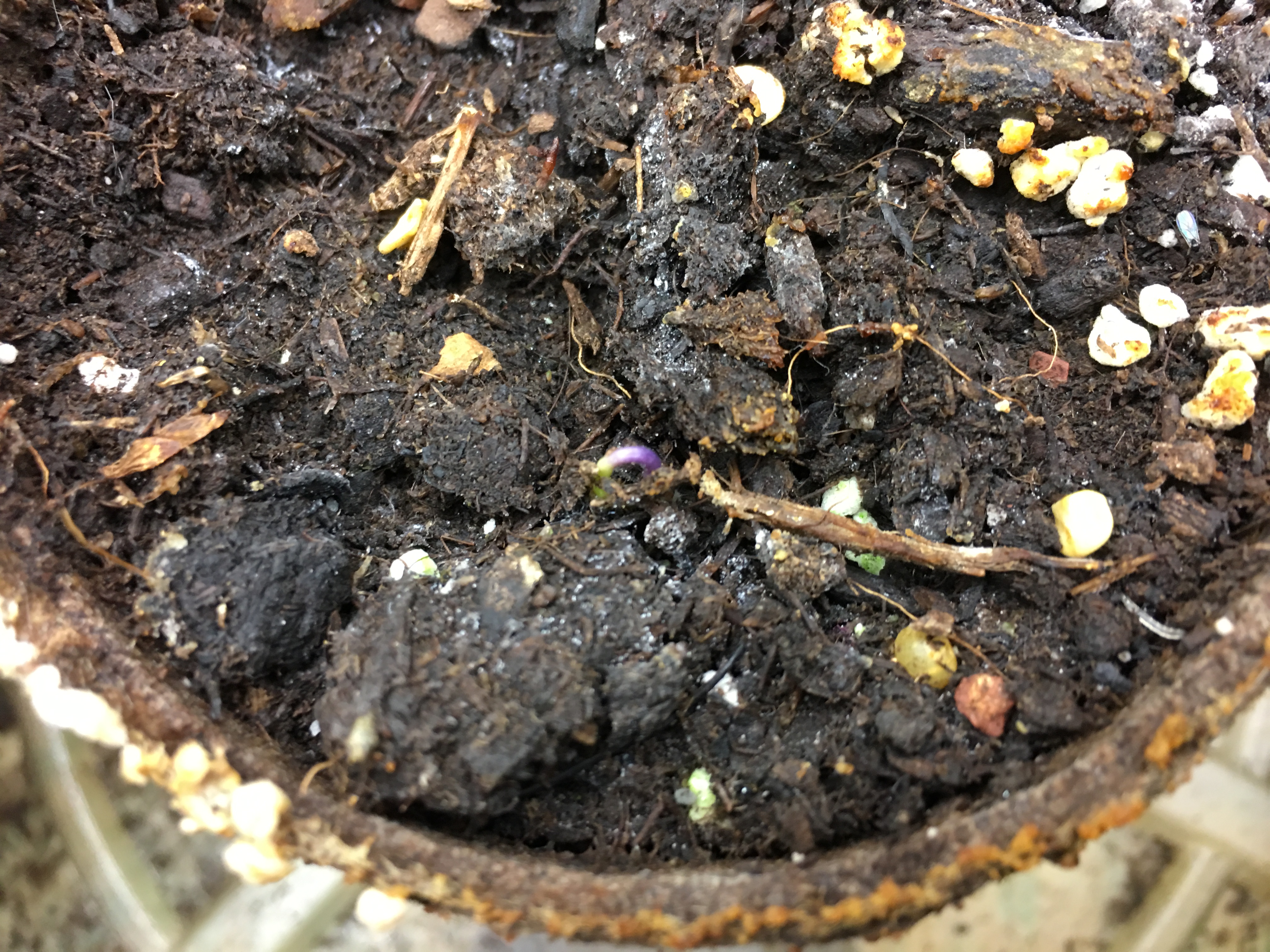
After the aphids ravaged my pepper plants, I had been struggling to get a new one to germinate. Last year I learned that starting them around December/January gave them the time they needed to produce. But pepper seeds are lazy, and I had been becoming dismayed. Thankfully, I finally saw a sprout:
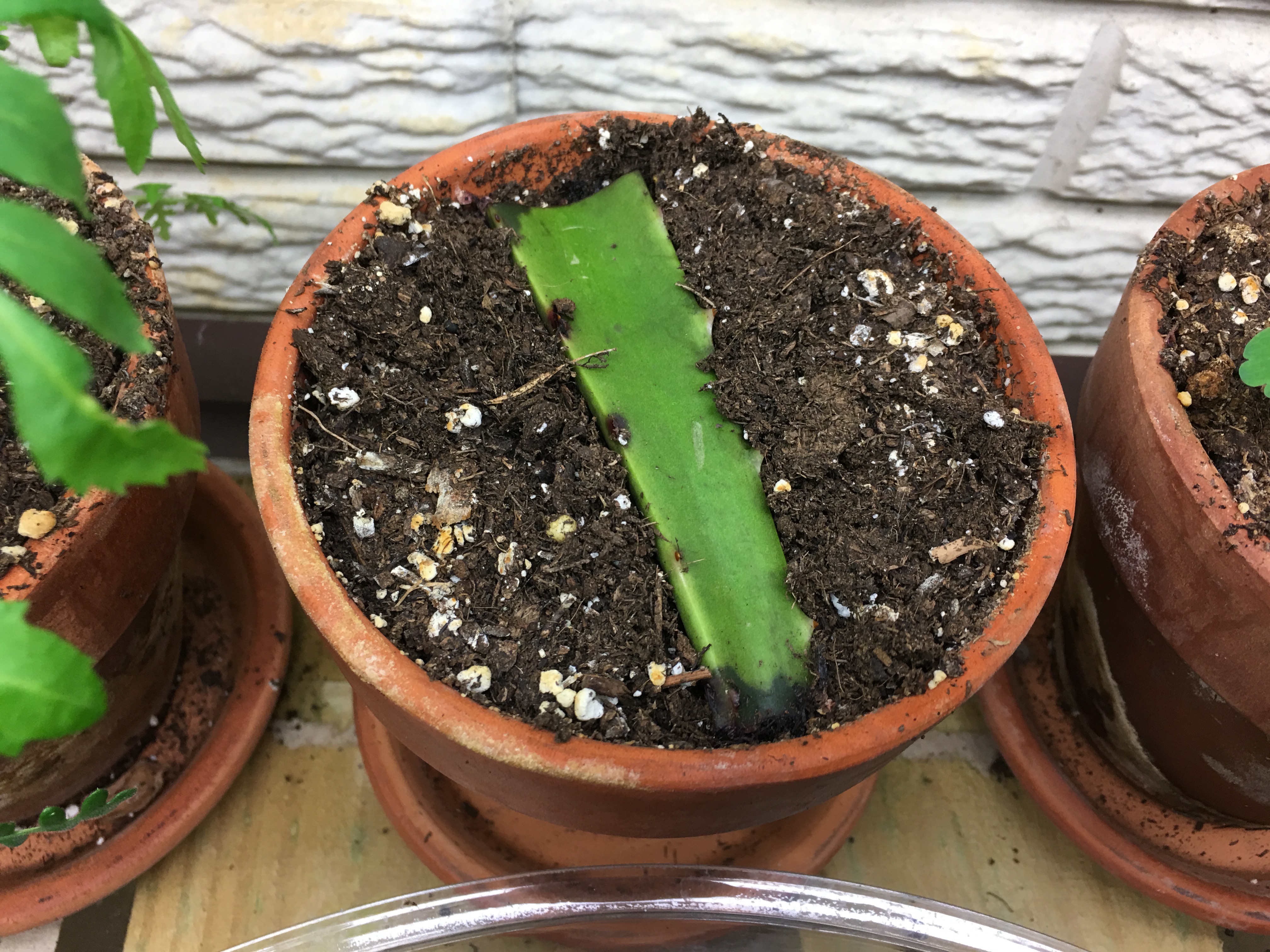
This is an attempt to grow an aloe plant from part of a leaf from a grocery store. I’m curious, though not terribly hopeful:
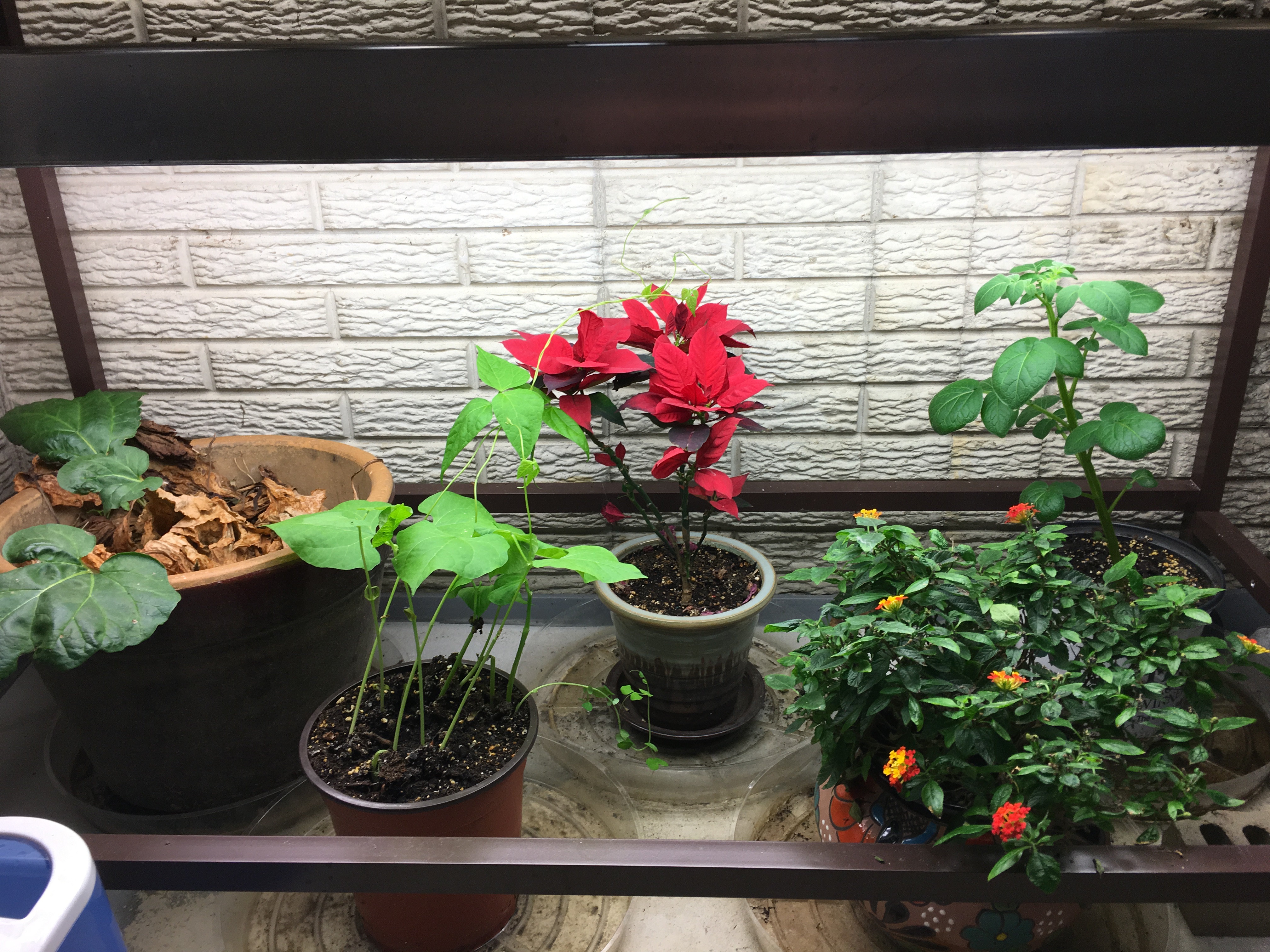
And lastly, here’s an assortment of things. There’s the rhubarb plant I’ve overwintering until I get it in the ground, as assortment of beans I was forced to plant as they were starting to mold, the poinsettia–awaiting next year’s festivities, an annual whose name I can never remember that we call “The Vegas Plant” (overwintering), and another potato–grown from salvaged kitchen scraps:
We’re fully in the winter slump now, but I still have my little patch of green.
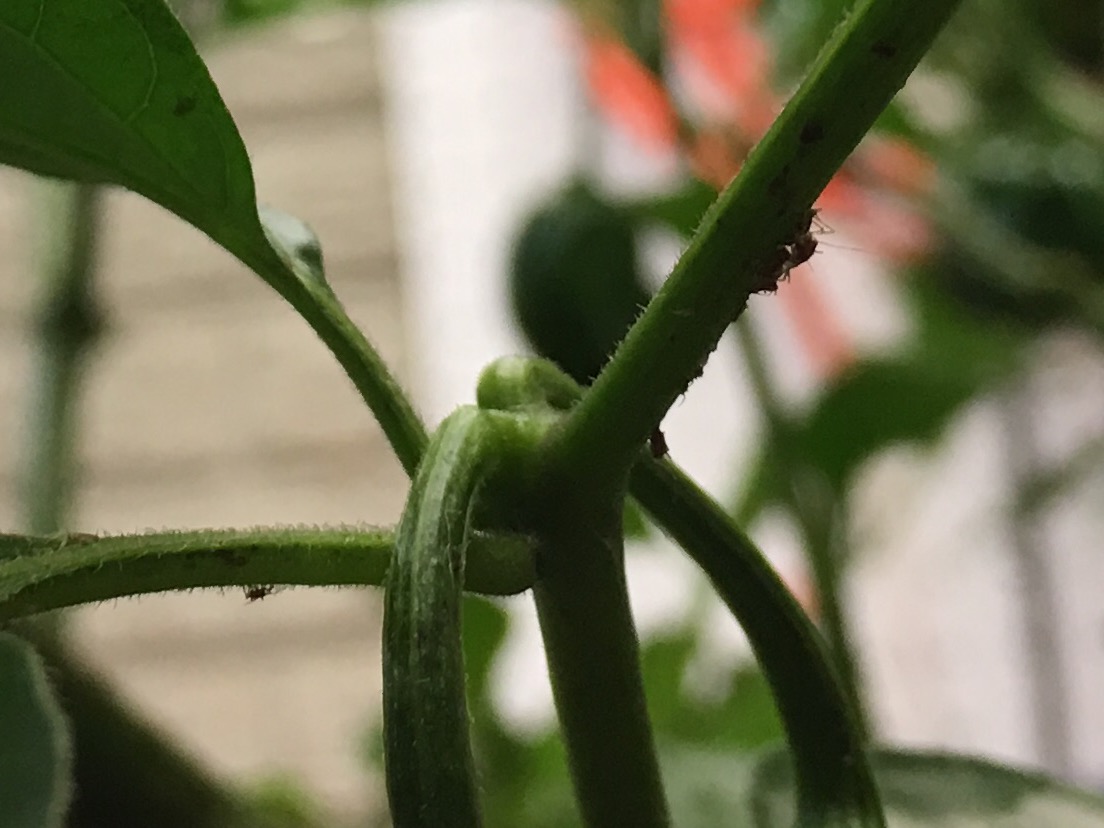
When I brought my pepper plants inside to overwinter, I did not anticipate an aphid scourge. In fact, I’ve never experienced an aphid problem before, so the threat didn’t register. In the past, I once had a colony attack some bindweed, but as they left everything else alone, I wasn’t concerned, and in fact left the bindweed there as a sort of companion gardening plant.
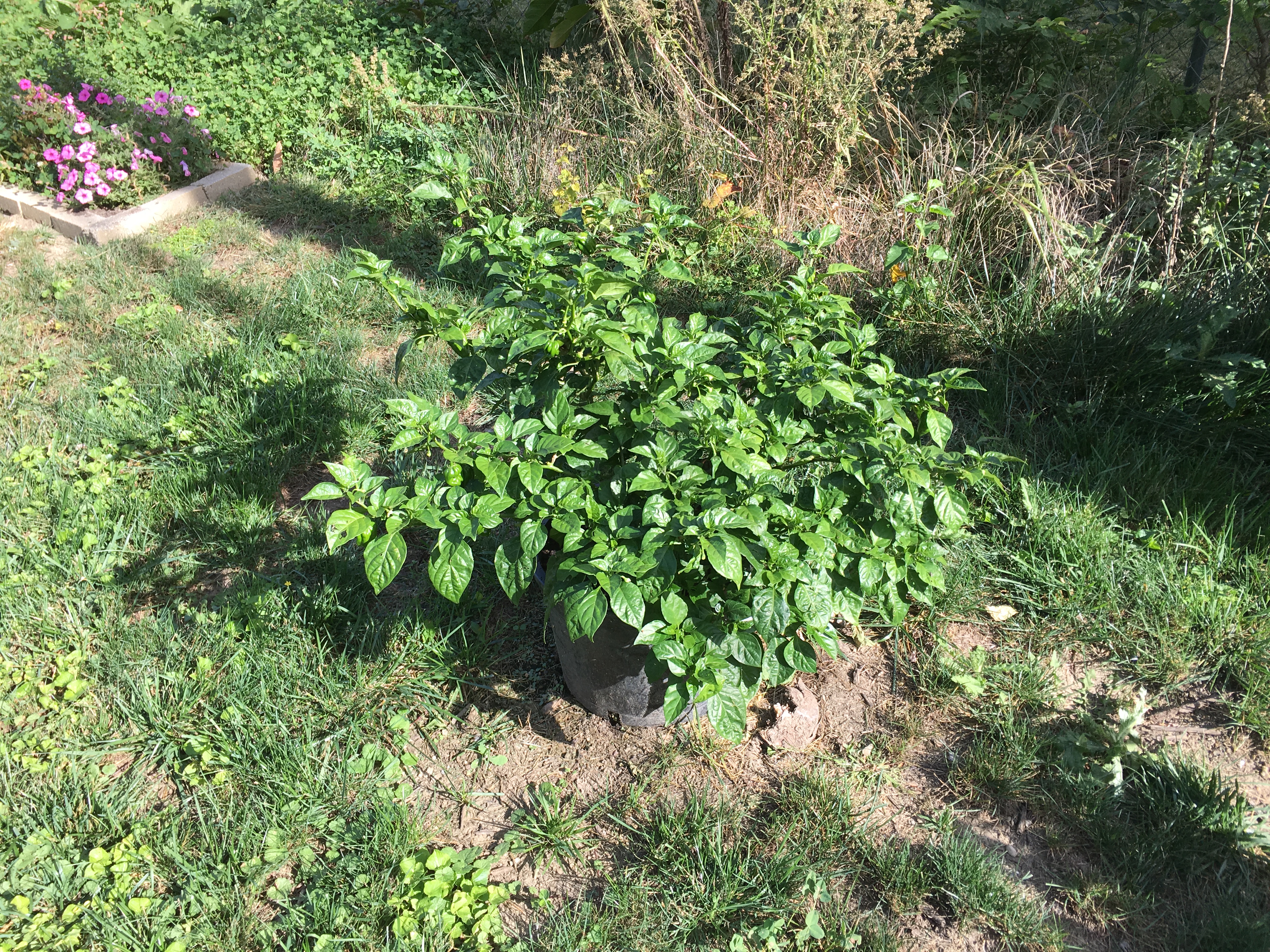
The chocolate habanero
The trouble is, bringing plants inside and into a controlled environment seems to have eliminated all natural predators. So while I may have always had aphids, their populations were controlled to the point that I never noticed them.
But a few weeks ago, I noticed the colony on my peppers. This particular strain was bright red, so I noticed fairly quickly. But it’s hard to treat big bushy plants inside, and while repeated sprayings lessened the population, I never eradicated it. And the aphids, being amazing specialists, transferred to the other plants. So finally, I had to take extreme measures. I took every infected plant outside to die in the freeze, along with their unwelcome guests.
It’s very annoying to lose plants that I really wanted to keep. From now on, I’ll start new peppers inside in the winter and just let them die at the end of fall. It’s not like I had a shortage of peppers this year. Lesson learned.
–Simon
P.S. Before I wrote this, I was lazily browsing the internet at work. Seeking apparently forbidden knowledge on aphid eradication, my query was blocked:
From the moment hungry primal Man stumbled through the wilderness and said, “I guess I’ll eat that,” to the modern Man’s willful decision to forego the fried chicken sandwich and say, “I guess I’ll eat that,” lettuce has throughout history filled the necessary niche of food that we eat, but not because we want to.
That is, until we cover it in oil, spices, MSG, bacon, cheese…
If nothing else it’s a medium–an empty slate onto which to append things that actually posses flavor. So, inglorious vegetable, I salute you.
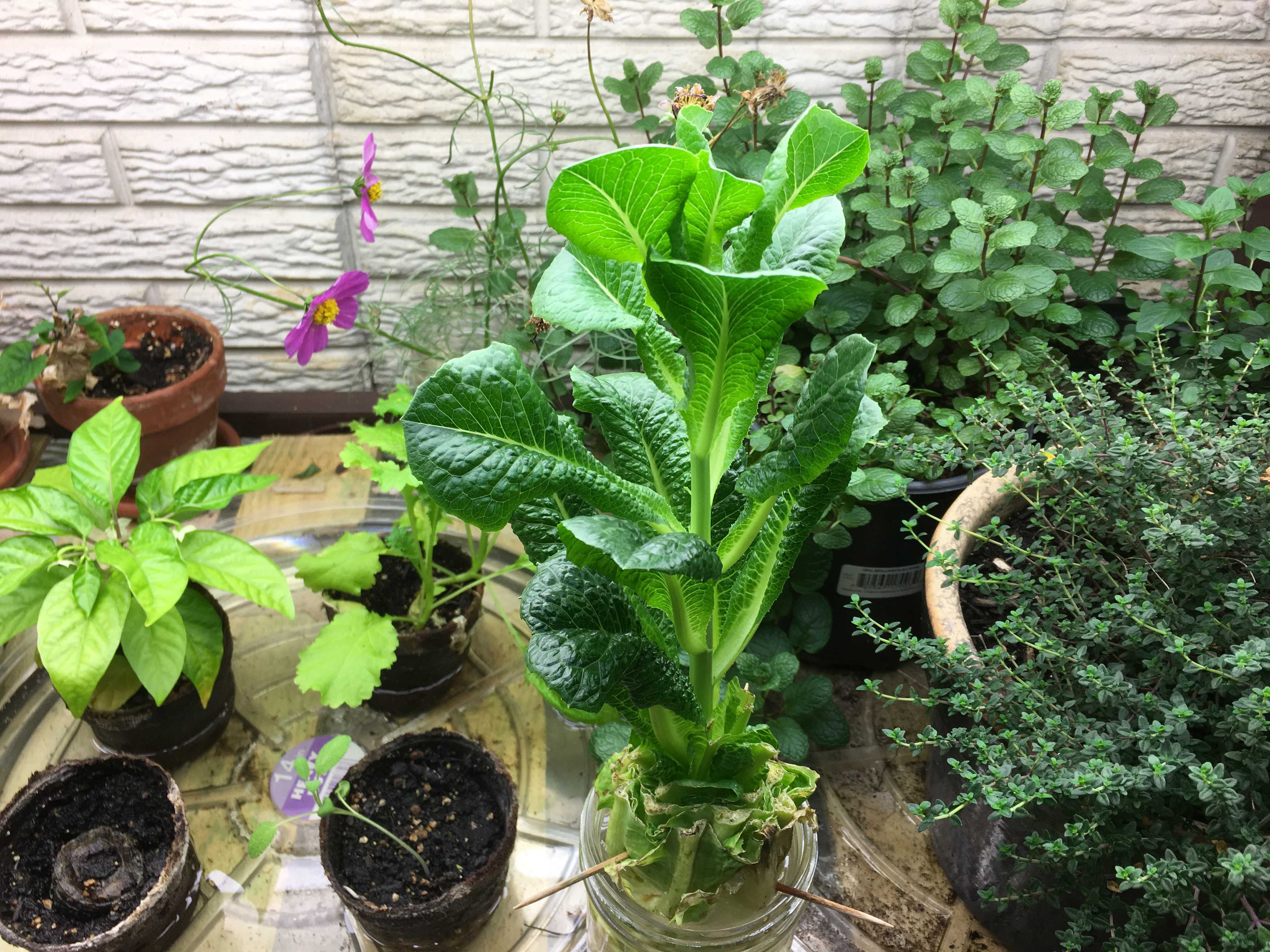
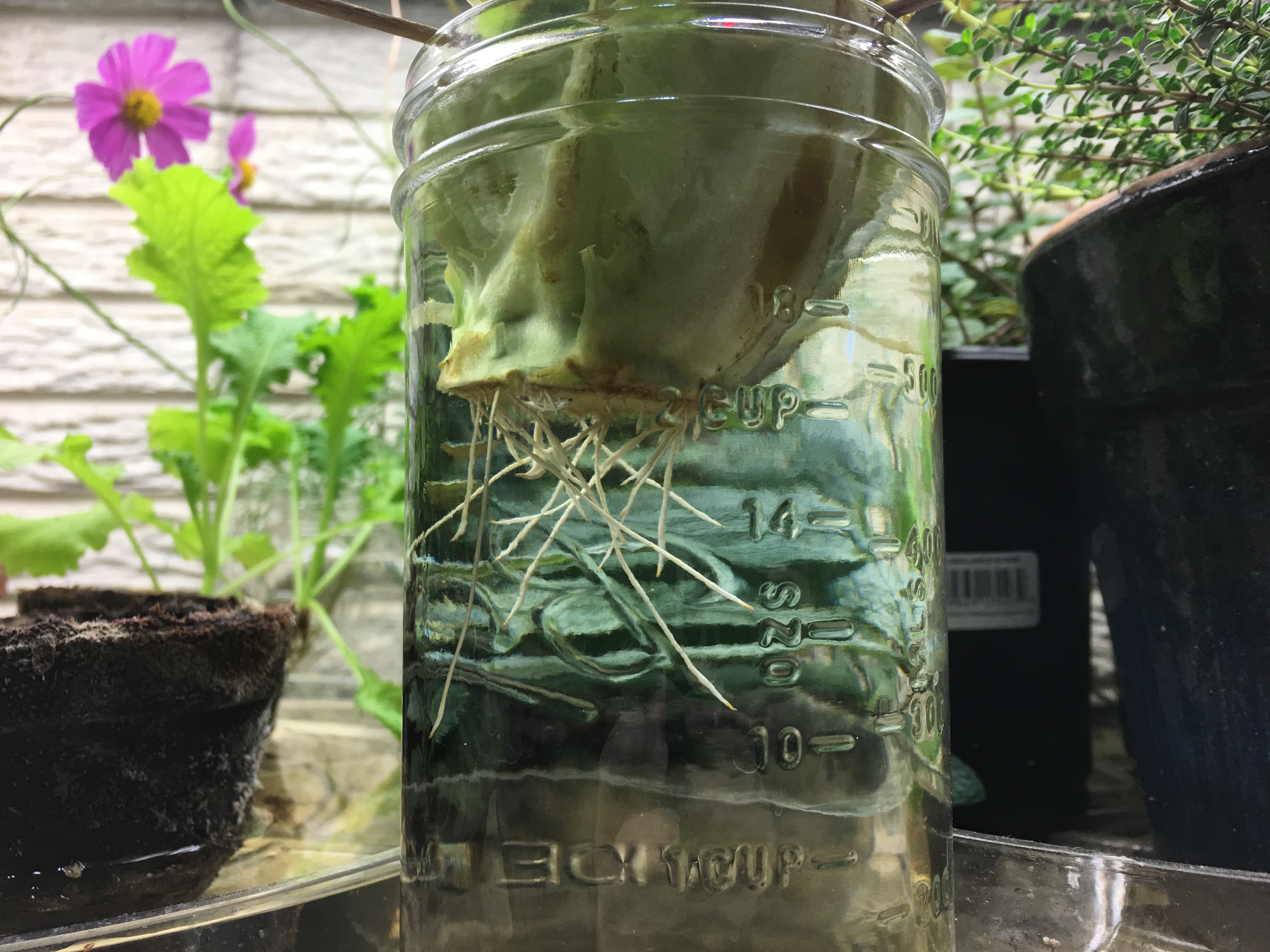
It was after one of these salad nights that Liz presented the depleted remains of the lettuce head and informed me that it was possible to regrow it by suspending it in water. Admittedly, it was one of the last plants I had ever considered growing, much less salvaging. But there was space under the grow light, so I figured why not? As Liz suggested, I used toothpicks to brace the mass, and placed the remains of the spent vegetable in a pickle jar of water.
I thought little of the project, but was pleasantly surprised when the lettuce head showed growth overnight. Sure enough, it was possible to restore this green ball of organic matter, and within 3 weeks, I had a leafy stem and roots.
I guess there’s enough to make a BLTLook at those roots
Since I’ve come this far, I might as well give it dirt and see what happens. You know, in case I’m starving and there’s nothing else to eat in the house and the grocery store is just too far away, and no one’s delivering pizza.