Feminists often don’t acknowledge the exploitation of men. The assumption that men have always possessed personal agency is in direct opposition to most of our history. Most men did not get to choose their social status or career options. Most men were expected to conform to predefined values and obligations – same as women. I’d even go so far as to suggest that the rift in egalitarianism was fairly recent. When modern western society shifted towards one of individual autonomy, women were excluded – a social problem which has, on paper anyway, since been addressed.
Of course, what’s written and what’s practiced are two different things. And while legal obligations such as, say, equal opportunity in the workforce be enforced – which are dependent upon everyone playing by the rules, shouldn’t so too certain social obligations be governed? A woman is judged by her domestic competence. And men are judged by their physical abilities and willingness to suffer physical injury. Why don’t we as a people change these?
Because they supersede civil law. They long predate civilization. They remain the foundation to our survival as a species in those early days, which paved the way for common law, prior to civil law. I don’t think they can ever be changed. They’re part of who we are.
Point being: as a man who lacks economic and political means, I’m trapped in an exploitative system too.
So it was that 10 years ago I willingly agreed to be the functional mass of man flesh required to maintain an estate…for 10 years. My premonition at the time was that age and injury would compound to ultimately end my usefulness as a man after that timeframe. Such a prediction has turned out to be surprisingly accurate. I’m gradually phasing into a period of needing more hired help, and becoming incapable of tasks which formerly were straightforward.
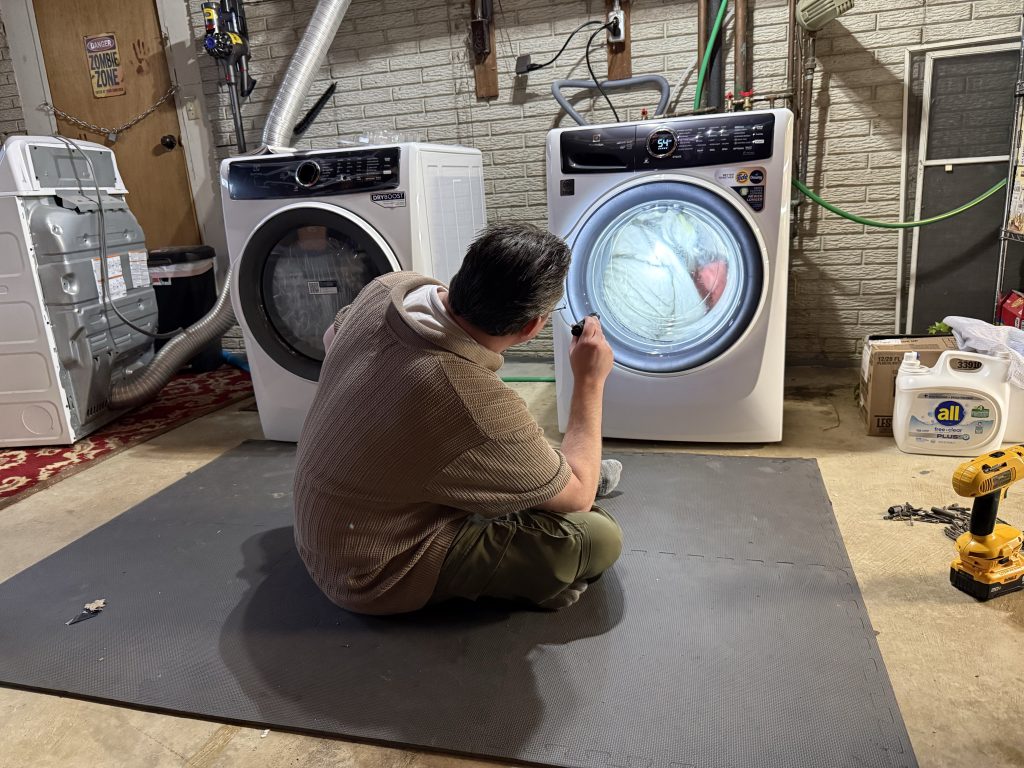
And one such task is moving heavy objects. In this particular case – laundry machines to the basement! Moving these machines was always a bit of a struggle, but no Herculean effort. Then Liz’s new wash machine arrived. It’s the first front-loader we’ve ever had, and as it would turn out, significantly heavier than top-loaders. Its specs weigh in at 217lbs. And the all-steel appliance dolly we borrowed was 50-70lbs. That’s really damn heavy, especially considering that the bottom step of the basement is narrower than laundry machines, requiring one to lift them over the stair ledge on the final push.
We managed it, but I’m paying the price. Next time, younger men are needed.
They’re also entertaining to watch!
Of course, this will be 10 years this summer, at which point I might irreparably break anyway. At least my promise will be fulfilled.
Of all the decisions I begrudge my parents for, vehicle availability ranks high on that list. I can get over a lot of things, and being a parent myself now, I understand that money is always limited and decisions have to be made. However, once that lesson is understood, it confuses me as to why parents would decide to have more than one child when they can ill-afford the first. But three? Even the wealthiest of my contemporaries rarely go that route. A third child is usually an accident or a surprise twin.
But: Catholicism. Organized religion has a remarkable inability to consider a more modern quality of life. It makes sense to encourage a population to have many kids when the goal is to grow the community and half of children die before age 5. And in a time predating birth control (or even after it became available but the church prohibited it), it probably didn’t require much encouragement anyway for young couples to engage in more sex – for God, and the community, of course.
Anyway, speaking of quality of life and vehicles, here are some activities directly tied to available transportation in one’s formative years. More specifically, if one doesn’t have access to a car in the suburbs:
Dating – difficult (unless of course you’re a girl and find a boyfriend with a car, as my sisters did)
Extracurricular activities – difficult and always needed a cranky parent
Working – difficult
Finding a job that actually pays well and offers a career – impossible
Feeling like a total loser – at least this one’s very easy
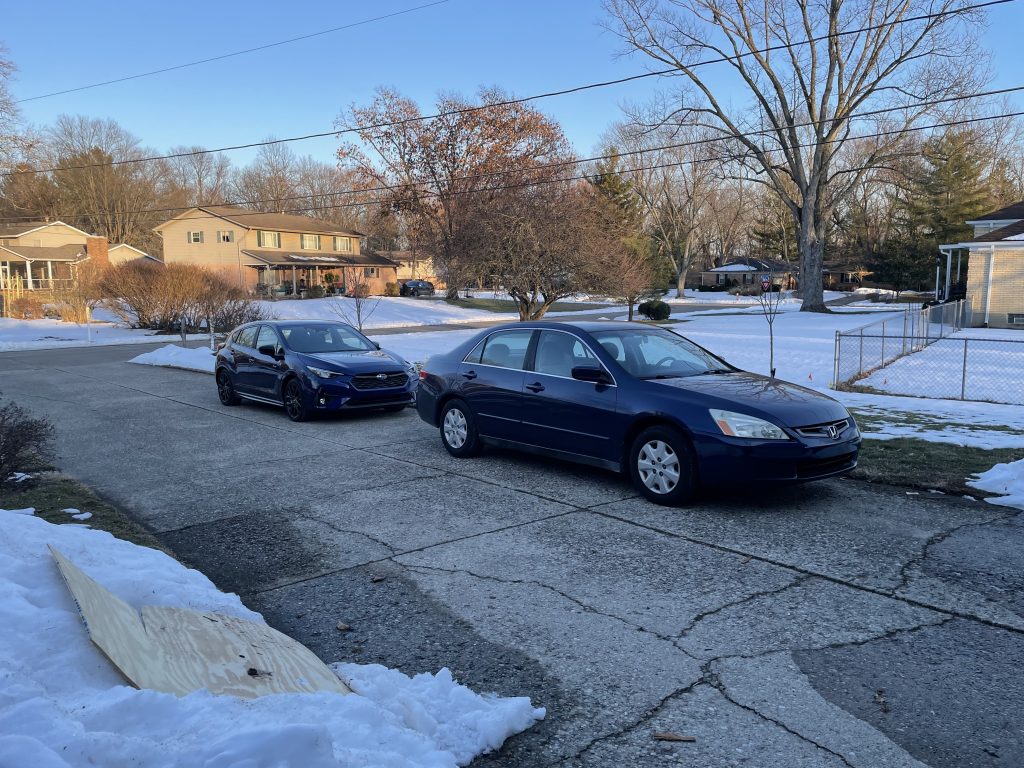
Overcoming this barrier was eventually possible when my future father-in-law sold me his old Corolla, which I then unceremoniously lost to black ice on one of the worst damn on-ramps in the state. Fortunately, the insurance payout gave me a down payment for my truly first car (I don’t consider the Corolla to be a first car): a used 2003 Honda Accord, which I proceeded to drive for the next 18 years, ultimately naming it: Old Blue.
Old Blue in front
Unsurprisingly, I never became a luxury car type of person. Possessing a car at all was my luxury, and an economic utility vehicle that consistently maintained its basic functions was sufficient.
But Old Blue’s age has shaken my confidence in this later quality. I no longer feel that it will always work in a time of need, and repairs are getting numerous and costly. Its latest issue is a rusted exhaust line, which I exacerbated by driving over a snow mound and ripped open. Now the engine exhausts under the hood, which wafts into the cabin, not to mention bypassing the muffler so it sounds like one of those small penises you hear at night playing Toretto. I’ll get that fixed eventually, but for now I needed something more reliable.
I wanted a station wagon. I wanted a car with a car’s chassis – not the typical SUV/crossover standard that everyone seems to make now. Or as I call it: do you want a long turd or a short turd? Seriously, they all look the same, with that turd-shaped aerodynamic (analdynamic?) profile. Bend over and think of England, fellow motorists. And with Liz’s Ascent, we don’t need another type of such a vehicle. One anal probe per family is adequate. I want an actual car, but with the cargo space and convenience of an anal probe…I mean hatchback.
This limited my options. Volvo apparently still makes station wagons, though I’ve never seen a new one. And Mercedes makes one, but I’m not ready for that cost. So, a non-station wagon non-anal-probe-hatchback car. That leaves compacts. And with that comes certain problems, notably image and demographic appeal.
Here’s what I’ve come to accept are the two types of people who buy compact hatchbacks:
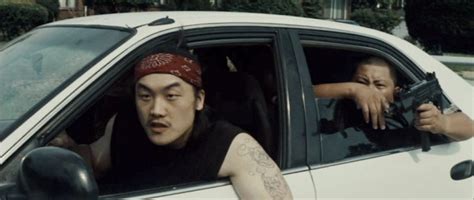
Hmong gang members
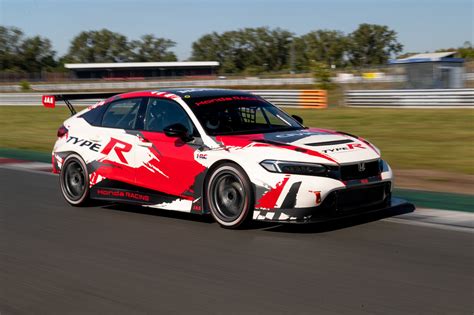
Trust fund baby wannabe street racers
This tends to lead manufacturers into douchey territory, with trim and accessories. When’s the last time you saw a hatchback white Honda Civic and one of the above stereotypes didn’t come to mind? What to do?
Here’s what’s on offer today:
Honda Civic – Absolute no for both the reasons above, my relationship with the local dealership, and past experience with their modern vehicles.
Toyota Corolla – Lower horsepower and front wheel drive only – nah.
Mazda3 – I drove one of these as a rental and really liked it. It was underpowered, but I didn’t know which version I had. It was worth considering, except…
Subaru Impreza – Standard AWG with higher HP on the RS model, and despite past misgivings with the Ascent, the dealership was completely accommodating with repairs and warranties and rentals. Top contender.
And fortunately, Subaru has thoughtfully separated out their douchey demographics into their WRX category, which is a souped-up Impreza. If you go on Reddit and read Impreza reviews, you’ll very quickly encounter some comment about how the poster should have bought a WRX, because that’s a “real” car, for which aftermarket douchebag add-ons have flooded online retailers. Want a spoiler with a wide muffler while pretending to be Formula One Frank and cranking RPMs with a turbo late at night? WRX.
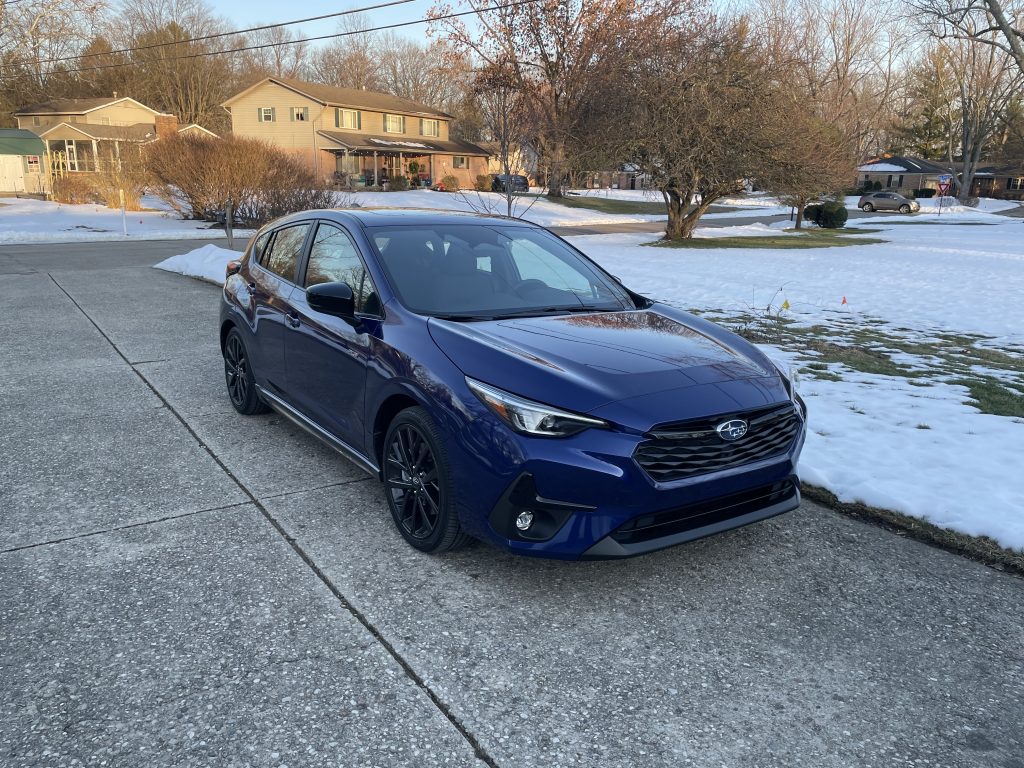
So I went with the Impreza. The 2026 Impreza RS, to be specific. Old Blue’s 160HP always felt just a tad underpowered on hard accelerations, so I wasn’t keen on the Impreza Sport’s 150HP. Granted Old Blue was old and no doubt lost some HP over the years, but even so, I wanted a little more power. The RS’s 180 HP so far seems to fill that gap with just a bit more oomph. And the top-tier model for the Impreza line comes with some luxury additions that certainly don’t hurt – like everything the automotive industry has done within the last 23 years. Seems there’s been some technological advances.
New Blue
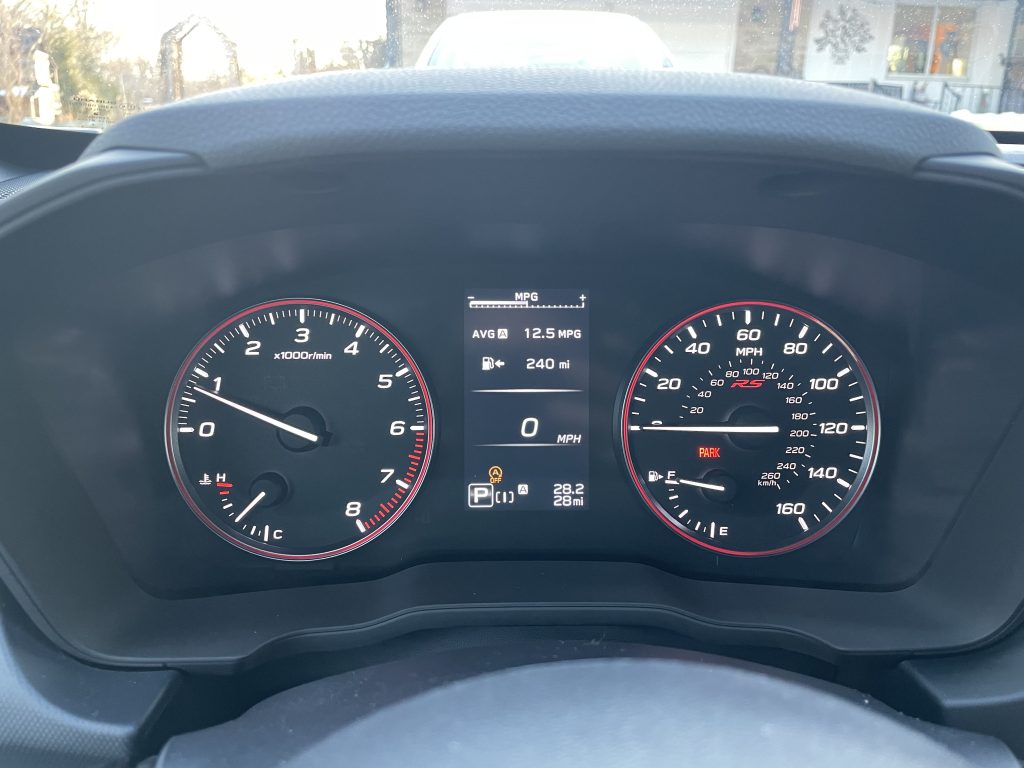
It’s also my first new car! It only had 8 miles on it when I test drove it. So just a couple other butts have been in there. No chance of anything weird that I don’t know about that’ll fail unexpectedly in the future.
Should have taken a pic of the odometer sooner
And it’s all mine and no one can touch it!
Okay, that’s not true. Part of the reason for getting it was so the kid would have a small and easy car to learn how to drive with, equipped with all the modern safety features. But that’s a year away, and for now it’s all mine! Then once she learns how to drive, she can have Old Blue. It might be a beater, but I won’t leave my own kid without a personal transportation option.
Turkey is a strangely non-favorite traditional food. I don’t know if it’s truly the taste, or that mothers everywhere overcook the things. A combination of generational food-safety paranoia combined with the Americana requirement of needing to present a turkey in its whole form to the table (white meat is done at 160F and dark meat at 175F), tends to yield less than satisfactory results. Plus, everyone tends to grab cheap turkey deals. So everyone grumbles a little at the turkey, yet also demands one be served.
So this year’s Thanksgiving attempt experienced some deviation from the norm, and I contemplated a turkey roulade. And according to the internet, I wasn’t the first to come up with this idea. That was encouraging.
But first, a turkey needed procurement. And some internet pointers. The key ingredient for this method was skin, and since I have yet to see turkey skin being sold as a standalone item, that meant an additional turkey breast to accompany the whole turkey. We were certainly going to have turkey!
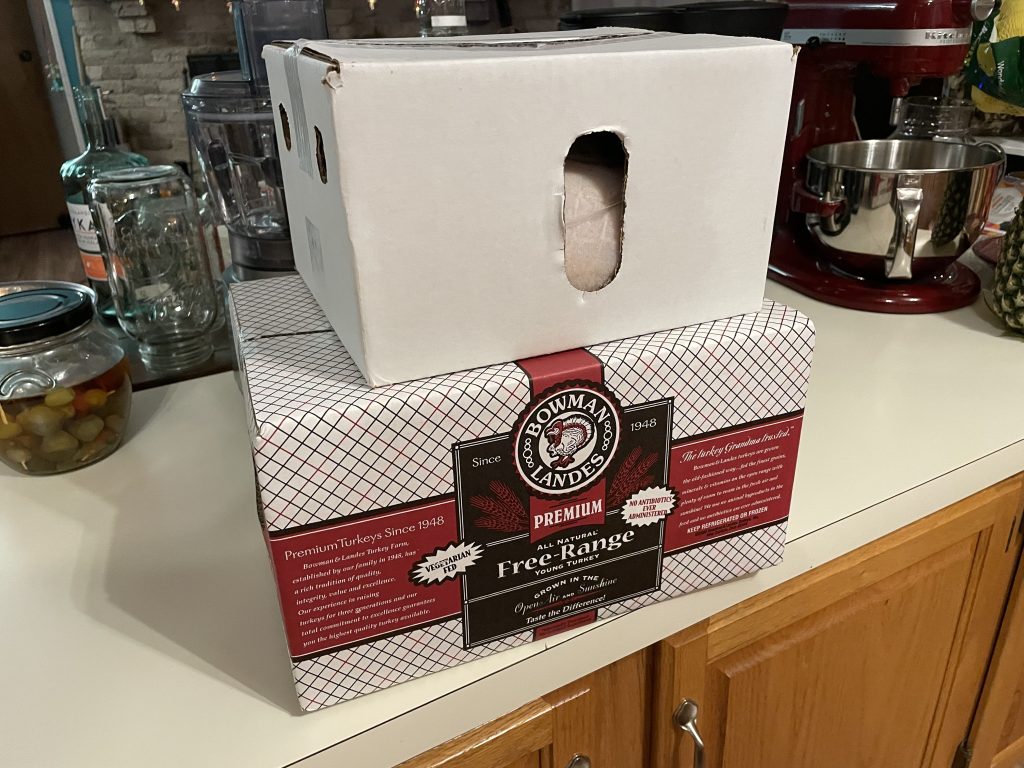
But not just any turkey. A Bowman Landes turkey! Because why not? Go with famous local free-range turkey! We were hosting after a 2-year hiatus, so let’s make it special.
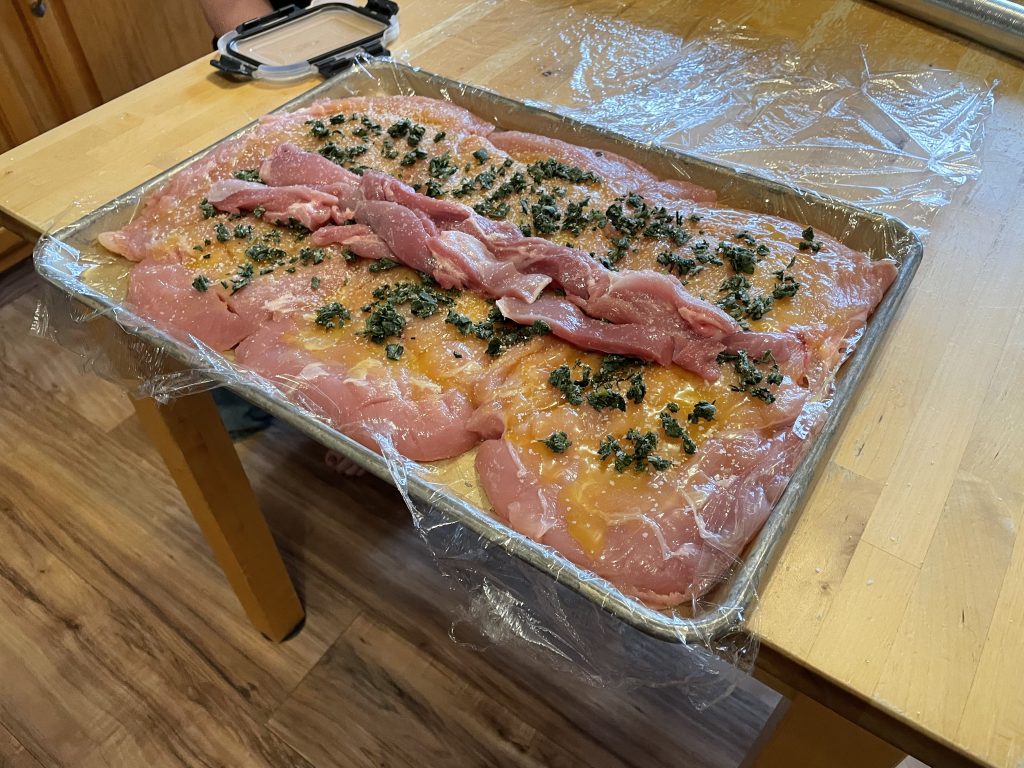
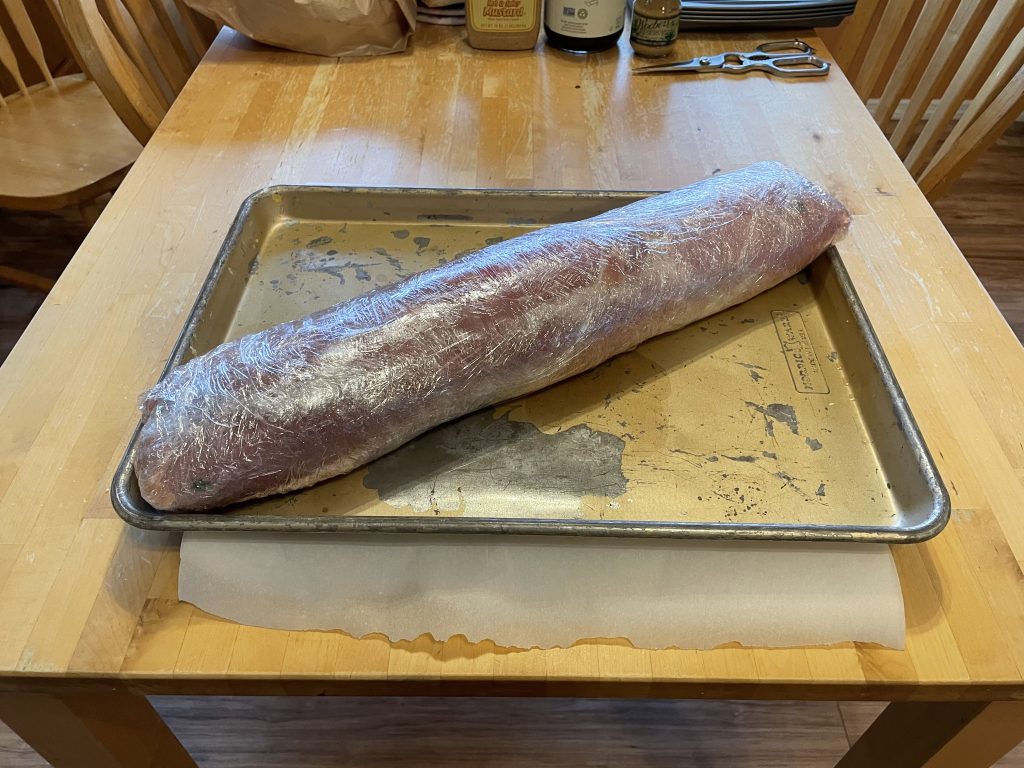
Turns out, the additional turkey breast, needed for the skin, contained an additional half breast. We didn’t need that much, so the remainder is frozen now awaiting a smoked turkey summer evening. Three were sufficient, butterflied and rolled with butter, herbs, and some de-boned thigh meat.
Then rolled in plastic and refrigerated overnight to set the shape.
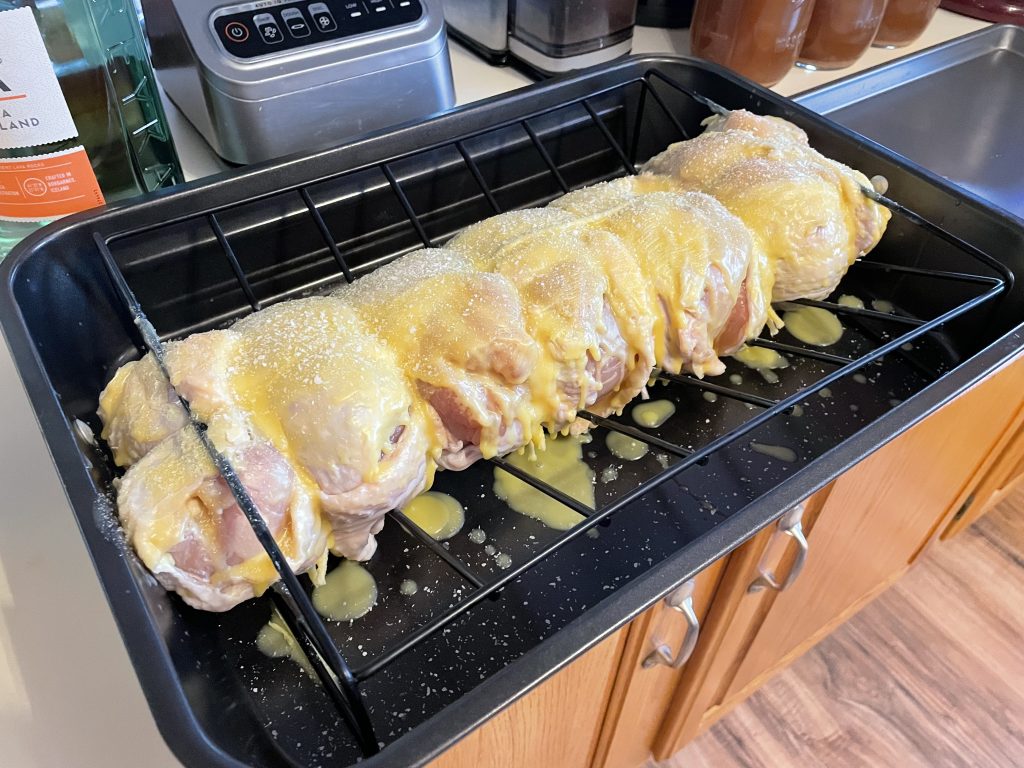
Then rolled in the saved skin.
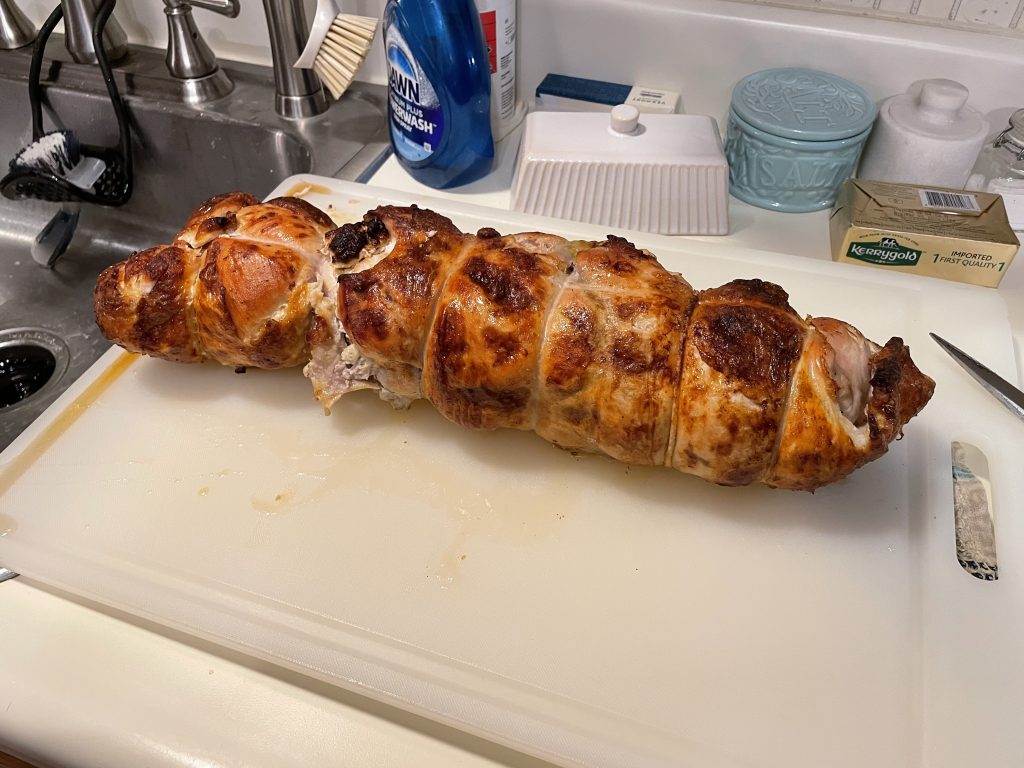
Baked.
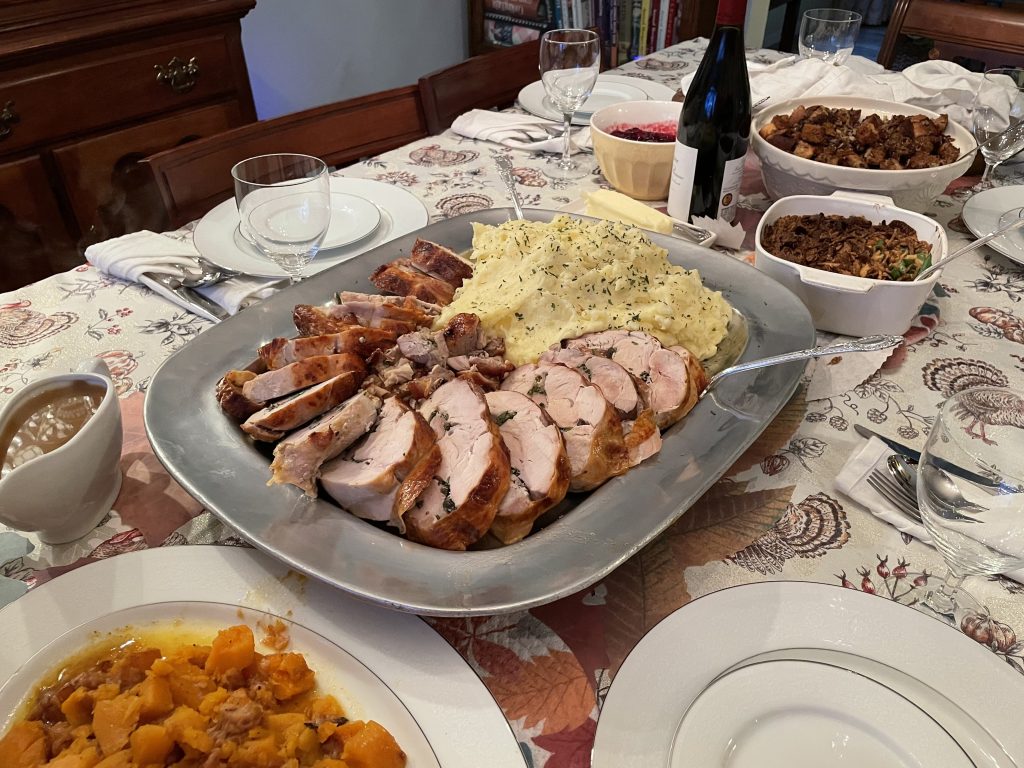
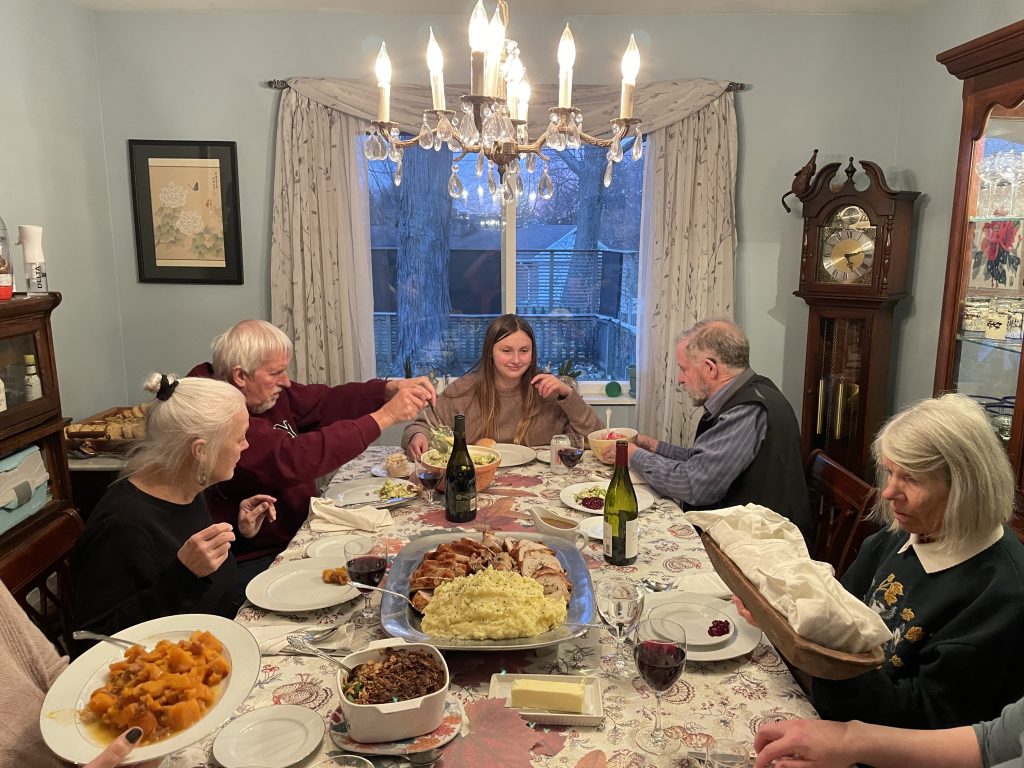
Served.
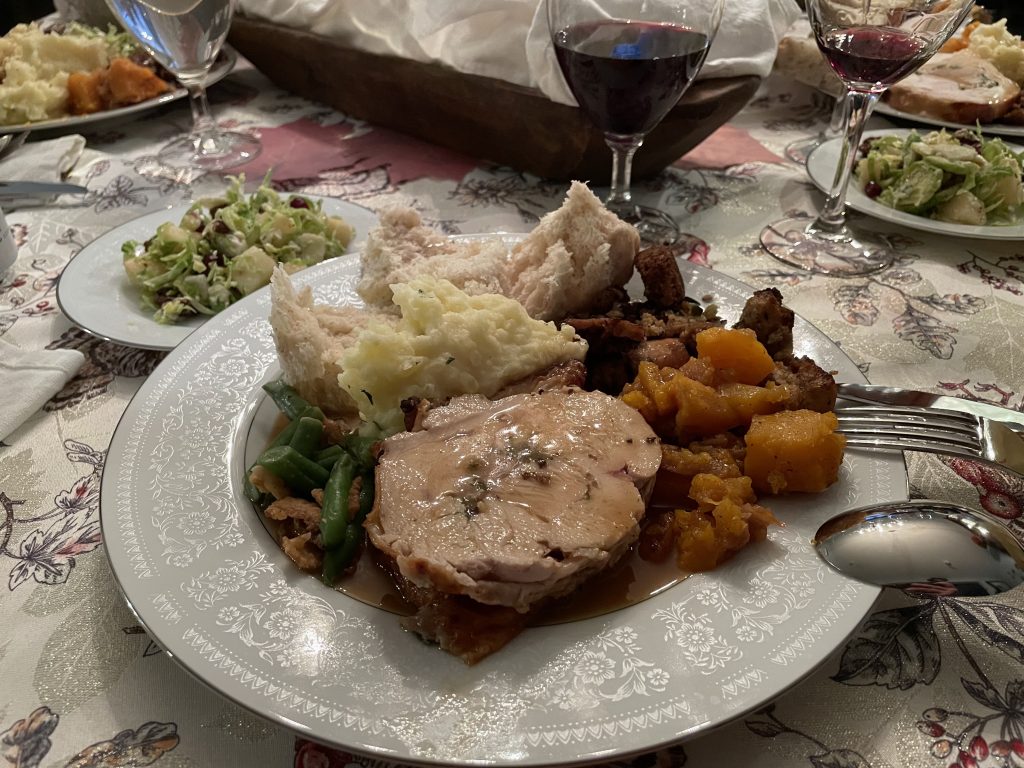
And plated.
How was it? Not too bad. Certainly easier to eat and less mess at the table, although the white meat was still a tad dry anyway. However, the gravy soaked into the leftovers overnight and solved that issue. Some preparation lessons were learned, and it was more work up front, but worth the effort for something new.