Pee-yew Pipe

I like breathing. I wasn’t exactly consulted in the design of terrestrial animalia metabolic function, but breathing is a required component in the process of oxidizing hydrocarbons for cellular energy nonetheless. So it would follow that such a necessary and constant action should be made somewhat pleasant, right?

Why then does laziness and cheapness persist to make the process unpleasant? Why as a people would we not choose to band together and make air quality a priority? (Beyond the obvious monetary implications, that is.)

I complained about this when I originally discovered the bathroom fans exhausted into nowhere. Actually, I discovered one fan. The other fan I would later find to be buried completely under insulation. Both fans vented to the attic. Both lacked hoses. And one was covered. Not very effective.

The one fan I could find I attached to a flexible duct line and routed it to the top of the attic, but with no exterior vent hookup, I instead retrofitted a rotary fan onto a passive vent in order to vent the whole attic. It sort of worked, but eventually the fan rusted and seized. Back to square one.

The next phase of the saga revealed the hidden location of fan #2 when what I assumed was the master bathroom fan turned out to be the guest bathroom fan when I ripped it out of the ceiling to figure out why it wasn’t ventilating. Peering down from the attic into the wrong bathroom was an unpleasant surprise. I finally located the master bathroom fan by shoving a wire up beside it and having Liz wiggle it while I scanned the attic for movement.

Both fans got replaced with ducts added. But again, with no external connection point, they vented into the attic for several years, awaiting a proper solution. Eventually, the proper solution came with the new roof. The installers, being very accommodating, added external vents for me – one for each bathroom and one for a future kitchen vent hood project. Huzzah. I triumphantly scampered up to the attic to finally connect the hoses, and was greeted by the sight of a square hole under the vents. Apparently, they’re universal external vents, meant to be fitted with connectors, but not including them by default. Damn. Had I known that, I would have fitted connectors to the old roof’s passive vents, which probably would have been a net gain even though I’d be sacrificing full attic venting capacity. Oh well. At least now I can do it proper.

And the internet told me that this is a very normal scenario, with the easy fix recommending bolting on vent collars and filling the gaps with that heat-resistant foil dryer vent tape. And go figure – that worked just fine. Duct work, unlike plumbing, is surprisingly imprecise. Tape, is part of the standard toolkit.
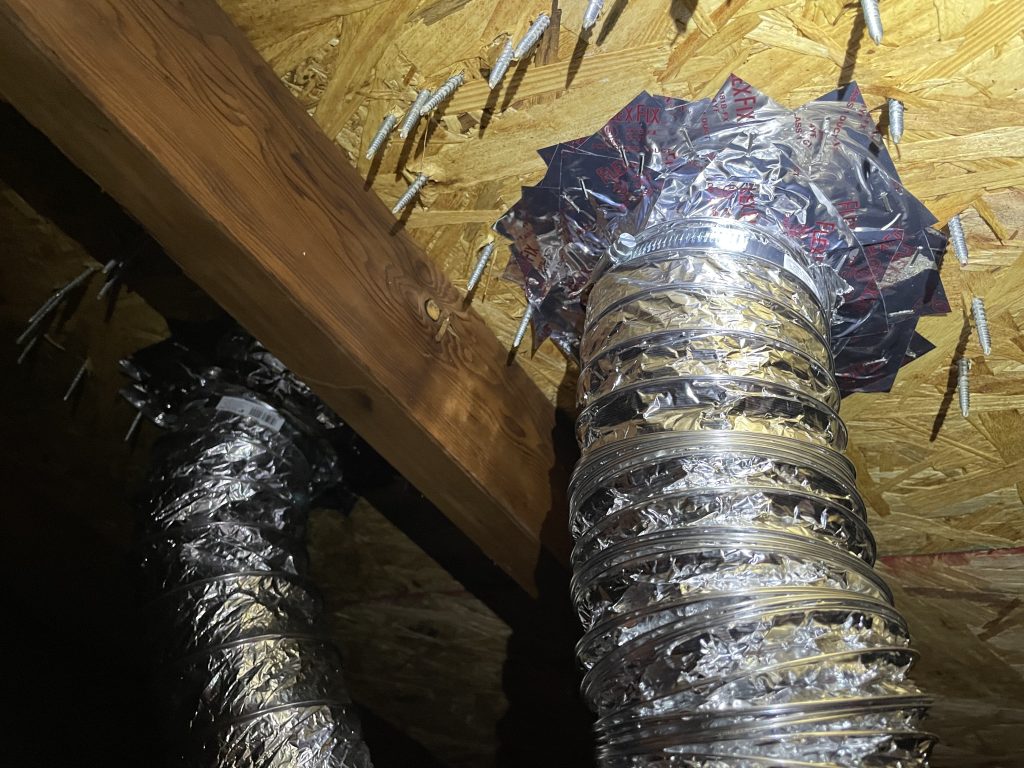
I should have taken some more “before” pics, but I was choking in the dust and trying to wrap this decade-long project up ASAP. But here’s what it looks like inside:
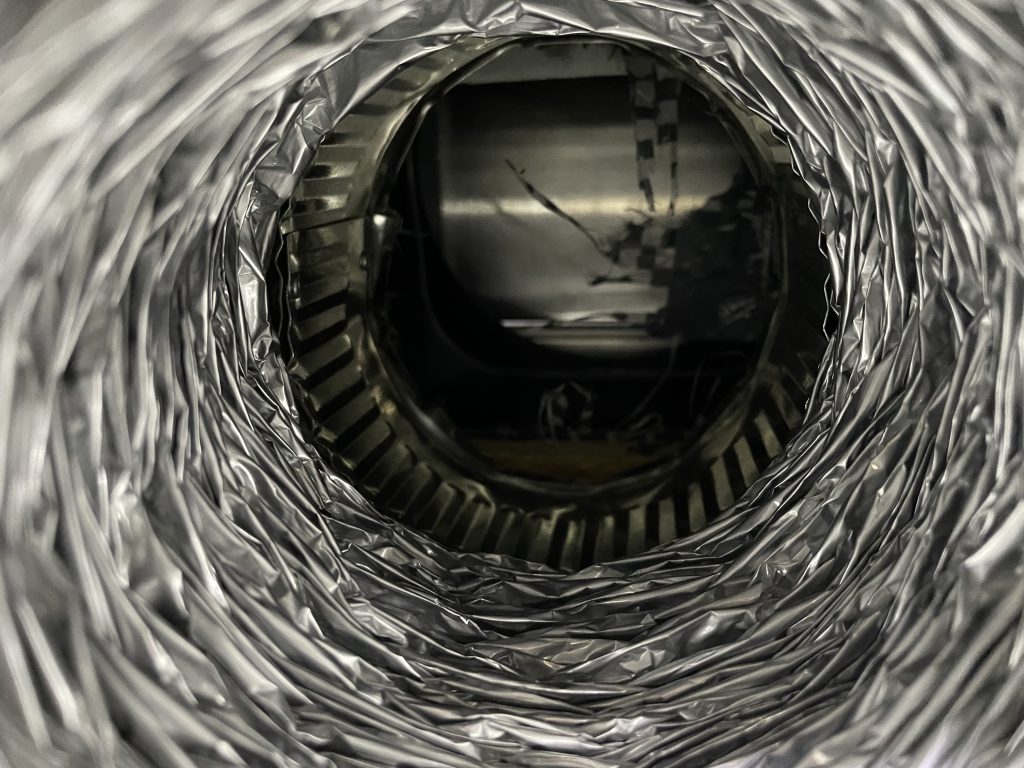
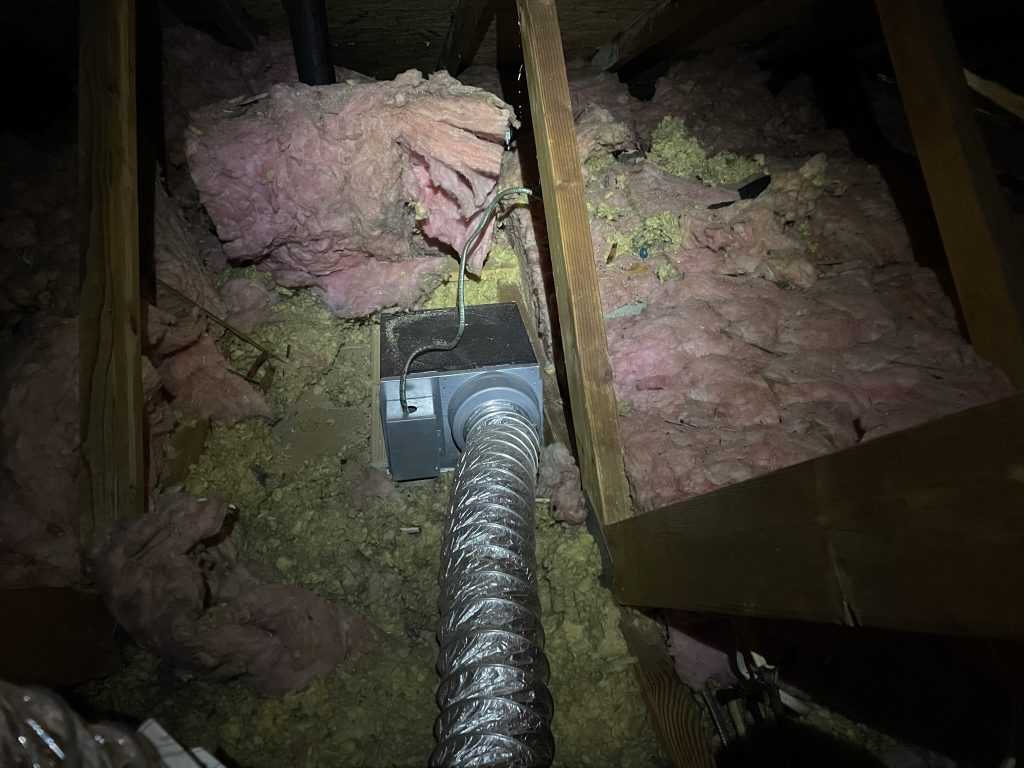
Here’s the guest bathroom fan. I had the foresight to install a 120CFM beast, even though the size of the bathroom only needed an 80. But with a shared bathroom for anyone visiting, expeditious air evacuation is of paramount priority:
And a final shot of both ducts connected! At last!
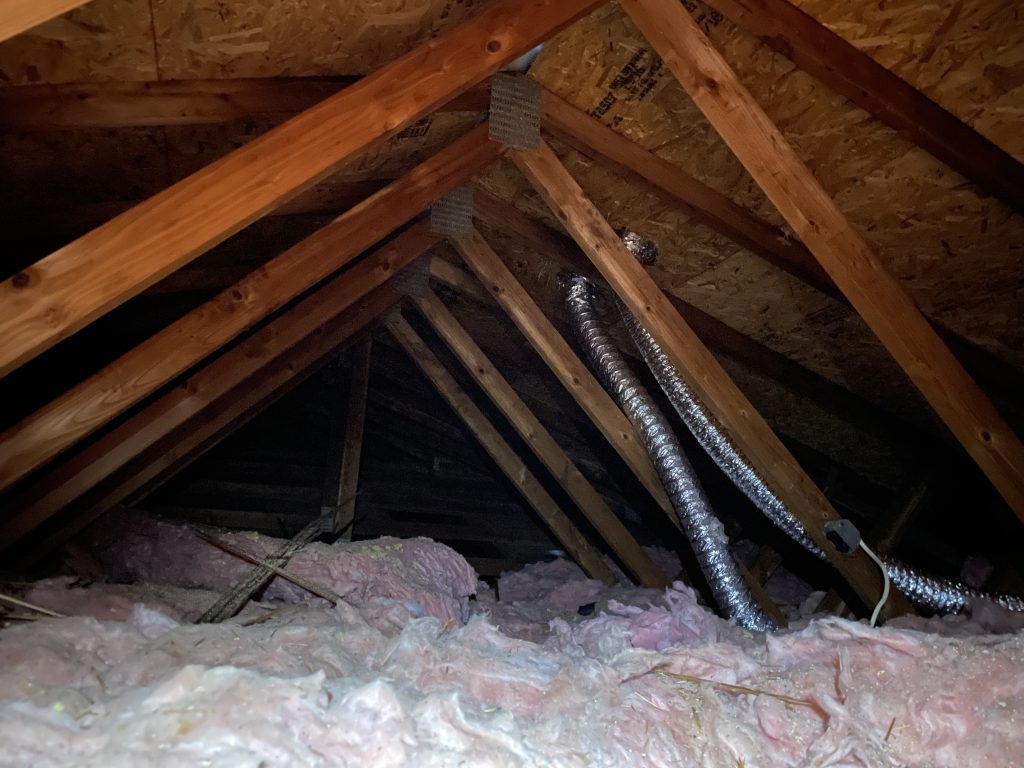
Side note: with no shingles on a metal roof, the attic ceiling isn’t studded with thousands of skull perforators. I can safely stand up higher than I ever dared before! The only blood shed on this project was from the sharp metal edges on the collars.

It is done!

–Simon
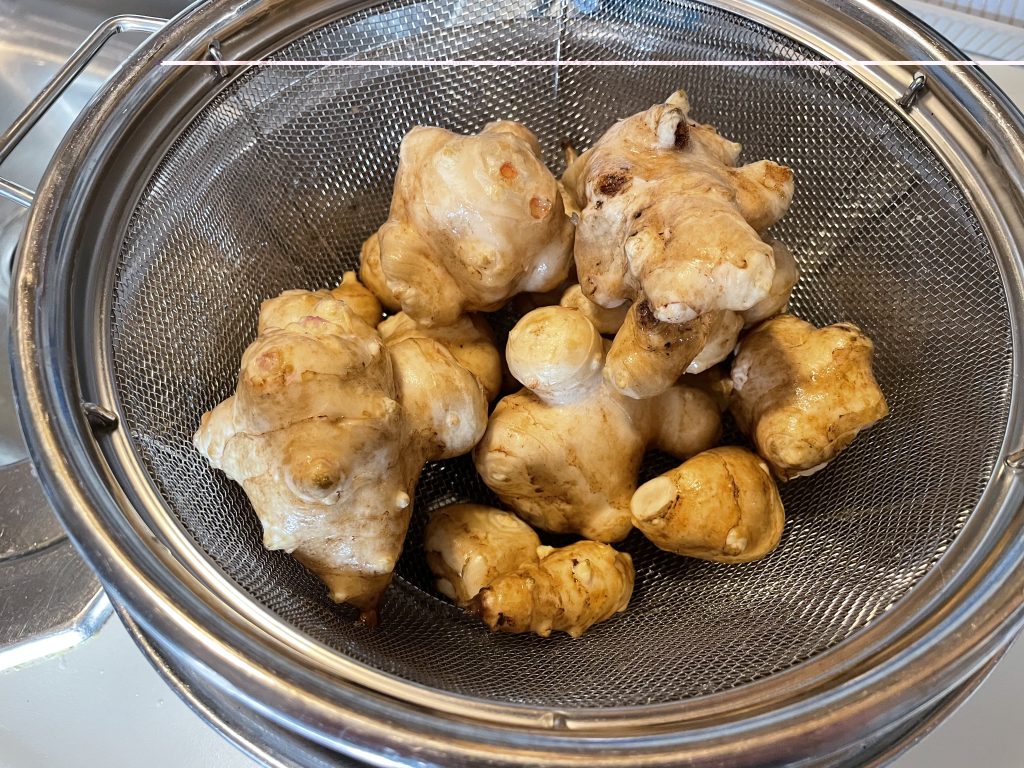
Choke on Polysaccharides

About two years back I planted sunchoke tubers in the forage patch. I caught on to the idea after reading some random gardening article during the height of the Ohio winter season and thought that they sounded like a good idea: native, low-maintenance, pretty flowers, edible tubers, perennial. What’s not to like?

They were also amusingly absent from any commercial catalog, so I had to source some from a fellow gardening nerd. They cleared postal inspection, unlike the black bean seeds my sister tried to send me, and I dutifully plopped them into the ground come early spring. A few plants grew, but I decided to wait an extra year for them to fill out before attempting a harvest.

After two years, they had spread quite nicely.

Now that the growing season is concluded, I wanted to try them. So I shoved a gardening pitchfork into the partially frozen ground at the edge of the patch and ripped up a mass. A surprisingly large mass, in fact. It would seem that they spread quickly.

Internet knowledge states that they can be cooked like potatoes. So Liz roasted them. And they were tasty – like an earthy parsnip. But, there were consequences.

Sunchokes store their energy in a carbohydrate very different from potatoes, specifically inulin – a polysaccharide. Polysaccharides cannot be digested (a notable exception being lactose, a disaccharide, though we all know isn’t a universal exception). Potatoes, on the other hand, consist of starch – also a polysaccharide, but upon cooking, breaks down into amylose and amylopectin, which are easy to digest. Inulin, however, does not fully break down into monosaccharides upon cooking, resulting in a food comprised of indigestible carbohydrates.

This leads to large amounts of food for gut bacteria, which ferment inulin into….gas! Lots and lots of gas!

So some more cooking research is needed to work around this better. Or…we eat them raw and have a juvenile fratboy-themed competition on the deck!

–Simon

Snowflake

I don’t want to post pictures from the holidays. I’m done with the holidays and want to move on. I’m middle-aged now and don’t find much magic in the rituals anymore. Any joy I had left was by proxy: watching my daughter enjoy them. But she’s a teen now and wants to distance herself from anything family-oriented. Plus it’s the age at which being overtly happy about anything just isn’t cool. It’s cool to be a cynic and hate.

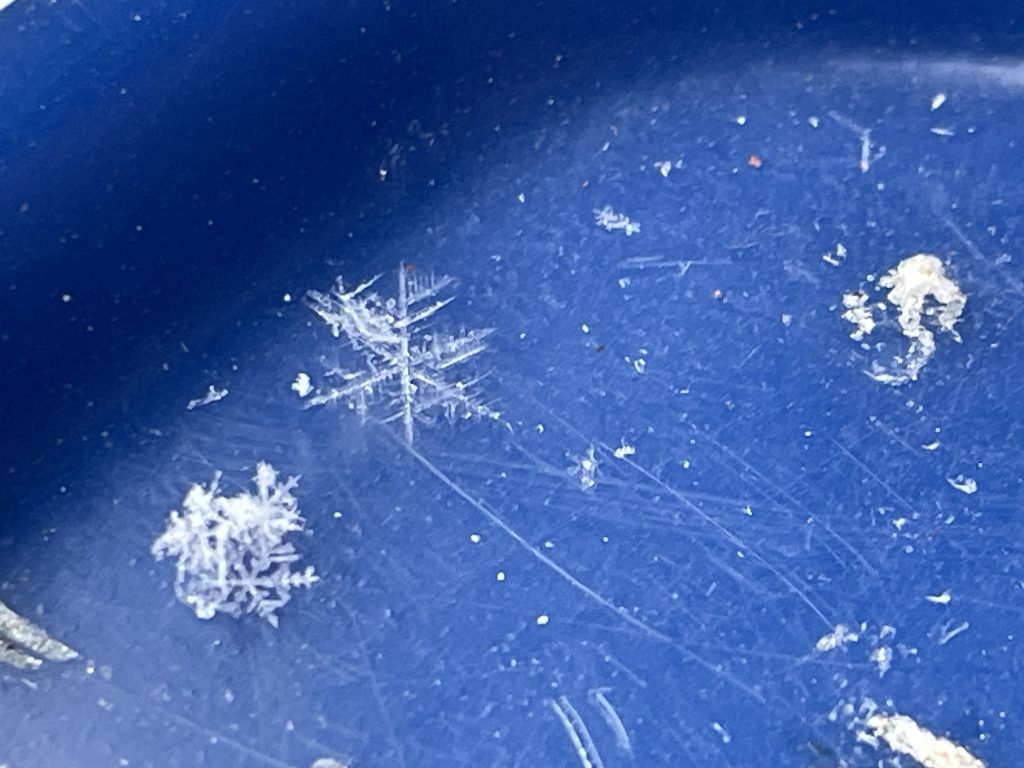
So I’ll pass on the tree and house light photos this year. Instead, here’s a brief reflection on one of my own moments of lost magic. Here is a single snowflake, captured poorly with my aging phone camera:

Contrasted nicely against the lid of the recycling bin

It was cold enough that individual crystals were falling without clumping together. It reminded me of when I learned what they actually are.

Another consequence of a Texan upbringing, I didn’t see much snow. Some light dustings here and there, but rarely anything of consequence. So I knew snow mostly from movies. And there’s a particular scene in Disney’s Fantasia with fairies dancing in snowfall, using individual snowflakes as dresses. Granted I’d never seen a fairy before either, but my assumption was that they’re 6-12 inches tall. Representations in various media confirm this, probably because that’s a good size to work the physical world around. Any smaller and our existing environment wouldn’t scale well to make understandable films, any larger and they’re just small people. Ergo, I made the connection that a snowflake dress, presented as being as wide as the fairy was tall, would therefore be around 6-12 inches in diameter.

So you might understand my disappointment when, on a rare day of Texas snow, when my mother exclaimed “Snowflakes!” when glancing out the window, that I was greeted with the sight of tiny specks of white, and not gargantuan plates of ice crystals, floating gracefully to the ground. Such is life.

But still, on a micro level, individual snowflakes are pretty cool to look at.

–Simon

Hoard a Cord (pt.3)

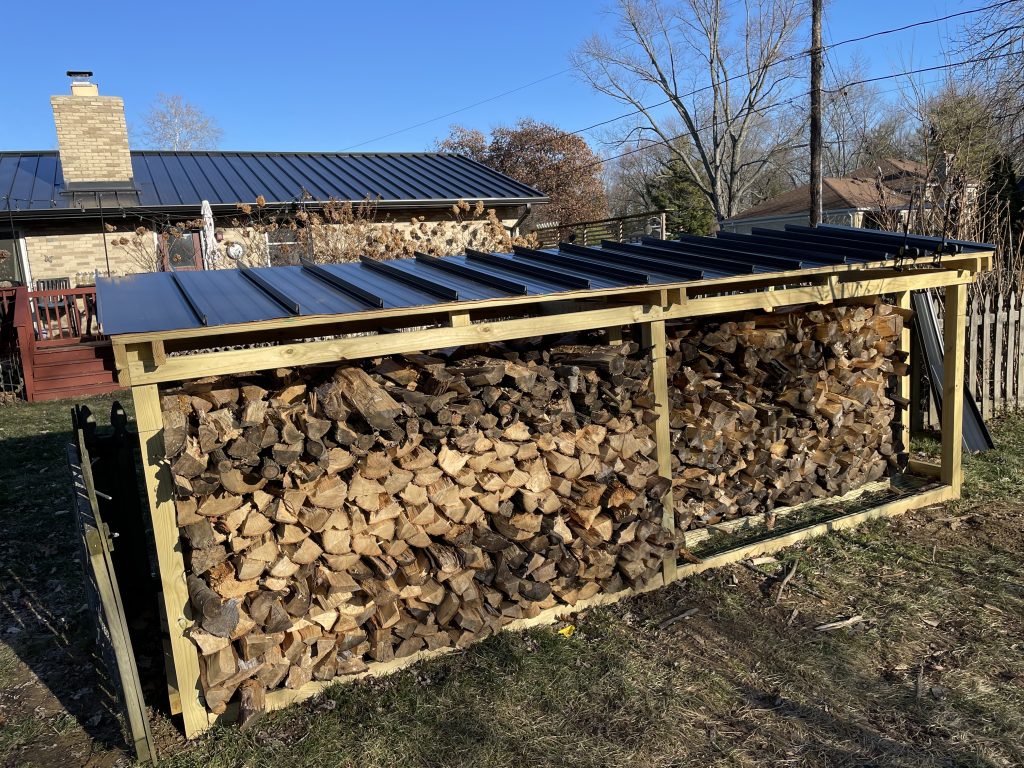
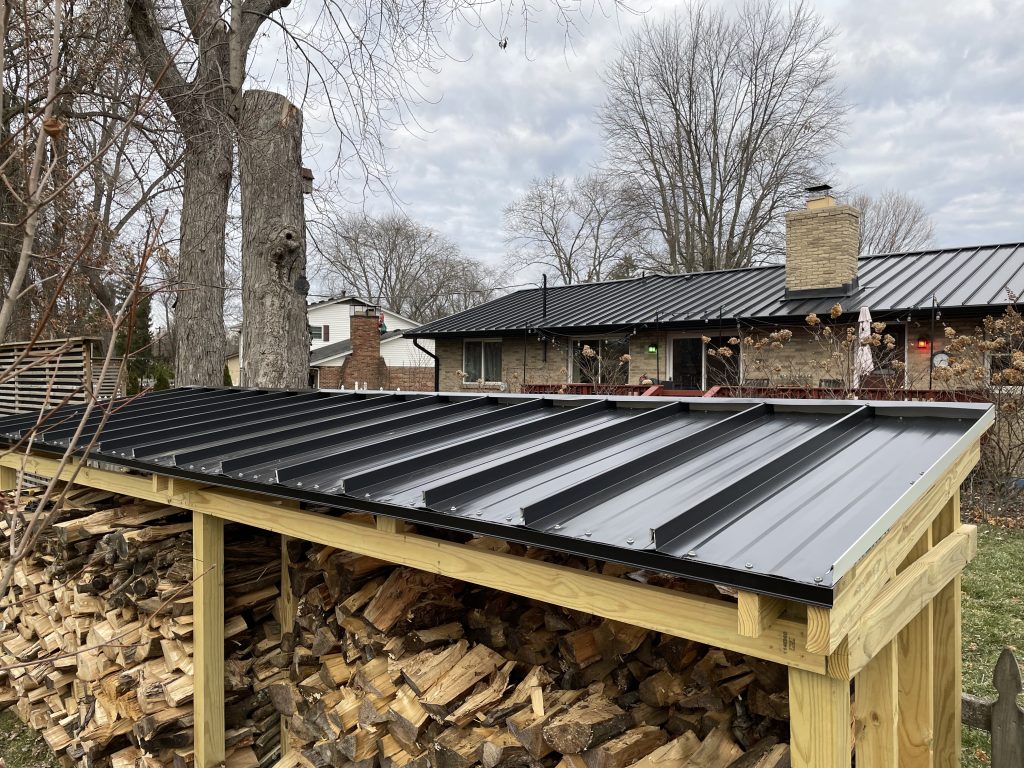
At last, with the holiday break, I was able to revisit the firewood holder. The warping OSB was concerning, but ultimately proved not to be an issue once I started attaching the metal. First though, I had to measure and cut it.

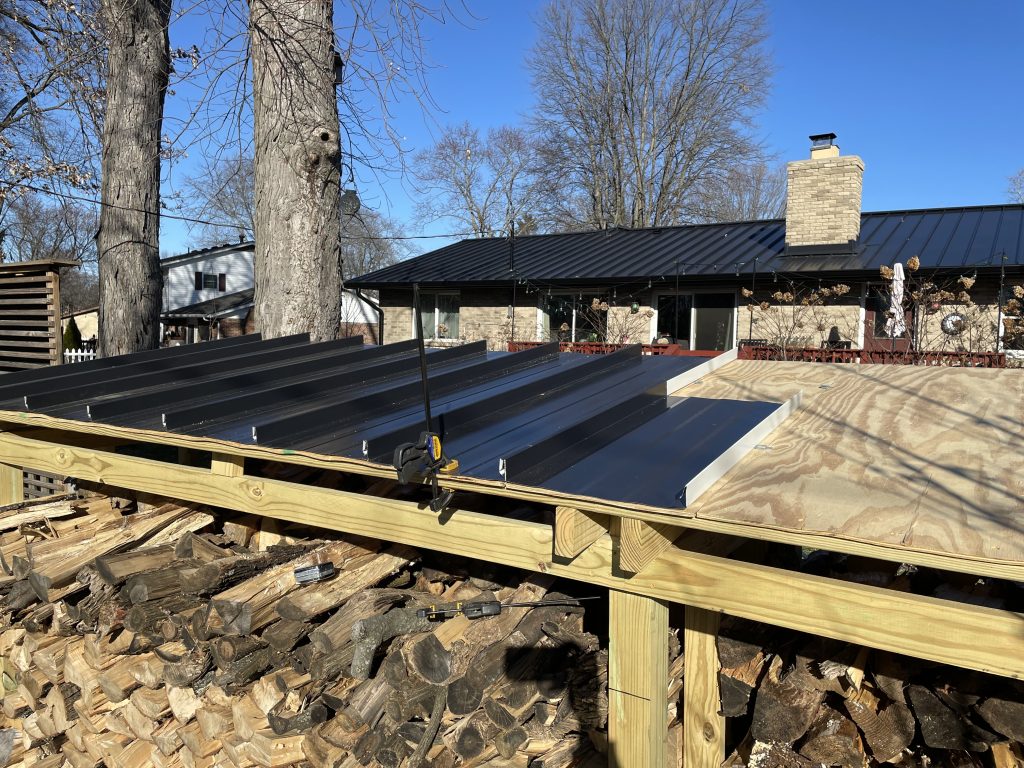
Sawing through metal paneling such as this was a new experience. It was too tough for any of my originally-planned methods, but with some protective gear and strong nerve on my part, the miter saw ended up suitable for the job. The screeching of metal on metal was horrendous, and the saw’s reach was insufficient, forcing me to make multiple cuts on each section. And no doubt the blade’s completely shot now and I’ll need to replace it. But, it did eventually work.

And by good fortune, full panel width almost lined up, with just a couple inches of overlap, so I didn’t have to attempt a longitudinal cut. Sometimes, I do luck out.

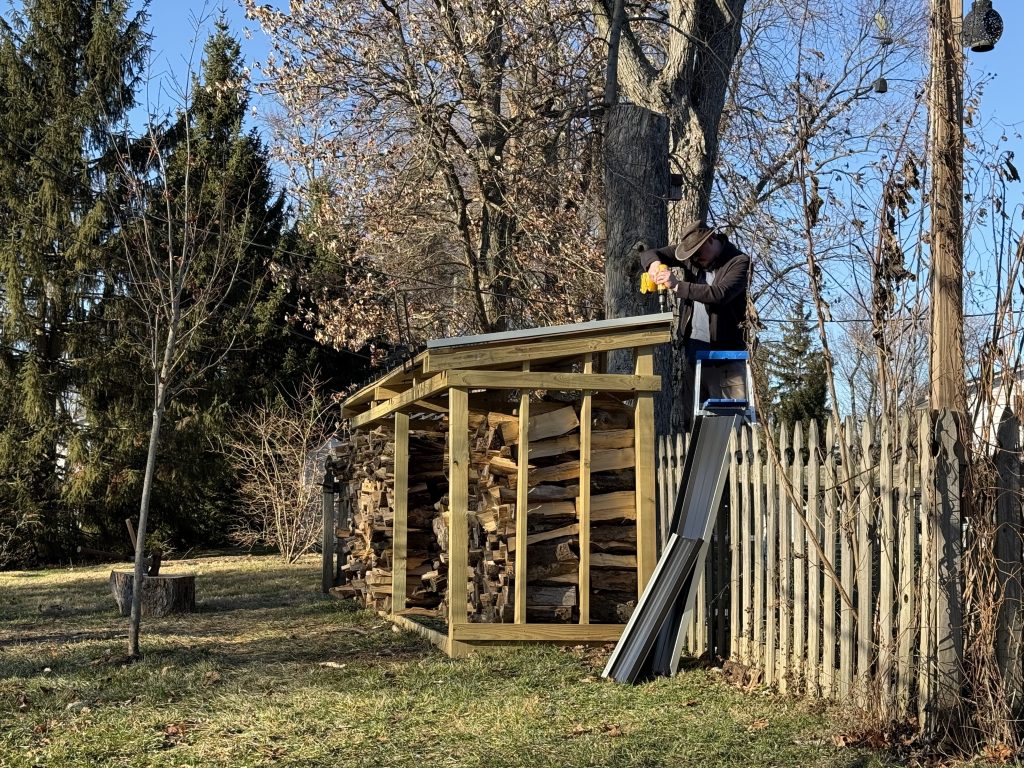
But as these were not full panels, they lacked the undercurve. They’re designed to hook under the eaves so no hardware is exposed skyward, but as I didn’t have 15 full panels to work with, that wasn’t an option and I had to screw them directly in. I wasn’t concerned. It is just a wood pile. Even if they leak over time, it’s a non-issue.

However, I did still use proper roofing screws – the ones with that synthetic washer that self-seal.

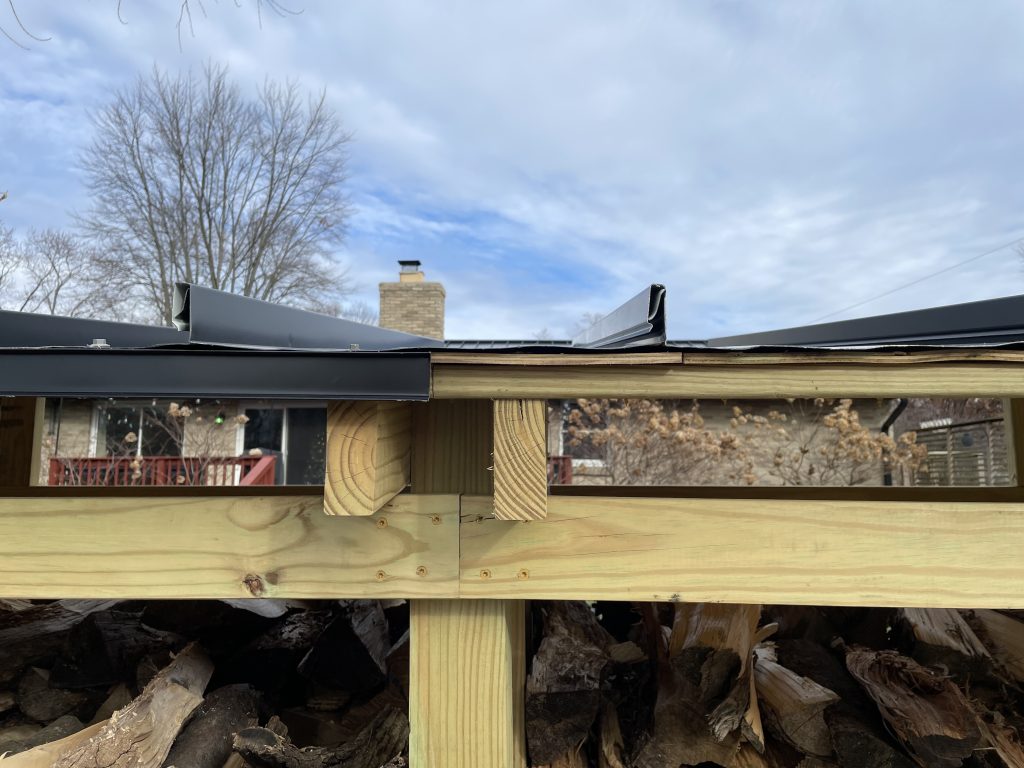
First though, I slid a drip guard under the downward edge, more for aesthetics than concern of water infiltration. I mean, I didn’t install felt or insulation between the metal and wood. I draw the line at overkill somewhere. But either way, it’s an improvement.

Then I added flashing at the peak, this time because I was concerned with water.

And lastly, I spray-painted all the metal parts that weren’t black, to make a nice purdy finish.

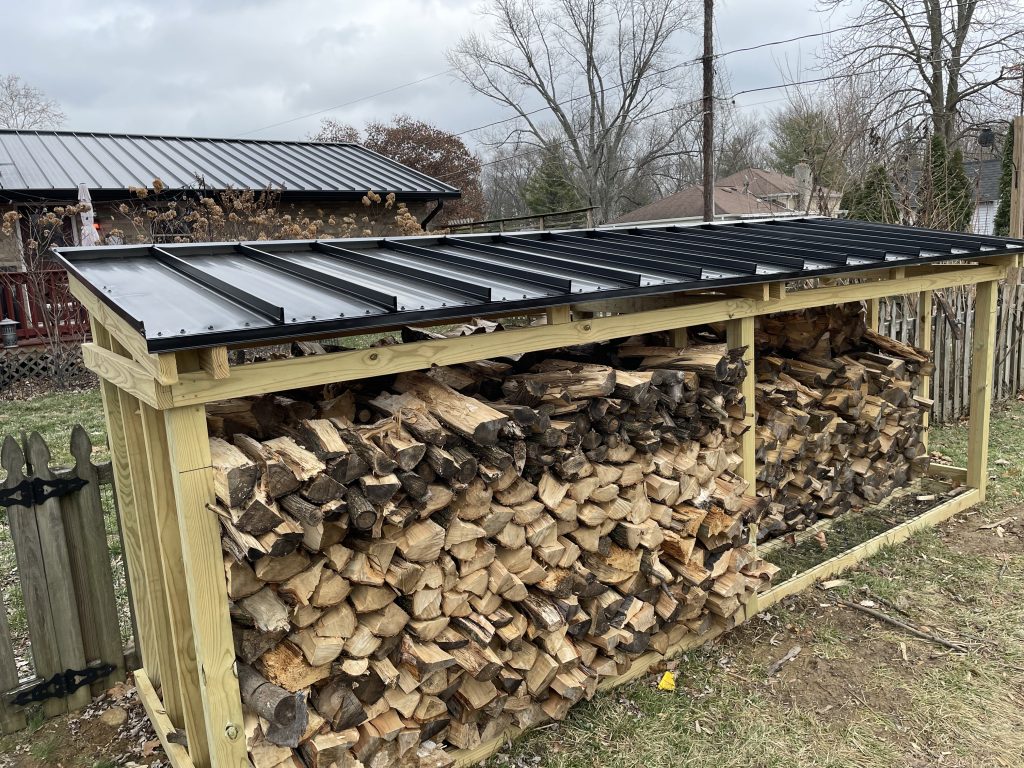
I have yet to see anyone else in the neighborhood with a custom-built firewood holder in their backyard, or a metal roof on their house – much less a custom-built firewood holder with a matching metal roof. I guess normal people spend their time and money elsewhere.

But I’m not a normal person, and I have an awesome firewood holder now. Ten years in the backlog and two months in the making. At last!

–Simon

Rabbits and Rednecks: Addendum

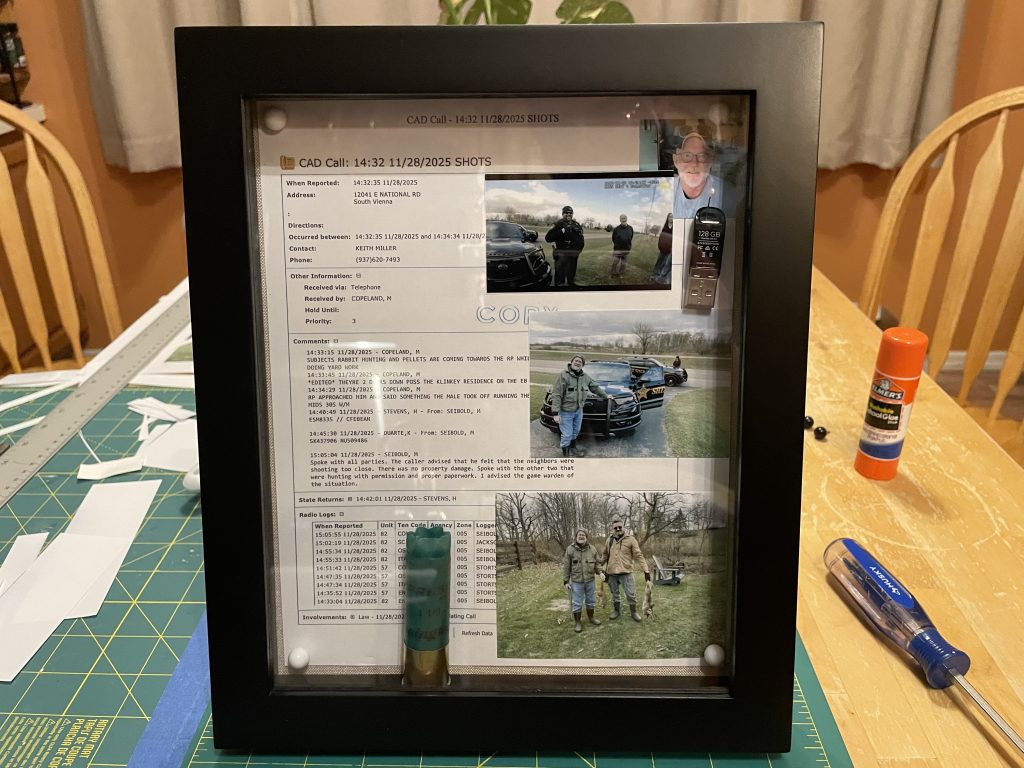
Wanting to have more fun with the Thanksgiving hunting incident, I decided on a more tangible method of memory preservation.

Specifically, my dad likes shadow boxes. And if memories are more important than possessions, it makes for a perfect Christmas gift. Plus, I had a lot of fun with it:

This cranky jerkface gave us, indirectly and unintentionally, a great holiday memory.

–Simon